
Medical device manufacturers face rigorous regulatory requirements when selecting silicone elastomers. FDA testing for medical silicone encompasses biocompatibility, extractables, and manufacturing consistency, with each testing category addressing specific patient safety concerns.
How Do FDA Medical Device Regulations Apply to Silicone Components?
Regulatory Framework
The FDA regulates medical devices under 21 CFR Part 820, establishing quality system requirements for design, manufacturing, and distribution. Silicone components used in medical devices must meet these requirements throughout the product lifecycle.
Device classification determines testing requirements:
- Class I (low risk): General controls and minimal testing
- Class II (moderate risk): Special controls, including testing
- Class III (high risk): Premarket approval requiring extensive testing
Most silicone components fall into Class I or II, with testing requirements established through FDA guidance documents and recognised consensus standards.
What Is ISO 10993 Biological Evaluation?
The primary standard for medical device biocompatibility testing is ISO 10993, Biological Evaluation of Medical Devices. This multi-part standard establishes testing categories based on device contact type and duration.
| Contact Type | Duration | Typical Testing |
| Surface device | <24 hours | Cytotoxicity, sensitisation |
| Surface device | >24 hours | Cytotoxicity, sensitisation, irritation |
| Implant device | <30 days | Cytotoxicity, sensitisation, irritation, genotoxicity |
| Implant device | >30 days | Subchronic toxicity and implantation testing |
According to the U.S. Food and Drug Administration, ISO 10993-1 testing can provide appropriate evidence of biological safety when it is properly designed and conducted within a risk-management process.
Which FDA Testing Categories Apply to Medical Silicone?
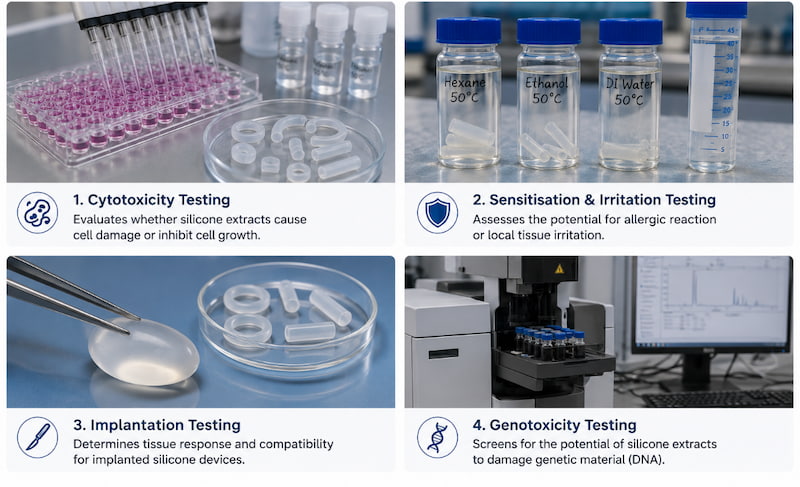
Cytotoxicity Testing Identifies Harmful Leachables
Cell viability testing identifies compounds that may harm cells.
L929 Mouse Fibroblast Method: Silicone samples are extracted in cell-culture medium, then the extracts are applied to cell monolayers to measure cell death or degeneration. Visual scoring or quantitative methods, including MTT and XTT, determine cytotoxicity.
Acceptance criteria: Extracts should not cause cell degeneration exceeding Grade 2 on a 0–4 scale.
This test identifies leachable compounds that could harm patients if absorbed. It is one of the most sensitive biocompatibility tests, and many materials fail this stage before progressing to further testing.
Sensitisation and Irritation Testing Assesses Tissue Response
Guinea Pig Maximisation Test (GPMT): This evaluates delayed hypersensitivity potential. Sensitisation requires prior exposure, and the test identifies compounds that may trigger immune reactions after re-exposure.
Intracutaneous Reactivity: Extracts are injected intracutaneously to assess local tissue response. Irritation testing identifies compounds that may cause inflammation or tissue damage.
These tests help ensure silicone components do not cause allergic reactions or irritation when they contact body tissues or fluids.
Implantation Testing Verifies Long-Term Tissue Compatibility
For permanently implanted silicone components used for more than 30 days, implantation testing verifies tissue compatibility.
Muscle implantation: A sample may be implanted in rabbit paravertebral muscle for 12 weeks. Histopathological evaluation assesses capsule formation, inflammation, and tissue response.
Long-term implants: Some applications require 90-day or longer implantation studies to verify chronic tissue compatibility.
Implantation testing is particularly important for silicone components used in permanent implants, including breast implants, tissue expanders, and other long-term medical devices.
Genotoxicity Testing Screens for DNA Damage
Genetic toxicity testing identifies compounds that may damage DNA.
Ames Test: Salmonella bacteria are exposed to extracts to detect mutation-causing compounds. Negative results indicate no detected gene mutations.
Mouse Lymphoma Assay: Mammalian cells are exposed to extracts to detect mutation-causing compounds and assess chromosomal damage.
Chromosomal Aberration Test: This evaluates structural chromosome damage in mammalian cells.
Genotoxicity concerns may arise from residual catalysts, cross-linker by-products, or extractable compounds that could contribute to carcinogenic risk.
Why Are Extractables and Leachables Testing Important?

Extractables and Leachables Are Different
Beyond immediate biocompatibility, long-term patient safety requires manufacturers to understand which compounds may migrate from silicone into the body over time.
Extractables: Compounds that can be extracted from a medical device under laboratory conditions, such as aggressive solvents or elevated temperatures.
Leachables: Compounds that migrate into the patient during normal-use conditions.
Extractables testing identifies potential migrants, while toxicological risk assessment determines acceptable leachable levels.
How Is Extractables Testing Performed?
Solvent extraction: Samples are extracted in multiple solvents, including polar, non-polar, and aqueous media, at elevated temperatures to identify a broad range of extractables.
Analytical identification: Gas chromatography-mass spectrometry (GC-MS) identifies extracted compounds. Liquid chromatography-mass spectrometry (LC-MS) can be used for non-volatile compounds.
Toxicological assessment: Each identified compound is evaluated for:
- Daily dose through body contact
- Systemic toxicity potential
- Carcinogenicity and mutagenicity concerns
- Sensitisation potential
Common Extractables in Silicone
| Compound Category | Source | Toxicological Concern |
| Platinum catalysts | Cure system | Low concern at trace levels |
| Siloxane oligomers | Polymer fragments | Generally low toxicity |
| Cross-linker by-products | Cure reaction | Variable |
| Fillers, including silica | Reinforcement | Low toxicity, with particle concerns |
| Antioxidants | Stability additives | Low concern |
According to the FDA’s guidance on ISO 10993-1, extractables and leachables should be assessed through chemical characterisation and toxicological risk evaluation based on the intended device use.
What Manufacturing Consistency Requirements Apply to Medical Silicone?
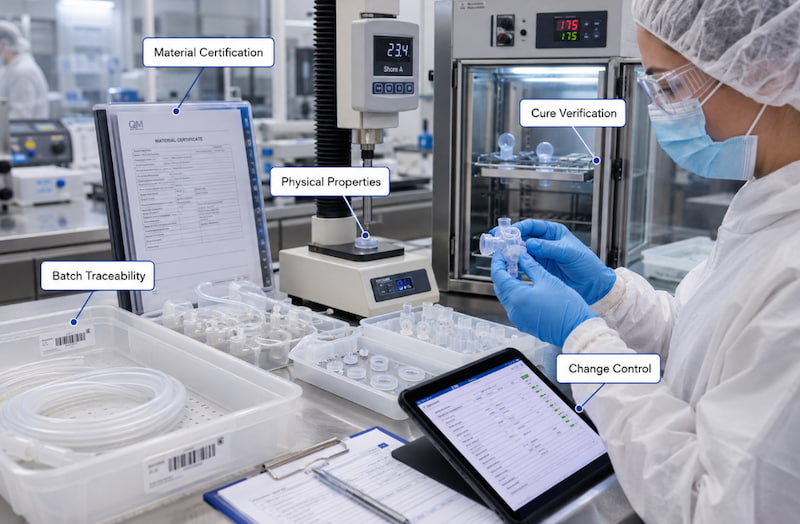
Quality System Documentation Supports Traceability
FDA quality system requirements under 21 CFR Part 820 require manufacturers to maintain controlled documentation for medical-device materials and production.
This includes:
- Device master record (DMR): Complete device specifications, including material requirements
- Device history record (DHR): Production history for each lot
- Change control: Documented evaluation of changes that could affect device safety
Silicone suppliers should provide material certifications documenting:
- Formulation identification
- Physical properties, including hardness, tensile strength, and elongation
- Cure characteristics
- Batch traceability
For devices requiring high mechanical durability and controlled formulation, medical-grade HCR silicone can support applications where extractables control, long-term stability, and repeatable processing are important.
Material Certification Testing Verifies Each Lot
Each lot of medical silicone may require verification testing.
Physical properties: Hardness, tensile strength, and elongation tested to relevant standards such as ASTM D412 and ASTM D2240.
Cure verification: Press-cure and post-cure schedules are verified alongside final material properties.
Biocompatibility verification: Some applications require testing on each lot, while others rely on established equivalence supported by controlled material and process documentation.
What Must Be Included in FDA Submissions?
Medical device manufacturers incorporating custom silicone should document material selection in their regulatory submissions.
510(k) Submissions Require Supporting Evidence
510(k) submissions may include performance data, biocompatibility testing documentation, and material specifications.
PMA Submissions Require Extensive Data
PMA submissions may require extensive characterisation data, animal testing, and clinical data.
Technical Files Support CE Marking
For CE marking, technical files should include comprehensive documentation, including risk analysis and verification testing.
What Is USP Class VI Testing?
USP <87> and USP <88> Provide Additional Evidence
United States Pharmacopeia testing can provide additional biocompatibility assurance.
USP <87> Biological Reactivity Tests: In vitro testing similar to ISO cytotoxicity methods.
USP <88> Biological Reactivity Tests: In vivo testing in rabbits and mice.
USP Class VI: The most stringent classification, requiring:
- Intracutaneous injection, where extracts are injected into rabbits
- Systemic injection, where extracts are injected into mice
- Implantation, where samples are implanted in rabbits for seven days
USP Class VI certification indicates minimal tissue response and may be important for permanently implanted devices.
When Is USP Testing Required?
USP Class VI is commonly specified for:
- Implanted devices used for more than 30 days
- Blood-contact devices
- Devices used in critical anatomical locations
Many medical device manufacturers specify USP Class VI as a minimum requirement for silicone components, regardless of actual device classification.
How Should You Choose an FDA Testing Laboratory?
Select a Laboratory With Medical Device Experience
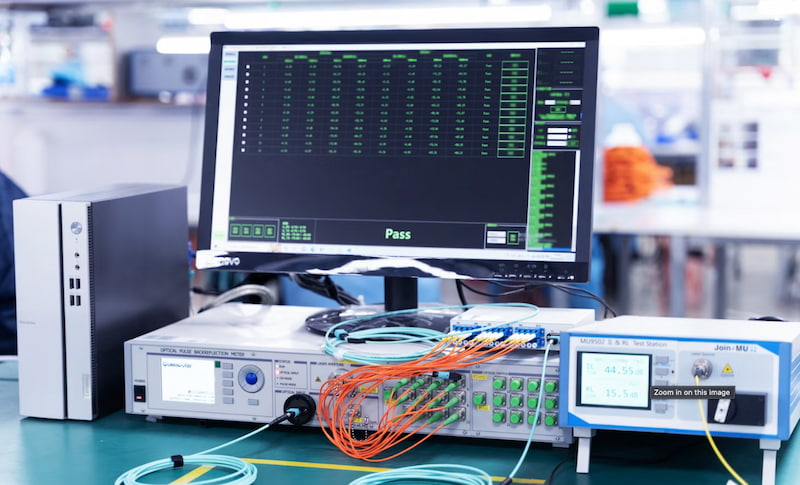
FDA testing should be completed by accredited laboratories with relevant medical-device experience.
- GLP compliance: For certain FDA submissions, testing must follow Good Laboratory Practice requirements under 21 CFR Part 58.
- ISO 17025 accreditation: Indicates technical competence for relevant testing methods.
- Medical device experience: Laboratories should understand device submission requirements.
Flexion works with certified testing laboratories to provide biocompatibility documentation that supports customer regulatory submissions.
What Are the Typical Testing Timelines and Costs?
Typical testing timeline:
- Cytotoxicity, sensitisation, and irritation: 4–6 weeks
- Implantation: 3–4 months
- Full biocompatibility package: 4–6 months
- Extractables characterisation: 3–4 months
Cost considerations:
- Cytotoxicity: $500–1,500 per sample
- Full biocompatibility package: $10,000–25,000, depending on testing scope
- Extractables characterisation: $15,000–40,000, depending on compounds identified and testing requirements
Testing investment helps protect patient safety and supports regulatory compliance.
What Documentation Is Required for Medical Silicone Compliance?
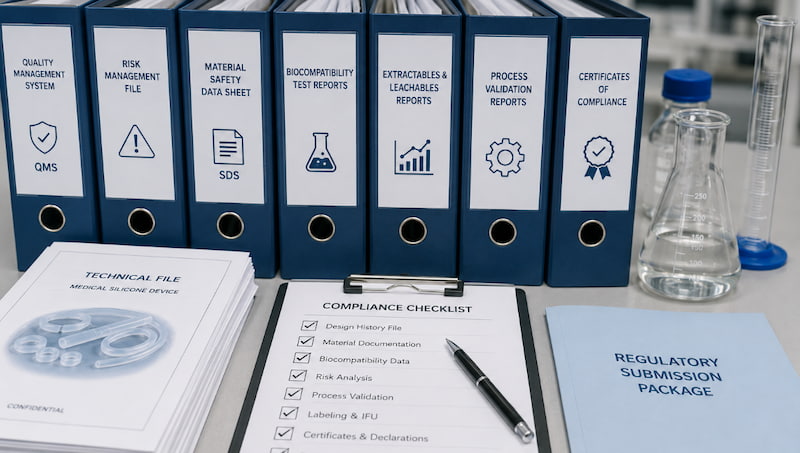
Technical Dossiers Must Support the Full Product Lifecycle
Medical device manufacturers need comprehensive documentation.
Material specifications: Complete formulation, processing requirements, and storage conditions.
Manufacturing validation: Process capability studies and critical parameter control.
Testing reports: Biocompatibility testing records with methodology, results, and conclusions.
Change history: Documentation of formulation or process changes, alongside any necessary re-evaluation.
Regulatory Submission Support Reduces Documentation Gaps
Flexion provides technical documentation that can support customer regulatory submissions, including:
- Material specification sheets
- Biocompatibility test reports
- USP compliance documentation
- Manufacturing consistency data
- Change-control notifications
Conclusion
FDA testing for custom medical silicone requires more than a single test or material certificate. Manufacturers must consider biological evaluation, extractables and leachables, production consistency, traceability, and the specific patient-contact conditions of the finished device.
At Flexion, we help customers select and manufacture silicone components with the material documentation, process control, and testing support required for regulated applications. Where chemical resistance is also critical, Flurosilicone may be considered alongside other silicone materials, provided it meets the device’s specific biocompatibility and regulatory requirements.
Frequently Asked Questions
What FDA Testing Is Required for Medical Silicone?
Required testing depends on device classification, contact duration, and intended use. Common testing includes cytotoxicity under ISO 10993-5, sensitisation and irritation testing under ISO 10993-10, and, for certain implants, genotoxicity and implantation testing.
How Long Does FDA Testing Take?
Basic biocompatibility testing, including cytotoxicity, sensitisation, and irritation, typically takes 4–6 weeks. Full biocompatibility packages that include implantation testing may require 4–6 months. Extractables characterisation can add 3–4 months.
What Is USP Class VI Testing?
USP Class VI is a stringent biological reactivity classification requiring intracutaneous injection, systemic injection, and implantation testing in animals. It indicates minimal tissue response and is often specified for permanently implanted devices.
Can Silicone Be Used in Blood-Contact Applications?
Yes, with appropriate testing. Blood-contact devices may require haemocompatibility evaluation under ISO 10993-4. Special silicone formulations can be selected for blood-contact compatibility where supported by the finished-device risk assessment.
How Often Must Biocompatibility Be Verified?
Initial testing establishes material safety. Material composition or process changes may require re-evaluation. Your quality system should define the changes that trigger additional biological evaluation.