
HCR SILICONE FOR MEDICAL INDUSTRY 2026
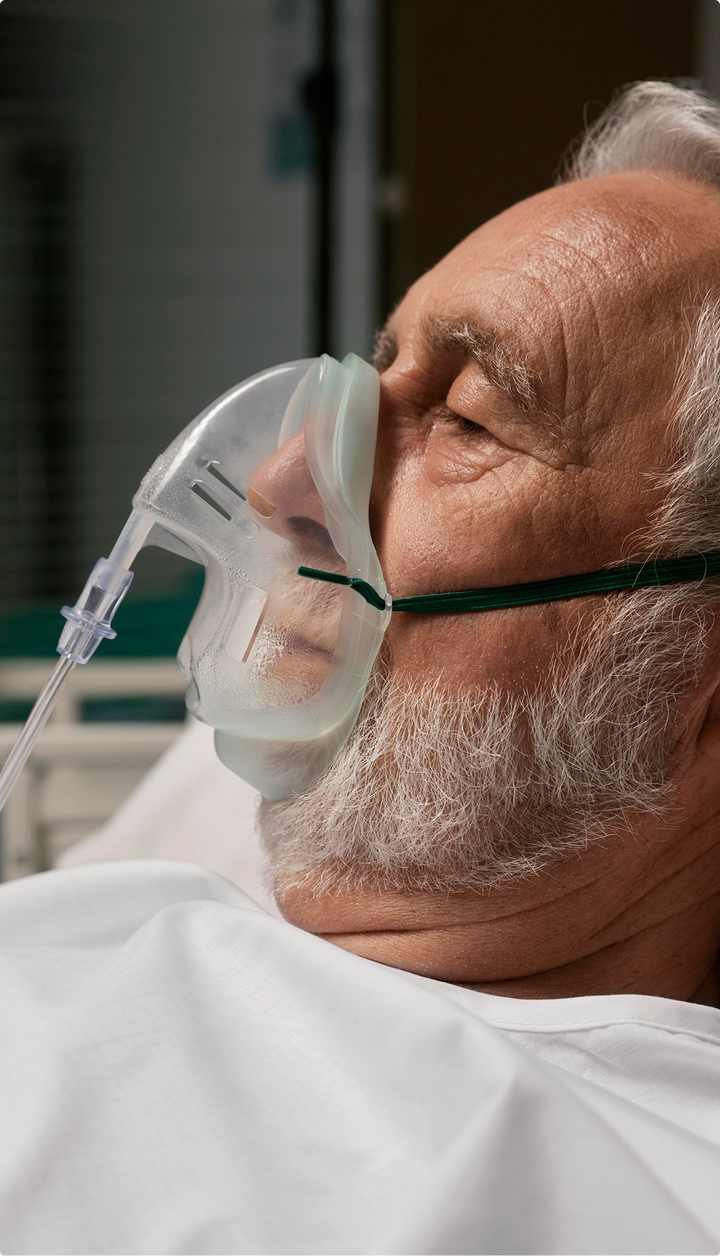
High Consistency Rubber, or HCR silicone, has become one of the most important elastomer materials in medical manufacturing because it offers a rare combination of long-term biostability, mechanical durability, sterilization resistance, and regulatory acceptance. In the medical sector, material choice affects far more than just part performance. It influences patient safety, shelf life, recall risk, qualification cost, process yield, and time to approval. That is why HCR silicone continues to hold a strong position in both implantable and non-implantable medical devices.
Medical-grade HCR silicone is a high-molecular-weight, heat-cured polydimethylsiloxane elastomer reinforced with high-purity fumed silica and typically cured using platinum-catalyzed addition chemistry. Unlike lower-grade elastomers, medical and implant formulations are tightly controlled for residuals, extractables, and consistency. Properly formulated HCR can deliver Shore A hardness from 20 to 80, strong tear resistance, low compression set, and extremely low extractables, making it suitable for demanding clinical environments.
These advantages are why HCR silicone is widely used in long-term implants, pacemaker lead insulation, respiratory masks, catheter and tubing systems, wound care interfaces, seals for reusable medical equipment, and drug-delivery components. In many of these categories, the material is not selected simply because it is flexible. It is selected because it can remain stable through long service life, repeated sterilization, and exposure to tissue or fluid contact without major degradation.
As regulatory expectations continue to tighten and device complexity increases, HCR silicone has become more strategically important. Manufacturers today need materials that not only perform in the lab, but also support chemical characterization, toxicological review, biocompatibility evaluation, and long-term risk control. HCR silicone remains one of the few elastomer families with both the performance record and documentation ecosystem to support that full lifecycle requirement.

WHAT MAKES HCR SILICONE DIFFERENT?
Before looking at applications, it helps to understand why HCR silicone stands apart from many alternative elastomers used in healthcare.
KEY REASONS HCR SILICONE IS WIDELY USED IN MEDICAL DEVICES
- It maintains flexibility and integrity over long service life.
- It resists heat, oxidation, and hydrolysis better than many competing polymers.
- It can be sterilized repeatedly with minimal property loss.
- It can be formulated across a broad hardness range.
- It offers low extractables when properly compounded and post-cured.
- It has a long clinical history in implant and contact applications.
- It is supported by strong regulatory and supplier documentation pathways.
QUICK PROPERTY SNAPSHOT

CORE MATERIAL
SCIENCE AND
BIOCOMPATIBILITY
MECHANISMS
The strength of HCR silicone begins with its chemistry. The backbone of the material is built on alternating silicon and oxygen atoms. This siloxane structure gives silicone its characteristic flexibility, but more importantly, it gives the material a high level of resistance to environmental degradation. Compared with many carbon-based polymers, the Si–O backbone is more stable under heat and oxidative stress, which is one of the reasons silicone performs so well in demanding medical applications.
Medical-grade HCR starts as a gum-like high-molecular-weight polymer. High-purity fumed silica is added to reinforce the system. That filler does not just “bulk up” the material. It creates a reinforcing network that improves tensile properties, tear strength, and dimensional stability. This is especially important in tubing, implant shells, dynamic seals, and components that experience repeated flexing or pressure.
Platinum-catalyzed addition cure is another major advantage. In a medical context, platinum cure is generally preferred over peroxide cure because it avoids the byproducts associated with peroxide decomposition. That cleaner cure system supports lower residual volatiles, lower extractables, and better long-term biocompatibility performance. When followed by validated post-curing, HCR silicone can achieve very low levels of cyclic siloxanes and residuals.

THE MAIN PERFORMANCE
MECHANISMS BEHIND HCR SILICONE
- Biostability
The siloxane backbone resists hydrolysis and long-term oxidative damage, helping the material retain performance in vivo. - Low extractables and leachables
Proper compounding and post-cure reduce the risk of unwanted migration, which supports both patient safety and regulatory review. - Surface inertness
Silicone’s relatively inert surface helps reduce unwanted tissue reaction in many applications. - Fatigue resistance
Medical HCR can survive millions of flex cycles, which matters in pacemaker leads, dynamic tubing, and moving implant systems. - Sterilization durability
The material can tolerate steam, EtO, gamma, and e-beam sterilization far better than many alternative elastomers.
HISTORICAL EVOLUTION OF MEDICAL-GRADE
HCR SILICONE
HCR silicone did not become a gold-standard medical material overnight. Its role in healthcare developed through decades of clinical use, material refinement, and regulatory pressure.
HISTORICAL DEVELOPMENT TIMELINE
- 1950s–1960s
The siloxane backbone resists hydrolysis and long-term oxidative damage, helping the material retain performance in vivo. - 1970s
Proper compounding and post-cure reduce the risk of unwanted migration, which supports both patient safety and regulatory review. - 1980s–1990s
Silicone’s relatively inert surface helps reduce unwanted tissue reaction in many applications. - 2000s
Medical HCR can survive millions of flex cycles, which matters in pacemaker leads, dynamic tubing, and moving implant systems. - 2010s
The material can tolerate steam, EtO, gamma, and e-beam sterilization far better than many alternative elastomers. - 2020s
HCR silicone expands into smarter, higher-value applications such as advanced respiratory systems, implantable devices, and combination products.
This history matters because it explains why modern medical HCR is much stronger than generic assumptions about “silicone” might suggest. Today’s implant and medical grades are the result of long-term improvement in chemistry, processing, purity control, and regulatory discipline.
GLOBAL REGULATORY LANDSCAPE AND
MASTER FILE STRATEGY
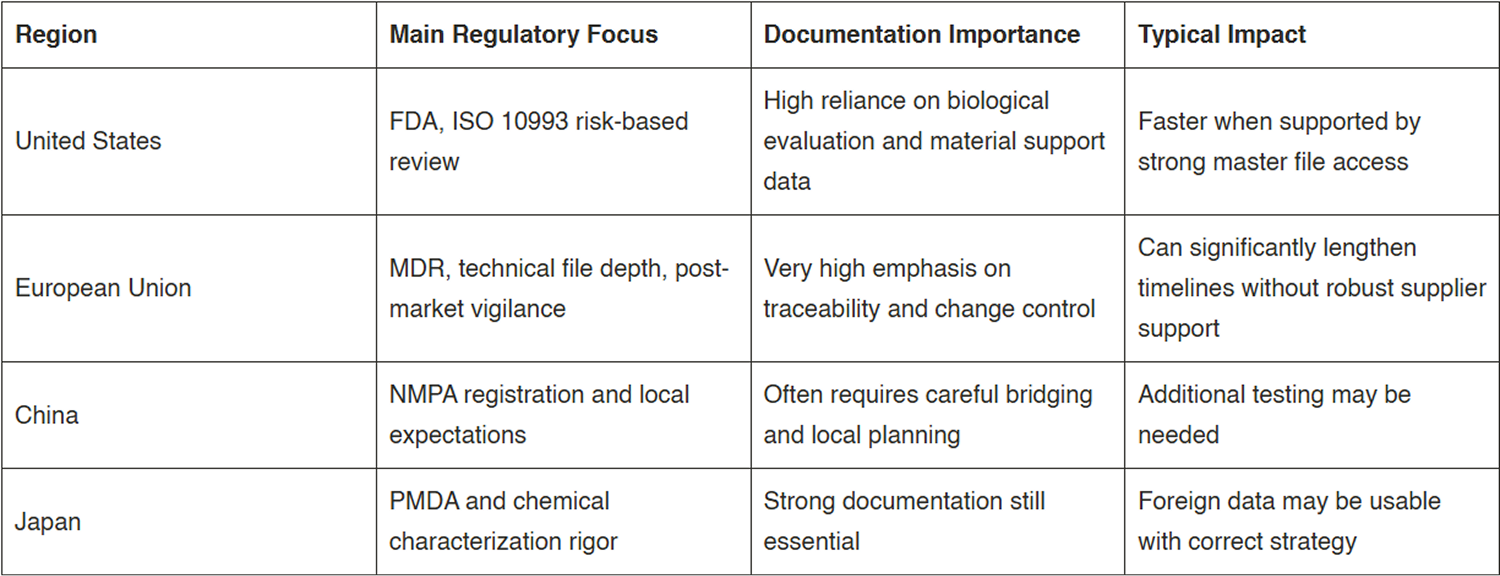
In medical manufacturing, a material is only as useful as its ability to survive the regulatory process. HCR silicone performs strongly here because the material family is supported by long clinical history, structured supplier documentation, and recognized testing pathways.
REGIONAL REGULATORY COMPARISON
WHY SUPPLIER MASTER FILES MATTER
A strong material supplier can provide:
- A letter of authorization for reference use
- ISO 10993 summaries or supporting biological data
- Extractables and leachables data
- Change-notification procedures
- Stability and shelf-life support
- ISO 13485 and quality system evidence
This is not just paperwork. Good documentation can reduce duplicated testing, shorten approval timelines, and lower development cost. In high-risk devices, that can materially change the commercial viability of a program.
BIOCOMPATIBILITY TESTING AND ISO 14971
RISK MANAGEMENT
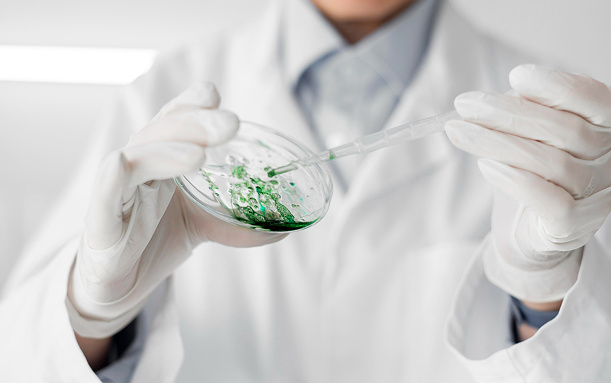
Biocompatibility should never be approached as a generic claim. The correct question is not “Is HCR silicone biocompatible?” but rather “Is this exact formulation, in this exact device, with this exact patient contact profile, sufficiently characterized and risk-controlled?”
Under ISO 10993-1 and ISO 14971, biological evaluation is tied to device use. A permanent implant with tissue or blood contact demands a very different evaluation than a short-duration external skin-contact device.
COMMON EVALUATION AREAS FOR HCR
SILICONE DEVICES
- Cytotoxicity
- Sensitization
- Irritation
- Acute and systemic toxicity
- Implantation effects
- Genotoxicity where appropriate
- Chemical characterization
- Toxicological risk assessment
Modern programs increasingly rely on chemical characterization and toxicological assessment to support or reduce animal testing, especially where exposure can be shown to remain below risk thresholds. This is one more reason HCR silicone performs well: the material can be processed to very low extractables, making the risk assessment pathway more manageable.
FAILURE MODES, CLINICAL RISKS, AND
MITIGATION STRATEGIES
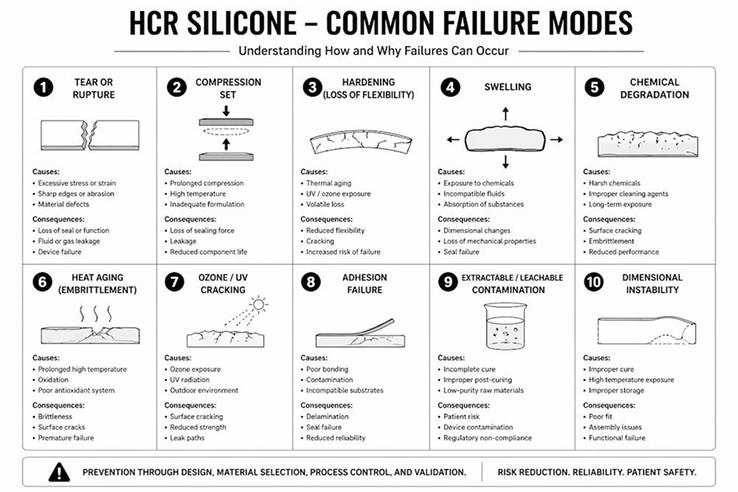
Even the best elastomer can fail if the design, formulation, or process is wrong. HCR silicone is highly reliable, but it still needs correct engineering and validation.
MAIN FAILURE MODES SEED IN SILICONE-
BASED MEDICAL SYSTEM
1. Excessive leaching or inflammation
Most associated with older or poorly processed materials.
Mitigation: validated post-cure, platinum-cured compounds, full chemical characterization.
2. Mechanical fatigue cracking
Can occur in high-flex applications if geometry or compound selection is poor.
Mitigation: fatigue testing, higher tear-strength grades, better stress distribution.
3. Compression set leading to leakage
Important in reusable seals and sterilized equipment.
Mitigation: choose grades with strong compression set resistance and validate over the real sterilization cycle count.
4. Biofilm or surface-related performance issues
Design and surface strategy matter in fluid-path applications.
Mitigation: application-specific surface engineering or antimicrobial strategies where appropriate.
5. Calcification or long-term implant surface change
Rare in modern high-purity systems but part of long-term implant consideration.
Mitigation: high-purity grades, design optimization, and application-specific material selection.

PRACTICAL LESSON
In modern devices, failure is often not because “silicone is bad.” It is more often because the wrong grade was used, the geometry was poorly designed, the cure process was inconsistent, or the sterilization protocol was not properly validated.
MAJOR MEDICAL APPLICATIONS OF HCR
SILICONE
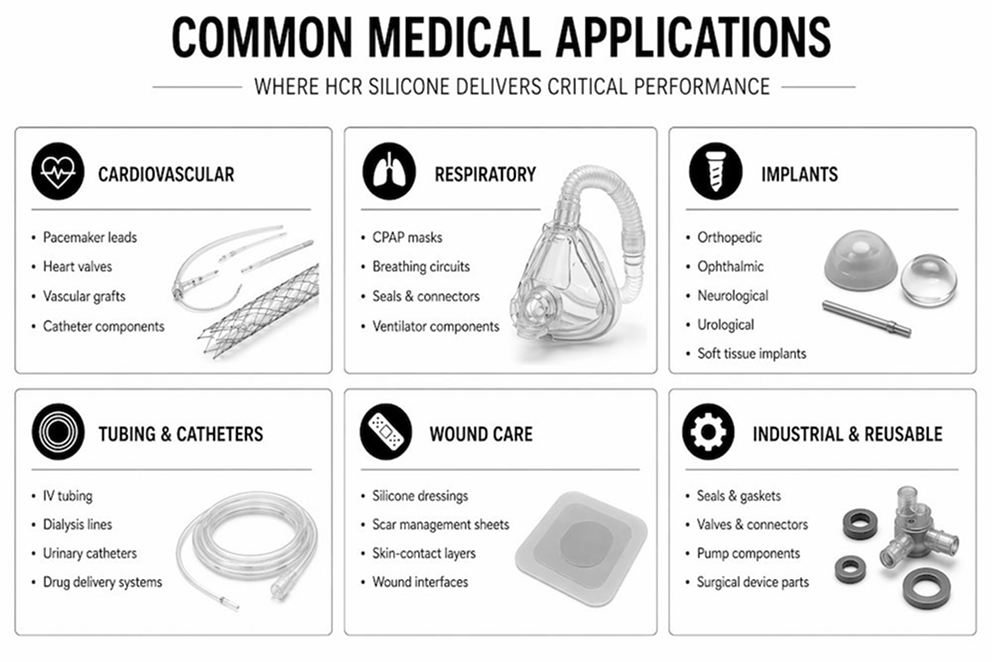
HCR silicone is used across a broad range of medical device categories. Its value is not limited to one specialty.
1. LONG-TERM IMPLANTS
These include:
- Pacemaker and ICD lead insulation
- Breast implant shells
- Neurological shunts
- Ophthalmic components
- Urological implant systems
In these applications, long-term stability is essential. Modern platinum-cured HCR grades have shown very strong long-duration performance, which is why they continue to be trusted in implantable systems.
4. WOUND CARE AND
ㅤ SKIN-CONTACT
ㅤ PRODUCTS
Common uses include:
- Silicone contact layers
- Wound therapy interfaces
- Scar management sheets
- Soft adhesive and cushioning systems
These applications benefit from silicone’s tissue-friendly performance and softness.
2. CATHETERS AND
ㅤ TUBING SYSTEMS
HCR is commonly used in:
- Peristaltic pump tubing
- Central venous catheter components
- Urological tubing systems
- Fluid handling and perfusion lines
Its smooth surface, flex life, and resistance to repeated use make it highly suitable here.
5. REUSABLE DEVICE
ㅤ SEALS AND GASKETS
HCR is also critical in:
- Surgical instrument seals
- Diagnostic device gaskets
- Reusable pump and valve interfaces
- High-cycle sterilizable closure systems
This is where low compression set and sterilization endurance become especially valuable.
3. RESPIRATORY AND
ㅤ ANESTHESIA
ㅤ COMPONENTS
Examples include:
- CPAP and mask cushions
- Breathing circuit seals
- Endotracheal tube cuffs
- Respiratory connectors and flexible interfaces
The softness and resilience of HCR improve both sealing and patient comfort.
STERILIZATION SCIENCE AND MULTI-CYCLE ENDURANCE
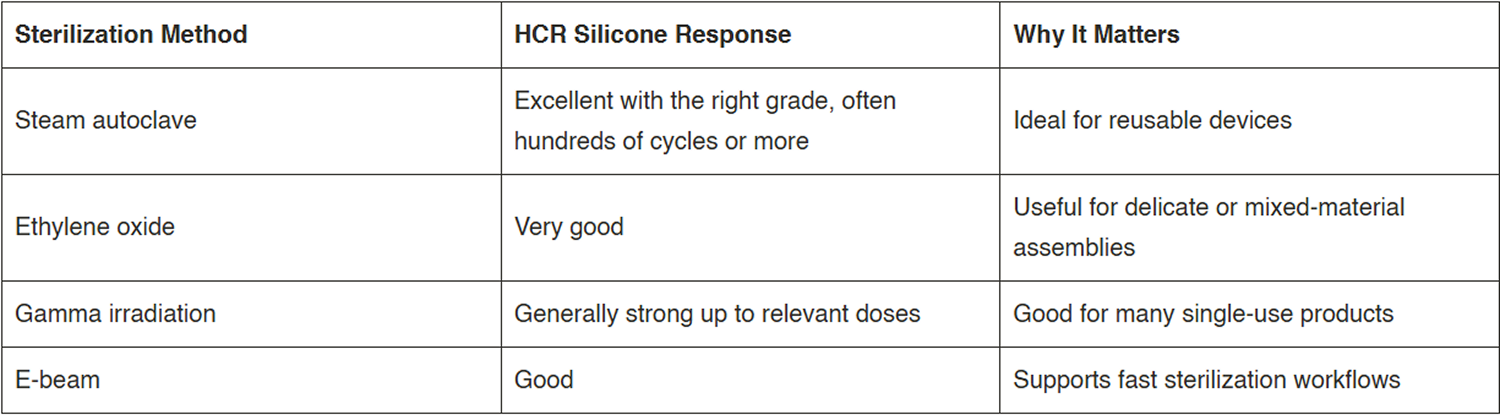
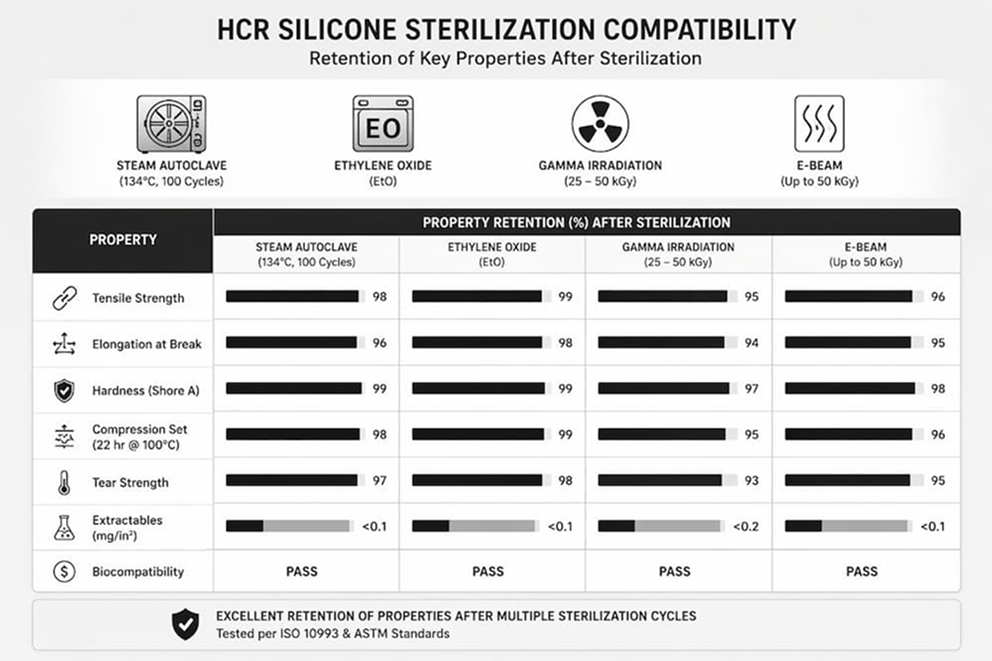
One of the biggest reasons HCR silicone is favored in healthcare is its ability to survive sterilization without losing critical performance. Many alternative elastomers become brittle, warp, harden, or lose seal integrity after repeated exposure to steam or radiation. HCR silicone generally holds up much better.
TYPICAL STERILIZATION COMPATIBILITY
OVERVIEW
VALIDATION CHECKLIST FOR STERILIZATION PROGRAMS
- Validate worst-case device geometry
- Confirm post-sterilization mechanical performance
- Recheck compression set where sealing matters
- Review color, hardness, and elongation drift
- Confirm biocompatibility is still supported after sterilization aging
- Include real-life cycle counts, not just theoretical exposure
MATERIAL SELECTION FRAMEWORK
Not all HCR silicone grades are equal. Choosing between implant-grade, medical-grade, and lower-tier materials has major consequences.
GRADE COMPARISON TABLE

PLATINUM-CURED VS PEROXIDE-CURED
IN MEDICAL USE

MATERIAL SELECTION FRAMEWORK
Not all HCR silicone grades are equal. Choosing between implant-grade, medical-grade, and lower-tier materials has major consequences.
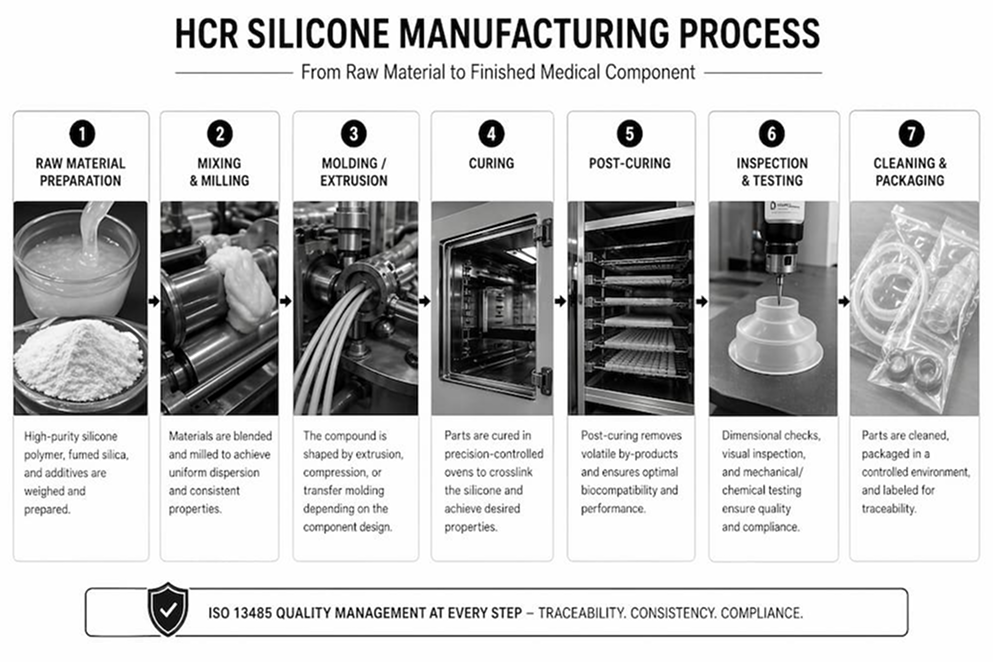
TYPICAL MANUFACTURING FLOW
- Raw gum and silica blending
- Catalyst and inhibitor incorporation
- Filtration and devolatilization
- Compounding and milling
- Extrusion, calendering, molding, or transfer molding
- Heat cure
- Precision post-cure
- Cleaning, inspection, and lot release testing
CRITICAL CONTROLS THAT AFFECT
FINAL PERFORMANCE
- Residual volatile reduction
- Cure consistency
- Cleanroom discipline
- Batch traceability
- Durometer and tear property control
- Compression set validation
- Extractables testing where required
This is why medical HCR manufacturing should be treated as a controlled quality system activity, not just a standard rubber process.
LIFECYCLE COST, ROI, AND TOTAL COST OF
QUALITY
A common mistake in material selection is comparing only raw material cost. In medical manufacturing, that is rarely the most important number. A cheaper elastomer that increases validation burden, recall risk, sterilization failures, or scrap rates can become far more expensive over the product lifecycle.
WHY HCR SILICONE OFTEN WINS ON
TOTAL VALUE
- Lower recall risk from material degradation
- Better seal retention in reusable systems
- Better fit for long-term implant applications
- Stronger documentation support
- Lower adverse event risk in certain uses
- Better endurance in repeated sterilization environments
COST THINKING THAT MATTERS MORE
THAN RAW MATERIAL PRICE
- Qualification cost
- Regulatory delay risk
- Manufacturing yield
- Post-market field failures
- Replacement frequency
- Clinical risk exposure
For many advanced medical devices, the cost of one major field issue can exceed years of raw material savings.
SUSTAINABILITY AND FUTURE TRENDS
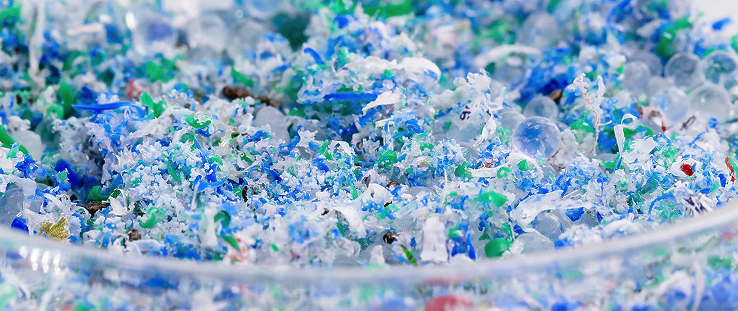
Sustainability is becoming more important even in medical materials. HCR silicone is not a perfect sustainability solution, but its durability can reduce waste in reusable device categories. Longer service life means fewer replacements and lower annual material consumption in appropriate applications. Some suppliers are also exploring post-industrial recycled content and bio-based PDMS routes for future programs.
MAJOR TRENDS SHAPING THE NEXT
DECADE
- Antimicrobial HCR formulations
- Bio-based silicone feedstocks
- Sensor-integrated smart elastomer systems
- Self-healing silicone concepts
- Higher-value implantable combination systems
- Greater global harmonization in regulatory expectations

CONCLUSION
HCR silicone has evolved into one of the most capable and trusted elastomer systems in the medical industry because it solves multiple problems at once. It combines long-term biostability, low extractables, strong fatigue resistance, sterilization durability, and broad regulatory acceptance in a way that few alternatives can match. That makes it highly effective not only in implants, but also in tubing, respiratory systems, wound care interfaces, and reusable equipment seals where performance must remain stable over time.
For manufacturers, selecting HCR silicone is no longer just about choosing a flexible material. It is about choosing a platform that supports quality, compliance, and long-term product reliability. That is where the right partner matters. Flexion brings specialized expertise in engineered elastomer systems, particularly in High Consistency Rubber applications, helping companies bridge the gap between formulation science, manufacturability, and real-world device performance. In a market where compliance pressure and clinical expectations continue to rise, that combination of technical depth and application-focused execution becomes a real advantage.
how we help you decide
We assess your operating fluids, temperature profile, sealing dynamics, and cost targets, then recommend fluorosilicone or alternatives where appropriate. If abrasion, dynamic motion, or strict cost caps are dominant constraints, we document why another elastomer may be better and outline the tradeoffs.
Request a Proposal or Book a Discovery Call to get a tailored materials recommendation.
book a
discovery call