
Silicone elastomers gain their flexibility, temperature resistance and chemical inertness through one essential chemical process: cross-linking. Without cross-linking, polydimethylsiloxane (PDMS) chains can slide past one another and the material cannot retain its shape. Once cross-linked, those same chains form a three-dimensional network that recovers after deformation, withstands heat and resists aggressive fluids.
Understanding silicone cross-linking is essential when tuning material properties for specific applications, from soft medical tubing to aerospace seals designed for temperatures from −60°C to 250°C.
What Is Silicone Cross-Linking?

Cross-linking is the chemical reaction that bonds adjacent PDMS polymer chains together, transforming a liquid or gum-like material into an elastic solid. The number, type and spacing of these bonds, known as cross-link density, directly control the final properties of cured silicone.
Cross-Linking Forms the Cured Silicone Network
Raw silicone consists of long PDMS chains with a silicon-oxygen, Si-O, backbone and methyl side groups. These chains are flexible but not connected. Heat, catalysts or chemical reactions can create covalent bridges between them.
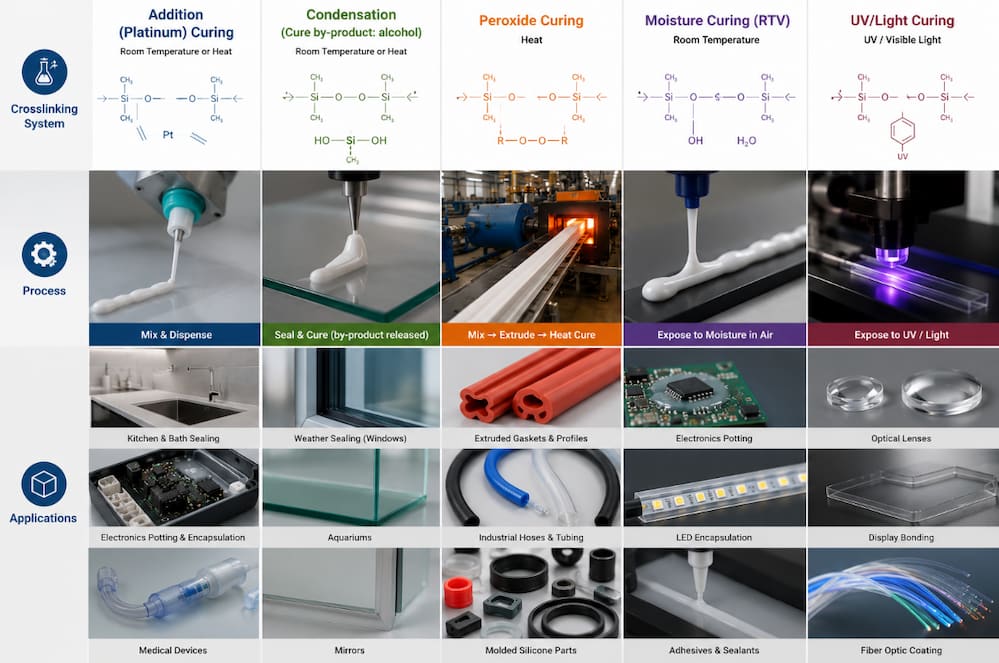
The most common silicone cross-linking systems are:
- Addition cure, platinum-catalysed: Vinyl groups on the polymer react with Si-H groups on a cross-linker. A platinum catalyst drives the reaction.
- Peroxide cure: Organic peroxides decompose under heat to form free radicals that create bond sites between polymer chains.
- Condensation cure, RTV: Hydroxyl-terminated polymers react with multifunctional silane cross-linkers, releasing alcohol or water as by-products.
Each system produces a different network structure, which is why cured properties can vary widely between silicone products.
Why Does Cross-Link Density Matter?
Cross-link density, measured in moles of cross-links per unit volume, is one of the most important variables in final silicone performance. Increasing the cross-linker concentration can shift a material from a soft gel to a rigid rubber.
- Low cross-link density: Soft, flexible, high elongation and lower tensile strength
- High cross-link density: Harder, stiffer, lower elongation, improved recovery and stronger chemical resistance
This is why two parts made from the same base polymer can have very different hardness, tear strength and compression set. The underlying chemistry may be similar, but the cross-link density changes.
How Do Silicone Cross-Linking Methods Compare?
Platinum-Cured Addition Silicone Provides Clean, Precise Curing
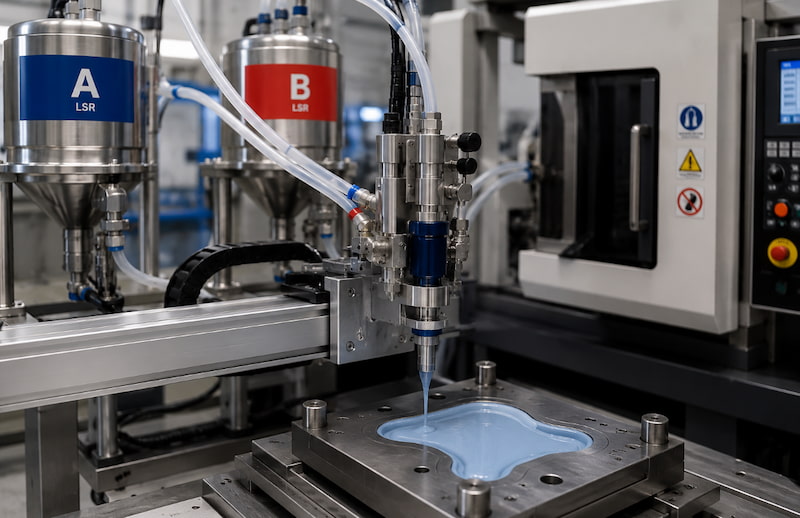
Addition cure is widely used for high-performance silicone. Vinyl-functional siloxane reacts with hydrogen-functional siloxane in the presence of a platinum complex catalyst, typically Karstedt’s catalyst.
Mechanism:
The platinum catalyst activates the Si-H bond, allowing it to add across the vinyl group. This forms stable bridges between polymer chains without producing volatile by-products.
Advantages:
- No by-products, reducing the risk of shrinkage, voids or reversion
- Fast curing at moderate temperatures, typically 120–180°C for HTV and at room temperature for RTV-2
- Excellent physical properties and batch-to-batch consistency
- Clean, odourless processing suitable for medical and food-contact applications
- Broad formulation range, from gels to 80 Shore A
Limitations:
- Catalyst inhibition from sulfur, nitrogen, tin and amine-containing compounds
- Higher platinum cost for high-volume applications
- Limited pot life after Parts A and B are mixed
- Precise mix ratios are needed for a complete cure
Typical applications: Medical devices, aerospace components, food-grade bakeware, baby bottle nipples, high-voltage cable insulation and optical-grade parts.
For precision moulded components, liquid silicone rubber is commonly processed as a two-part, platinum-cured material.
Peroxide Cure Is a Cost-Effective Industrial Option
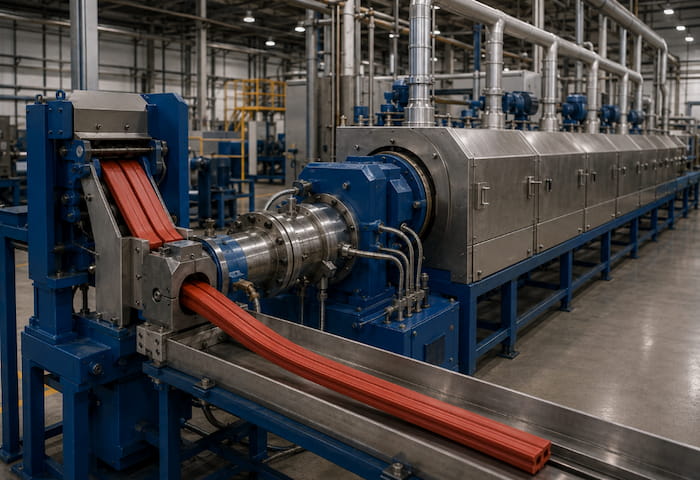
Peroxide curing is an established, lower-cost method still used widely for industrial silicone. Organic peroxides, including 2,4-dichlorobenzoyl peroxide, dicumyl peroxide and 2,5-bis(tert-butylperoxy)-2,5-dimethylhexane, decompose at elevated temperatures to generate free radicals.
Mechanism:
Free radicals abstract hydrogen from methyl groups, creating reactive sites on adjacent polymer chains. These radicals then combine to form covalent carbon-carbon cross-links.
Advantages:
- More tolerant of contamination that could inhibit platinum systems
- Lower raw material cost
- Suitable for thick-section parts where heat transfer is slower
- Different peroxide types support different processing windows
Limitations:
- By-products such as acids, ketones and volatile organic compounds can create odour and require post-curing
- Less precise control over final properties
- Slower cure times
- Post-curing is often required to remove volatiles and stabilise properties
Typical applications: Industrial moulded goods, automotive hoses, extruded profiles, rubber rolls and general-purpose gaskets.
RTV Silicone Cures at Room Temperature
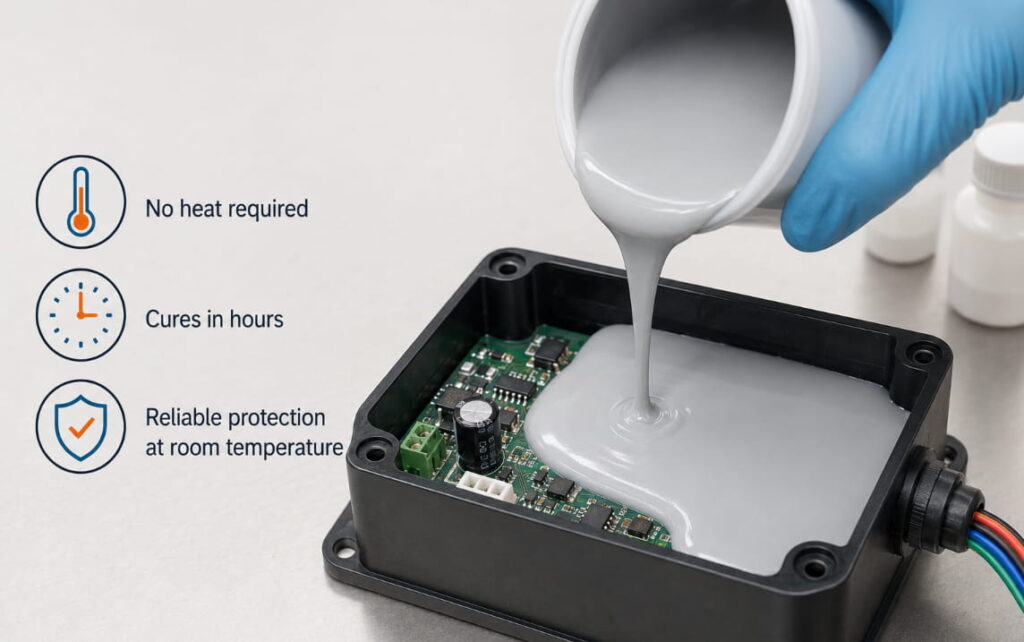
Room-temperature vulcanised, or RTV, silicone cures at ambient temperatures. This makes it useful for field applications, prototyping and processes that cannot accommodate heated moulds or ovens.
Two-component RTV, RTV-2:
- Part A contains the base polymer and fillers
- Part B contains the cross-linker and catalyst
- Mixing triggers cure at room temperature
- Typical pot life ranges from 5 minutes to 4 hours, depending on the formulation
- Cure speed can increase with heat
One-component RTV, RTV-1:
- Pre-packaged single-component system
- Cures through reaction with atmospheric moisture
- Requires suitable humidity for full curing
- Skin formation may occur within 10–30 minutes
- Full cure can take 1–7 days, depending on section thickness
- Cure speed depends heavily on humidity and moisture diffusion
Typical applications: Construction sealants, automotive gasketing, potting and encapsulation, mould-making, prototype parts and aerospace gap fillers.
For more detail on two-part systems, see our guide to 2-part RTV silicone.
How Does Cross-Link Density Affect Mechanical Properties?
The relationship between cross-link density and mechanical performance follows predictable patterns. Understanding these relationships helps formulators target the required material performance.
| Cross-Link Density | Hardness, Shore A | Elongation | Tensile Strength | Compression Set |
| Very low | 10–20 | 800–1200% | 4–6 MPa | 30–50% |
| Low | 25–40 | 500–800% | 6–9 MPa | 20–35% |
| Medium | 40–60 | 300–500% | 8–12 MPa | 15–25% |
| High | 60–80 | 150–300% | 10–14 MPa | 10–20% |
| Very high | 80+ | 50–150% | 12–18 MPa | 5–15% |
Higher cross-link density generally increases hardness and tensile strength while reducing elongation and compression set. This makes it a core property-tuning lever in silicone formulation.
What Else Can Be Used to Tune Silicone Properties?
Filler Loading Improves Strength and Tear Resistance
Fumed silica is the primary reinforcing filler used in silicone. Surface-treated, hydrophobic silica can improve tensile strength and tear resistance while supporting better dispersion. Typical loading ranges from 20–50 parts per hundred rubber, or phr.
Polymer Viscosity Blending Balances Flow and Strength
Combining high-viscosity and low-viscosity base polymers helps compounders balance processability with final performance. High-viscosity bases generally provide stronger mechanical properties, while lower-viscosity bases improve mould flow and can reduce knit-line defects.
Plasticisers and Extender Oils Soften the Material
PDMS fluids and low-molecular-weight polymers can reduce hardness and cost in softer applications, typically around Shore A 10–30. Their use may be limited in medical and food-contact parts because of extractables requirements.
Specialty Additives Expand Performance Options
Pigments, flame retardants, thermal stabilisers such as iron oxide or cerium hydroxide, and conductive fillers such as carbon black or silver can extend silicone performance without changing the basic cross-linking chemistry.
Which Cross-Linking System Is Best for Each Application?
Choosing the right cross-linking system depends on application requirements, processing method and regulatory constraints.
| Application | Recommended System | Key Reason |
| Medical implants and food contact | Platinum addition | No by-products and cleaner cure behaviour |
| Aerospace seals and high-temperature parts | Platinum addition | Thermal stability and low compression set |
| Cost-sensitive industrial moulded goods | Peroxide | Lower cost and inhibitor tolerance |
| Continuous extrusion profiles | Peroxide or platinum | Selection depends on speed and section thickness |
| Field-applied sealants | RTV-1 or RTV-2 | No heated cure required |
| Potting and encapsulation | RTV-2 condensation | Low exotherm, long pot life and deep-section curing |
| Optical or medical-grade parts | Platinum addition | Clarity, low extractables and no odour |
| High-voltage insulation | Peroxide or platinum | Choice depends on cleanliness and cost requirements |
For continuous tubes, strips, gaskets and complex profiles, silicone extrusion may be the most suitable manufacturing route. For precision, high-volume components, silicone injection moulding can offer a controlled route from mixed material to cured parts.
How Can You Control Silicone Cross-Linking During Production?
Accurate Mixing and Degassing Prevent Inconsistent Curing
Uniform cross-linker distribution is essential. Localised concentration differences can create hard and soft areas within finished parts.
- Weigh components precisely. Mix ratio errors of more than 2–3% can prevent complete cure or create inconsistent properties.
- Mix thoroughly. High-viscosity compounds may require a sigma-blade or planetary mixer, while low-viscosity RTV systems can use static mixing.
- Degas under vacuum. Vacuum degassing removes entrapped air that could otherwise form voids.
- Hold under vacuum until foaming stops. Re-mixing can introduce additional bubbles.
Cure Temperature Must Be Controlled in Thick Sections
Exothermic heat generated during cross-linking can overheat thick sections, causing property gradients or thermal degradation.
- For sections over 10 mm, use a stepped cure profile with lower initial temperatures.
- Monitor actual part temperature, not only the oven setpoint, as large parts can run hotter than the setpoint.
- For platinum systems, avoid excessively high initial cure temperatures that may affect catalyst performance.
- For peroxide systems, post-cure at 150–200°C for 2–4 hours when required to remove by-products.
Quality Testing Confirms Cure Consistency
Production parts should be tested for:
- Shore A hardness according to ASTM D2240
- Tensile strength and elongation according to ASTM D412
- Compression set according to ASTM D395
- Specific gravity according to ASTM D792
- Differential scanning calorimetry, DSC, where residual cure needs to be assessed in thick parts
What Are the Most Common Silicone Cross-Linking Defects?
Tackiness or Surface Stickiness
Cause: Platinum catalyst inhibition from sulfur, amine or tin contamination, or insufficient moisture for RTV-1 systems.
Solution: Confirm that mould releases, gloves and substrates are silicone-compatible. For RTV-1, ensure sufficient humidity and allow adequate time for moisture to diffuse through the section.
Blisters or Internal Voids
Cause: Entrapped air expanding during exothermic cure, or moisture reacting with hydride groups in platinum systems.
Solution: Improve degassing, dry fillers before use, slow the cure ramp rate to reduce the exotherm peak and verify mould venting.
Inconsistent Hardness Across a Production Run
Cause: Mix ratio drift, cross-linker settling during storage or cure temperature variation.
Solution: Calibrate dispensing equipment, agitate drums before use and verify that oven temperature uniformity remains within ±5°C.
Parts That Cure Too Slowly
Cause: Low ambient or mould temperature, aged catalyst or incorrect peroxide selection for the process temperature.
Solution: Increase mould temperature, verify catalyst storage conditions and consider a peroxide grade suited to the operating temperature.
Brittle or Over-Cured Parts
Cause: Excessive post-cure time, excessive cross-linker concentration or thermal degradation of polymer chains.
Solution: Reduce post-cure time or temperature, verify cross-linker concentration against the formula and review the process for excessive heat exposure.
How Is a Custom Silicone Formulation Developed?
For applications that do not fit standard catalogue grades, a custom cross-linking system can open a wider range of silicone properties. This may involve adjusting cross-linker type, concentration and cure profile to meet defined requirements, whether the aim is a 5 Shore A gel for cushioning or an 85 Shore A compound for industrial rollers.
A typical development process includes:
- Property specification: Hardness, tensile strength, elongation, compression set, fluid resistance, temperature range and regulatory requirements
- Base polymer selection: PDMS viscosity, vinyl content and copolymer choice, including phenyl, fluoro or standard dimethyl systems
- Cross-linking system selection: Platinum addition, peroxide or condensation cure, including cross-linker type and concentration
- Filler and additive package: Silica grade and loading, pigments and stabilisers
- Process trials: Laboratory samples for property verification, followed by pilot-scale production
- Validation testing: Application-specific testing, such as extraction, ageing, fluid immersion and temperature cycling
Conclusion
At Flexion, we help customers translate application requirements into practical silicone material and manufacturing choices, from cure-system selection to hardness, flow, durability and compliance planning. Where a component must withstand fuels, oils, solvents or harsh thermal cycling, Flurosilicone may offer the chemical resistance and temperature stability required for long-term performance.
Frequently Asked Questions
What Is the Difference Between Addition Cure and Peroxide Cure Silicone?
Addition-cure silicone uses a platinum catalyst to react vinyl groups with Si-H groups, producing no by-products and creating cleaner finished parts. Peroxide-cure silicone uses free radicals generated through peroxide decomposition, producing by-products that may require post-curing. Addition cure is commonly preferred for medical, food-contact and high-purity applications, while peroxide cure is often suitable for cost-sensitive industrial uses and applications where contamination resistance is important.
How Does Cross-Link Density Affect Silicone Hardness?
Higher cross-link density produces harder silicone with lower elongation. Soft silicones, typically Shore A 10–30, have lower cross-link density, while hard silicones, typically Shore A 70–90, have higher cross-link density. In the mid-range, the relationship is sufficiently predictable to support targeted hardness adjustment through cross-linker concentration.
Can Silicone Be Re-Cross-Linked or Recycled After Curing?
Fully cross-linked silicone is a thermoset, so it cannot be remelted and reprocessed like a thermoplastic. However, silicone waste can be ground and reused as filler in new compounds, or chemically depolymerised into cyclic siloxanes for repolymerisation. Some RTV systems can also support local bond repair with fresh silicone and a compatible primer.
What Causes Silicone to Remain Tacky After the Recommended Cure Time?
Tackiness often indicates cure inhibition in platinum systems, usually from sulfur, amine or tin contamination. It can also result from insufficient moisture diffusion in RTV-1 systems used in dry conditions or thick sections. Verify that contact materials are silicone-compatible and that RTV-1 systems have suitable humidity exposure.
How Do You Select the Right Cross-Linking System for an Application?
Consider regulatory requirements, operating temperature range, processing method, property targets and cost constraints. Medical and aerospace applications often benefit from platinum addition systems, while peroxide cure can be sufficient and more economical for many industrial parts.
What Is the Difference Between HTV, LSR and RTV Silicone?
HTV, or high-temperature vulcanisation silicone, is solid silicone rubber cured with peroxide or platinum at elevated temperatures, typically 120–200°C. LSR, or liquid silicone rubber, is generally a platinum-cured liquid system designed for injection moulding. RTV, or room-temperature vulcanisation silicone, cures at ambient temperature and is available in one-component moisture-cure and two-component systems. All rely on cross-linking chemistry, but differ in physical form and processing conditions.