
HCR SILICONE FOR TEXTILE INDUSTRY 2026
HCR SILICONE FOR TEXTILE INDUSTRY:
COMPLETE COATING TECHOLOGY
GUIDE 2026
High Consistency Rubber (HCR) silicone has emerged as a transformative material in the textile and apparel industry, offering unmatched durability, weather resistance, and protective capabilities for fabrics and garments. Unlike conventional coatings that compromise breathability or fade under UV exposure, HCR silicone creates a protective barrier that maintains fabric integrity while enhancing performance across demanding applications such as from outdoor apparel to industrial fabric protection.
This comprehensive guide explores how HCR silicone coating technology works, its specific applications in textile manufacturing, and why leading manufacturers are adopting this material for next-generation fabric protection solutions.

WHAT IS HCR SILICONE AND HOW DOES IT
WORK FOR TEXTILES?
High Consistency Rubber (HCR) silicone is a solid, high-viscosity elastomer that requires heat and pressure for processing. When applied as a textile coating, HCR silicone forms a continuous, flexible membrane that bonds with fabric fibers at the molecular level. This creates a protective layer that repels water, resists UV degradation, and maintains fabric breathability which are properties that conventional polyurethane (PU) coatings struggle to achieve simultaneously.
The coating process typically involves calendering or knife-coating techniques, where HCR silicone is spread evenly across fabric surfaces and then cured at elevated temperatures. This thermal curing creates cross-linked polymer chains that provide exceptional durability while preserving the fabric’s natural hand feel and drape characteristics.
KEY PROPERTIES OF HCR SILICONE FOR
TEXTILE APPLICATIONS

APPLICATIONS OF HCR SILICONE IN TEXTILE
AND APPAREL INDUSTRY

WATERPROOF OUTDOOR APPAREL AND
ACTIVEWEAR
The outdoor apparel market demands materials that perform reliably across varying weather conditions. HCR silicone coatings provide a hydrophobic barrier that repels water while allowing moisture vapour to escape, a critical combination for maintaining comfort during physical activity. Rain jackets, ski pants, and hiking apparel treated with HCR silicone maintain their waterproof properties even after repeated washing and extended UV exposure.
Leading outdoor brands have adopted HCR silicone coatings for high-performance gear because the material maintains flexibility across extreme temperature ranges. Unlike conventional coatings that crack in freezing conditions, HCR silicone retains elasticity at temperatures as low as -60°C, ensuring protection in alpine and arctic environments.

INDUSTRIAL FABRIC PROTECTION AND SEFETY
EQUIPMENT
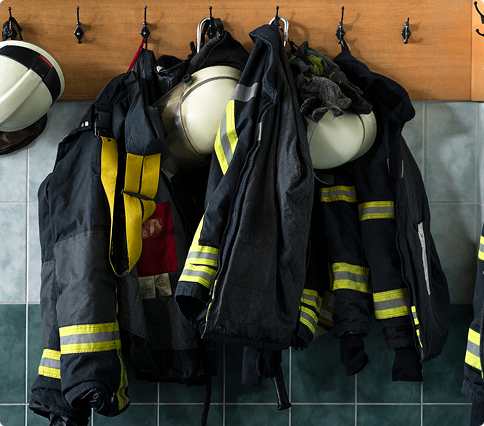
Industrial textiles face harsh conditions including chemical exposure, extreme temperatures, and mechanical abrasion. HCR silicone coatings provide the protective layer necessary for safety equipment, protective suits, and industrial fabric barriers. The material’s inherent flame retardancy makes it suitable for protective clothing in welding, firefighting, and petrochemical industries.
Chemical resistance is another critical advantage. HCR silicone withstands exposure to oils, solvents, acids, and bases that would degrade conventional textile coatings. This property extends the service life of protective apparel while maintaining safety standards in hazardous work environments.
ELASTIC COMPONENTS AND STRETCH FABRICS
HCR silicone’s elasticity makes it ideal for stretch panels, elastic bands, and recovery components in athletic wear and intimate apparel. The material maintains consistent stretch and recovery properties through thousands of cycles, outperforming natural rubber and synthetic elastomers that degrade with repeated use.
Sportswear manufacturers utilize HCR silicone in compression garments, waistbands, and support panels where long-term elasticity is essential. The material’s ability to return to its original shape after deformation ensures garments maintain their fit and function over extended wear periods.


UV-RESISTANT OUTDOOR FABRICS AND AWNINGS
Textiles exposed to sunlight suffer from photodegradation, resulting in color fading and fiber weakening. HCR silicone coatings provide UV-stable protection that prevents color degradation and extends fabric life for outdoor applications including awnings, marine upholstery, and patio furniture covers.
The UV resistance of HCR silicone is particularly valuable for marine applications where fabrics face combined exposure to saltwater, sunlight, and temperature fluctuations. Boat covers, sails, and marine upholstery treated with HCR silicone maintain appearance and performance properties significantly longer than conventionally coated alternatives.
HCR SILICONE VS. ALTERNATIVE TEXTILE
COATING TECHNOLOGIES
HCR SILICONE VS. POLYURETHANE
(PU) COATINGS
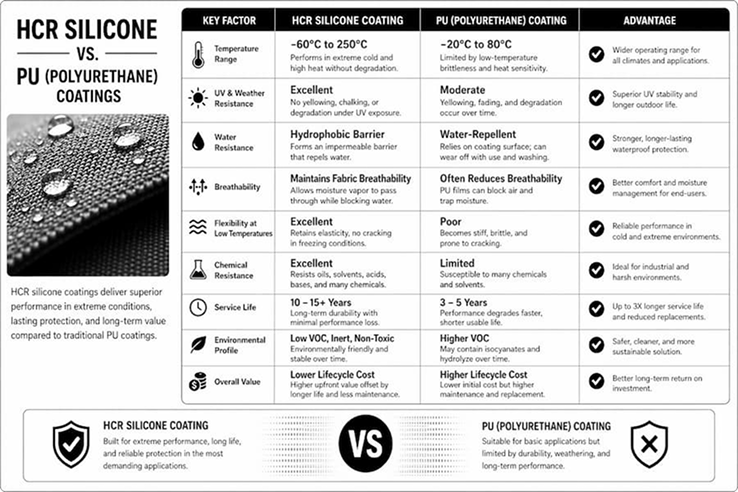
Polyurethane has been the dominant textile coating material for decades, but HCR silicone offers distinct advantages for demanding applications:
- Durability and Longevity: HCR silicone coatings maintain performance properties for 10-15 years under normal use conditions, compared to 3-5 years for PU coatings. This extended service life reduces replacement costs and environmental impact from discarded textiles.
- Temperature Performance: While PU coatings become brittle in cold conditions and soften in high heat, HCR silicone maintains consistent properties across the full temperature spectrum from -60°C to 250°C.
- Environmental Resistance: HCR silicone provides superior resistance to UV radiation, ozone, and oxidation. PU coatings yellow and degrade under UV exposure, requiring replacement of outdoor textiles much sooner.
- Breathability: HCR silicone coatings can be formulated to maintain fabric breathability while providing waterproofing. PU coatings often create a vapor barrier that traps moisture against the skin.

HCR SILICONE VS. FLUOROPOLYMER
COATINGS
Fluoropolymer coatings (such as PTFE) offer excellent chemical resistance but come with significant drawbacks:
- Cost: Fluoropolymer coatings typically cost 3-5x more than HCR silicone alternatives, making them economically unfeasible for many applications.
- Flexibility: HCR silicone maintains better flexibility and abrasion resistance than fluoropolymers, which can crack under mechanical stress.
- Processing: HCR silicone requires less specialized equipment for application, reducing manufacturing complexity and costs.
HCR SILICONE VS. ARYLIC COATINGS
Acrylic coatings provide basic water resistance at low cost but lack the performance characteristics of HCR silicone:
- Weather Resistance: Acrylic coatings degrade rapidly under UV exposure and temperature cycling. HCR silicone maintains properties for years in the same conditions.
- Chemical Resistance: Acrylics offer limited resistance to oils, solvents, and industrial chemicals. HCR silicone provides broad-spectrum chemical protection.
- Flexibility: Acrylic coatings become stiff and crack over time. HCR silicone retains flexibility throughout its service life.

MANUFACTURING AND APPLICATION
PROCESSES
CALENDER COATING METHOD
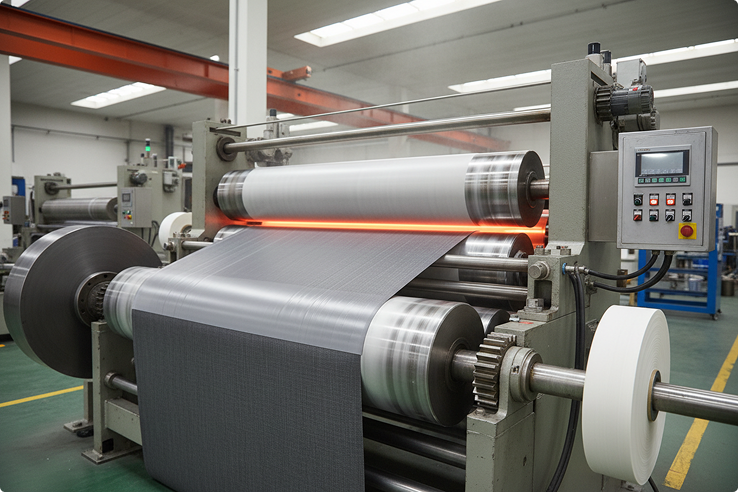
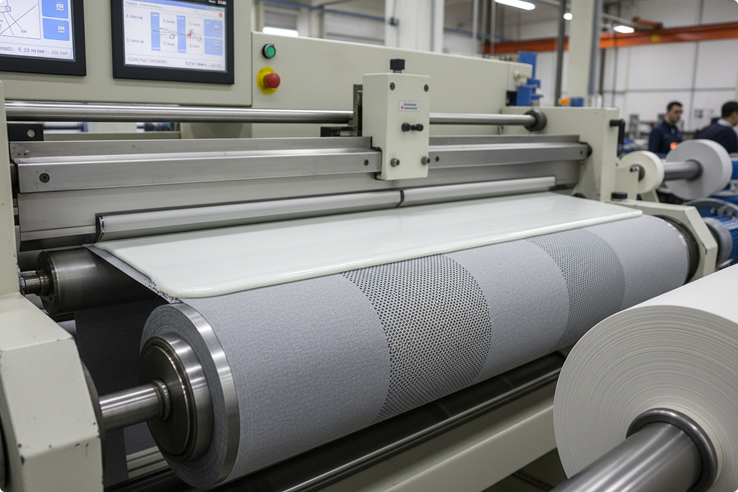
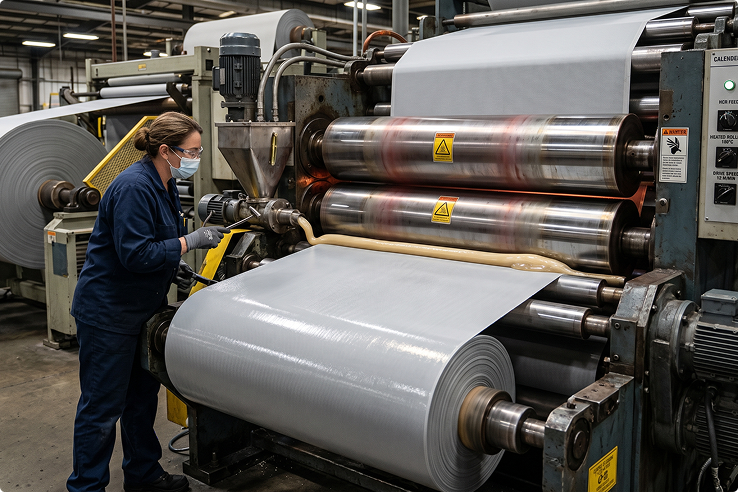
The calender coating process applies HCR silicone to fabric using heated rollers that press the material into the textile surface. This method provides consistent coating thickness and excellent adhesion for high-volume production runs. Calendering is particularly effective for industrial fabrics and technical textiles requiring precise coating weights.
KNIFE-OVER-ROLL COATING
Knife coating spreads HCR silicone across fabric surfaces using a precision blade that meters the coating thickness. This technique allows for variable coating weights across different fabric zones and is commonly used for apparel applications where breathability varies by panel.Knife coating spreads HCR silicone across fabric surfaces using a precision blade that meters the coating thickness. This technique allows for variable coating weights across different fabric zones and is commonly used for apparel applications where breathability varies by panel.
TRANSFER COATING
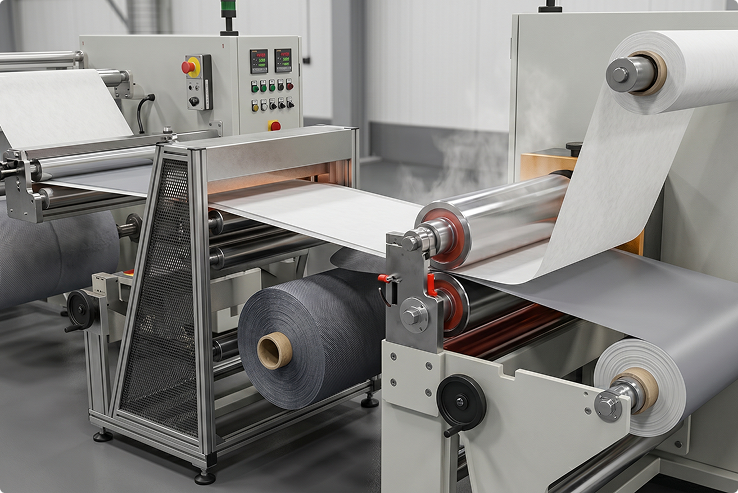
Transfer coating applies HCR silicone to a release paper first, then transfers the cured coating to fabric through heat and pressure. This method produces smooth, consistent surfaces ideal for fashion applications and technical textiles requiring precise surface characteristics.
CURING AND CROSS-LINKING
After application, HCR silicone coatings undergo thermal curing at 150-200°C to activate cross-linking agents. This curing process creates three-dimensional polymer networks that provide elasticity, durability, and chemical resistance. Proper curing is essential for achieving optimal performance properties.
QUALITY STANDARDS AND COMPLIANCE
OEKO-TEX
CERTIFICATION
HCR silicone coatings for apparel applications must meet OEKO-TEX Standard 100 requirements, ensuring they are free from harmful substances and safe for direct skin contact. Leading manufacturers provide certification documentation for textile-grade HCR silicone products.
FLAME RESISTANCE
STANDARDS
Industrial HCR silicone coatings meet NFPA 701, ASTM D6413, and EN ISO 14116 flame resistance standards. These certifications are essential for protective apparel used in hazardous environments.
FOOD-CONTACT
COMPLIANCE
HCR silicone coatings intended for food-processing textiles comply with FDA 21 CFR 177.2600 and EU 10/2011 regulations, ensuring safety for applications involving food contact.
SUSTAINABILITY AND ENVIRONMENTAL
IMPACT
RECYCLABILITY AND CIRCULAR ECONOMY
HCR silicone coatings intended for food-processing textiles comply with FDA 21 CFR 177.2600 and EU 10/2011 regulations, ensuring safety for applications involving food contact.
REDUCED ENVIRONMENTAL FOOTPRINT
The extended service life of HCR silicone-coated textiles reduces replacement frequency and associated environmental costs. A textile lasting 15 years versus 5 years represents a 66% reduction in manufacturing-related carbon emissions over the product lifecycle.
LOW-VOC FORMULATIONS
Modern HCR silicone coatings utilize platinum-cured systems that emit minimal volatile organic compounds (VOCs) during processing. This reduces air quality impacts in manufacturing facilities and meets stringent environmental regulations.

COST ANALYSIS AND ROI
TNITIAL INVESTMENT VS. LIFECYCLE COST
While HCR silicone coatings typically cost 20-40% more than PU alternatives upfront, the total cost of ownership is significantly lower due to extended service life. A comparative analysis for industrial protective apparel:

PRODUCTION EFFICIENCY
HCR silicone coatings can be applied using existing textile coating equipment with minimal modification. Processing speeds are comparable to PU coatings, and the material’s stability reduces waste from coating defects or premature curing.
FUTURE TRENDS IN HCR SILICONE TEXTILE
TECHNOLOGY
SMART TEXTILE
INTEGRATION
Researchers are developing HCR silicone coatings with embedded sensors and conductive properties for smart textile applications. These innovations enable fabrics that monitor vital signs, detect environmental hazards, or adjust thermal properties in response to conditions.
BIO-BASED SILICONE
FORMULATIONS
Sustainable chemistry advances are producing HCR silicone formulations from bio-based feedstocks rather than petroleum derivatives. These materials maintain performance properties while reducing reliance on fossil fuels and improving lifecycle sustainability metrics.
NANOCOMPOSITE
ENHANCEMENTS
Incorporating nanoparticles into HCR silicone matrices creates nanocomposite coatings with enhanced properties including antimicrobial activity, self-cleaning surfaces, and improved mechanical strength. These advanced formulations address specific application requirements in medical, military, and consumer textiles.

CONCLUSION
HCR silicone continues to redefine what high-performance textiles can achieve, delivering durability, flexibility, and long-term reliability across demanding applications. From outdoor apparel to industrial safety fabrics, manufacturers are increasingly turning to High Consistency Rubber solutions to improve product lifespan and performance while reducing lifecycle costs.
At Flexion, we specialise in advanced silicone material solutions tailored for real-world manufacturing challenges. As a partner focused on precision, customization, and scalability, Flexion supports brands and manufacturers looking to integrate High Consistency Rubber into their products, whether for textile coatings, industrial components, or specialized applications. Our approach is built around making complex silicone solutions practical, efficient, and production-ready.
how we help you decide
We assess your operating fluids, temperature profile, sealing dynamics, and cost targets, then recommend fluorosilicone or alternatives where appropriate. If abrasion, dynamic motion, or strict cost caps are dominant constraints, we document why another elastomer may be better and outline the tradeoffs.
Request a Proposal or Book a Discovery Call to get a tailored materials recommendation.
book a
discovery call