
HCR SILICONE FOR CONSUMER GOODS 2026
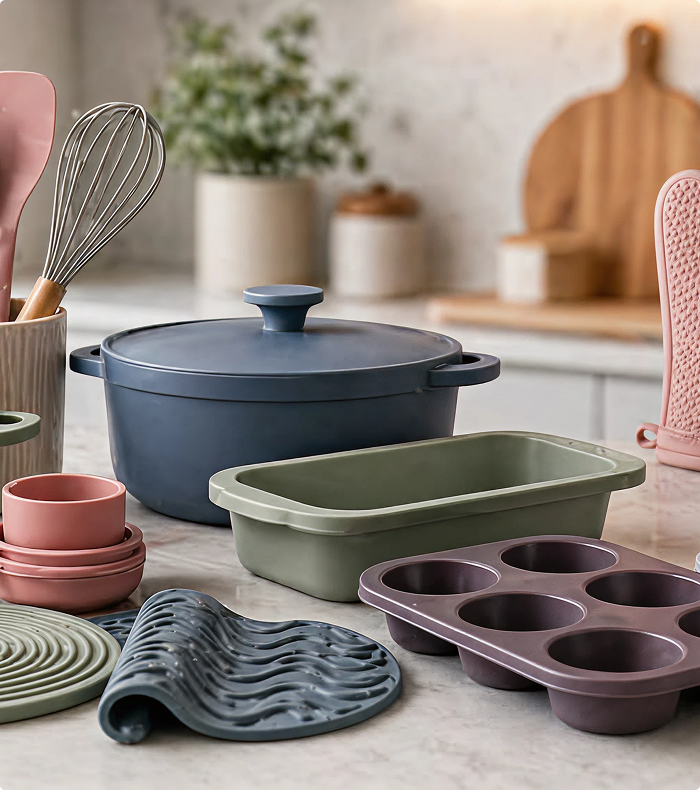
High consistency rubber, commonly called HCR silicone, is a high-quality silicone rubber that has become a favorite material for makers of kitchen tools, bakeware, baby products, personal care items, and many household goods. It starts as a thick, putty-like substance that manufacturers shape using compression molding. Once cured, it turns into a durable, flexible, heat-resistant product that feels soft in your hand and performs reliably for years.
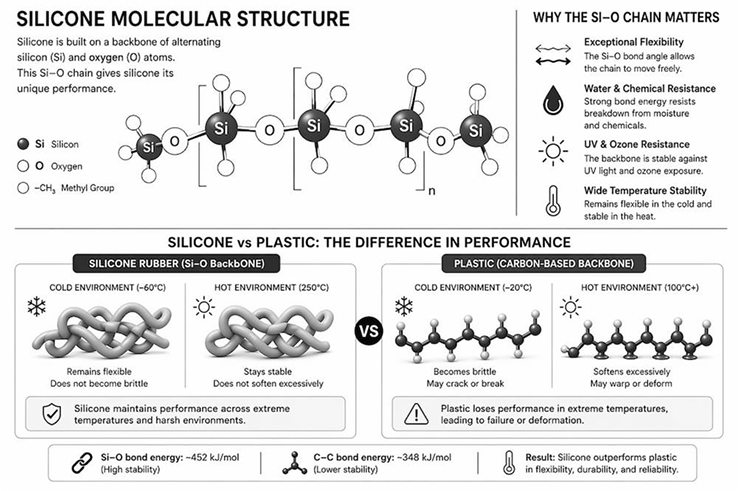
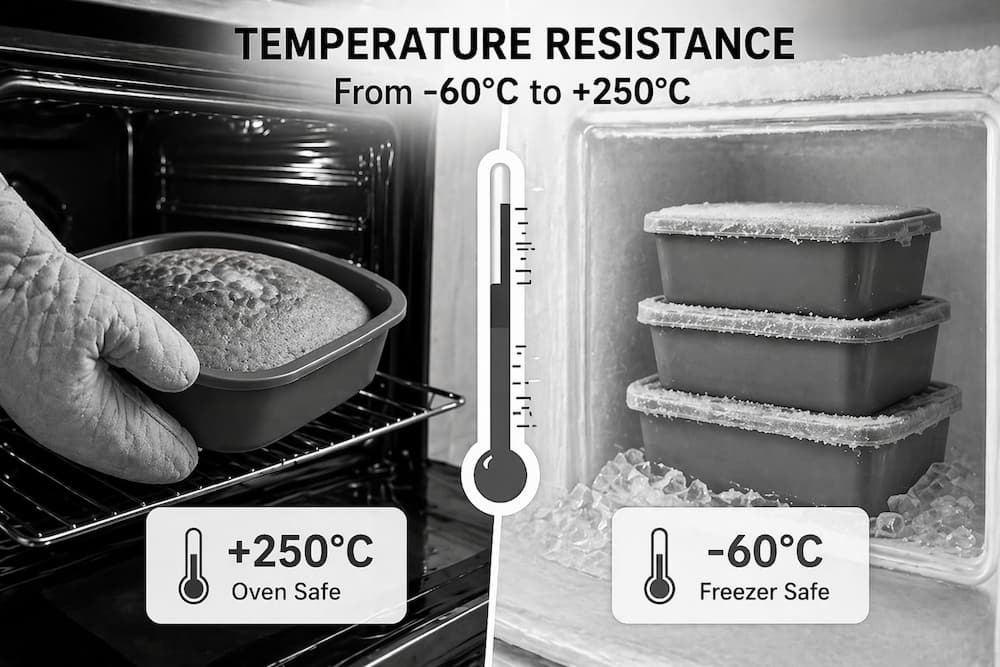
What makes HCR silicone special in 2026 is how well it solves everyday problems. Plastic utensils can melt, leach chemicals, or break quickly. Wooden tools can harbor bacteria. Ordinary rubber may crack under heat or age poorly. HCR silicone avoids these issues. It handles temperatures from -60°C in the freezer all the way up to 250°C in the oven. It does not release harmful substances when it touches food or skin. It lasts 10 years or longer in normal home use. These qualities explain why demand keeps growing as families, home cooks, and parents look for safer, longer-lasting products that reduce waste.

WHAT EXACTLY IS
HCR SILICONE?
HCR stands for High Consistency Rubber. Before curing, it has a thick, putty-like consistency that sets it apart from liquid silicones. It is made by blending a silicone polymer base with reinforcing fillers, pigments, and a curing catalyst.
Its structure is built on a silicon-oxygen (Si–O) backbone, which gives HCR silicone strong flexibility, wide temperature resistance, and stability against water, UV, ozone, and many chemicals. Unlike plastic, it stays flexible in cold conditions and remains stable under heat within its working range.

KEY PROPERTIES
- Temperature resistance from -60°C to +250°C
- Strong flexibility and tear resistance
- Non-stick surface for easier food release
- Soft, skin-friendly feel
- Resistance to stains and odors when cleaned properly
- Long-lasting color throughout the material
Because of these qualities, HCR silicone has grown from an industrial material into a popular choice for kitchenware, baby products, and household goods, especially where safety, durability, and comfort matter most.
HCR SILICONE VS LSR: A PRACTICAL SIDE-BY-
SIDE COMPARISON
Many people confuse HCR with LSR (Liquid Silicone Rubber). Both are high-performance silicones, but they are processed differently and suit different needs. Understanding the differences helps when choosing products or working with manufacturers.
Here is a clear comparison table:
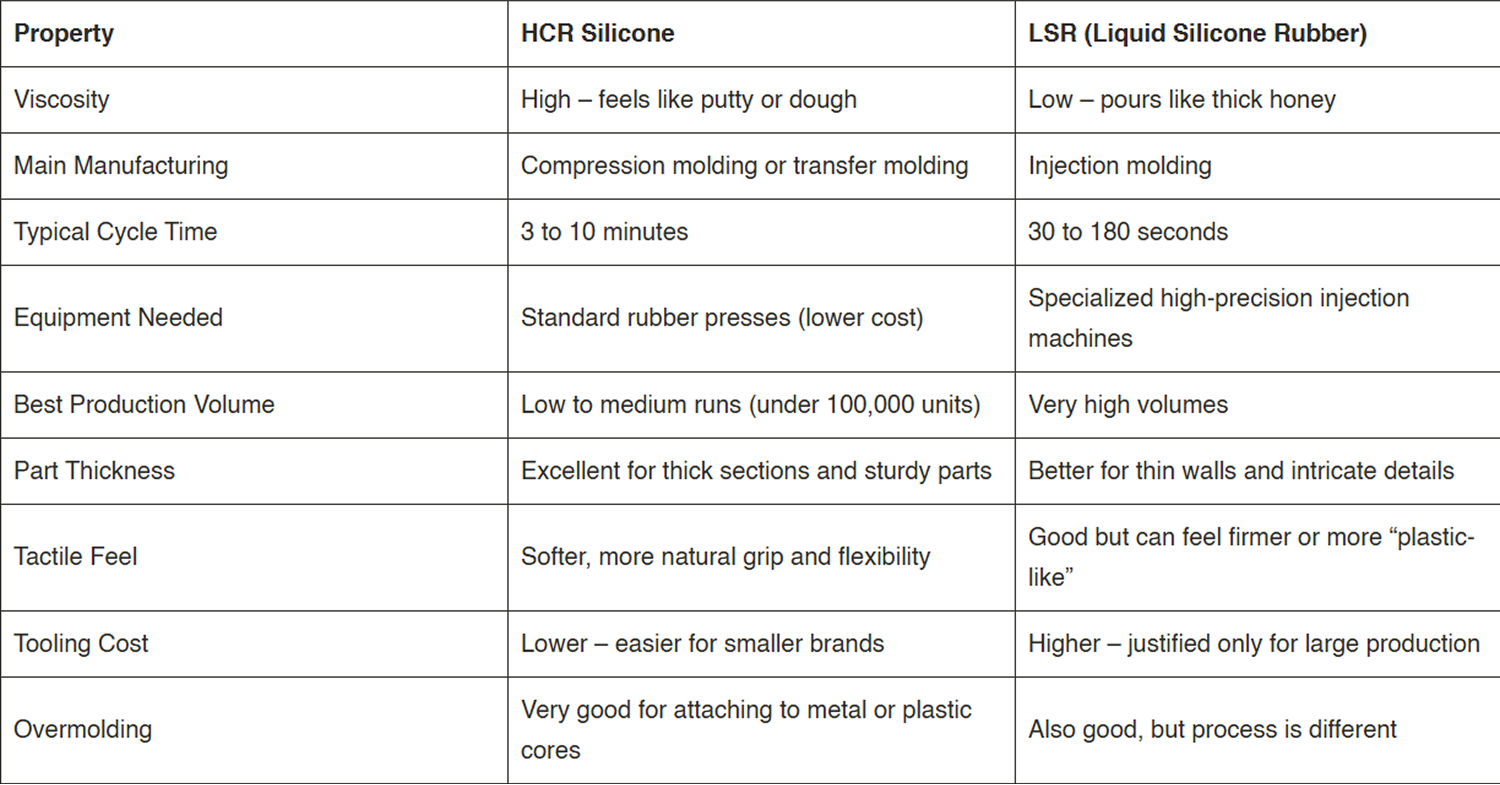
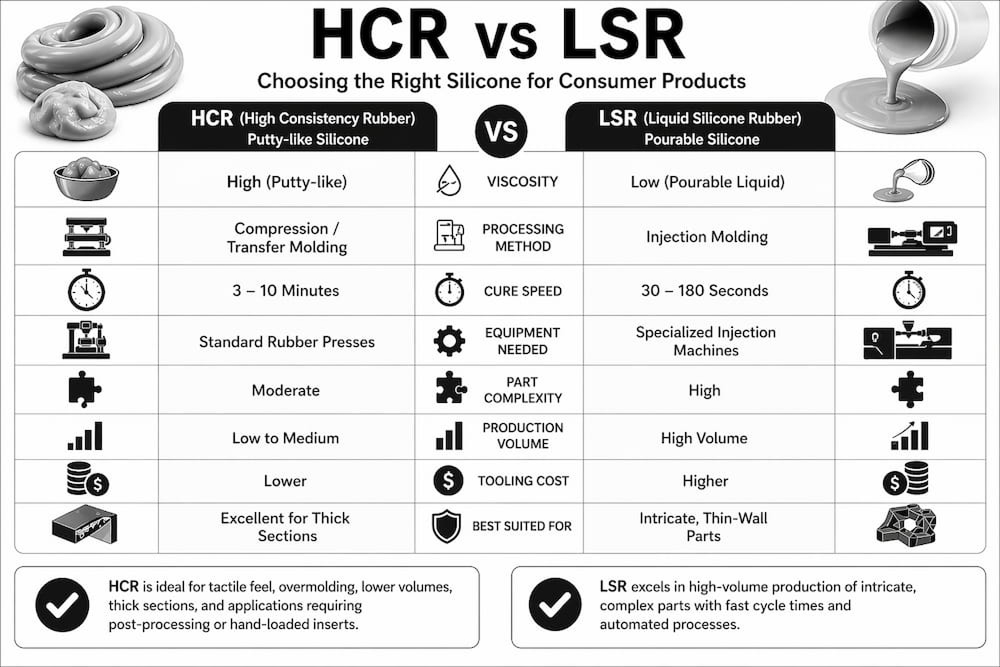
HCR silicone wins for products where the “feel” in your hand matters a lot, such as kitchen spatulas, spoon handles, or baby bottle nipples. The putty consistency allows workers to load molds by hand, insert metal cores easily, and create items with varying thicknesses. LSR is faster for massive production runs of tiny or highly detailed parts, but the tooling is more expensive.
When a brand wants a premium tactile experience or is testing a new kitchen tool line with moderate sales expectations, they usually choose HCR. This is why you see it so often in high-quality spatulas, collapsible steamers, and durable bakeware sold in specialty stores and online.
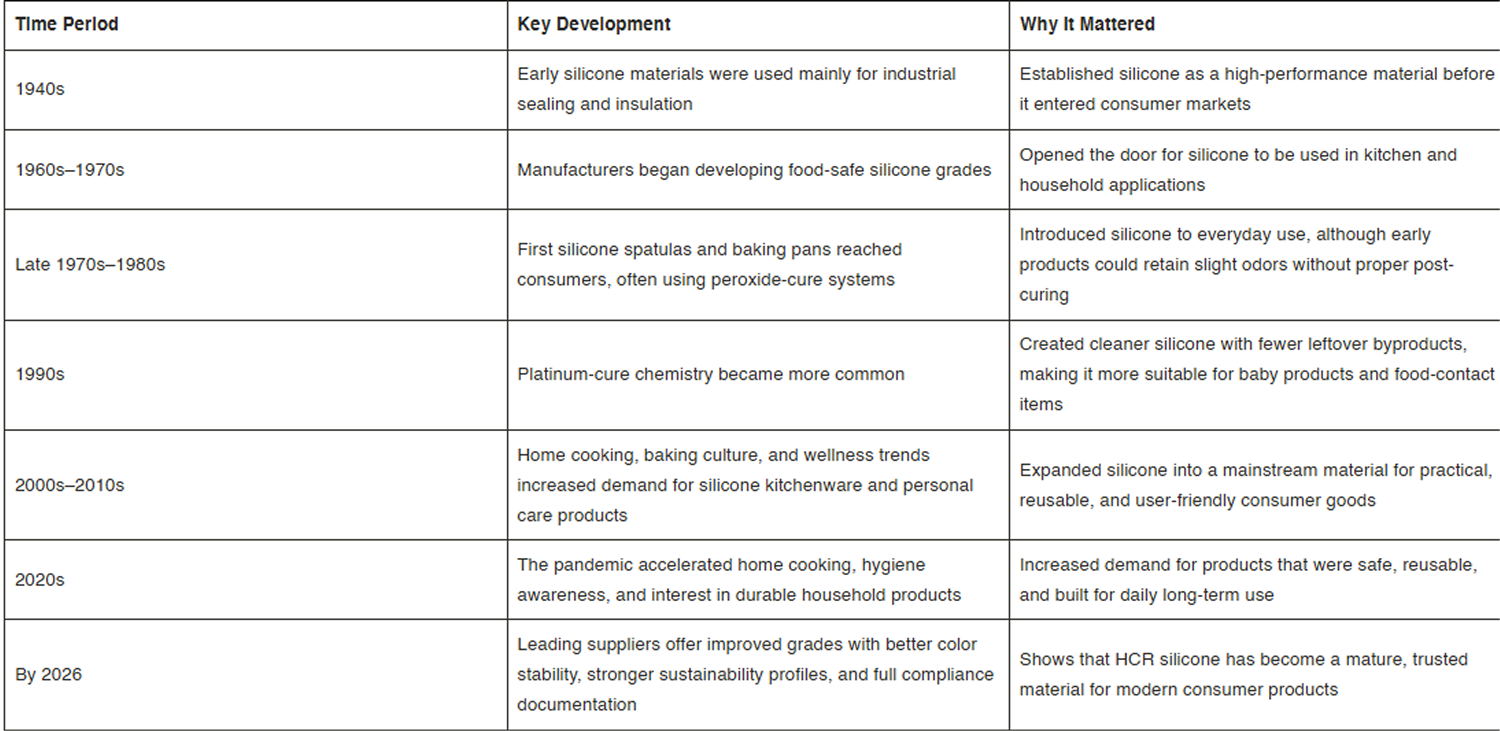
HOW HCR SILICONE DEVELOPED
OVER THE DECADES

HOW HCR SILICONE IS MADE: A
SIMPLE STEP-BY-STEP PROCESS
- Compounding
Raw silicone gum is mixed with fumed silica for strength, pigments for color, and a curing catalyst. This creates a uniform uncured HCR compound that is ready for processing. - Pre-forming
The material is cut or extruded into precise pre-forms that match the mold cavities. This helps improve consistency and material control during molding. - Compression molding
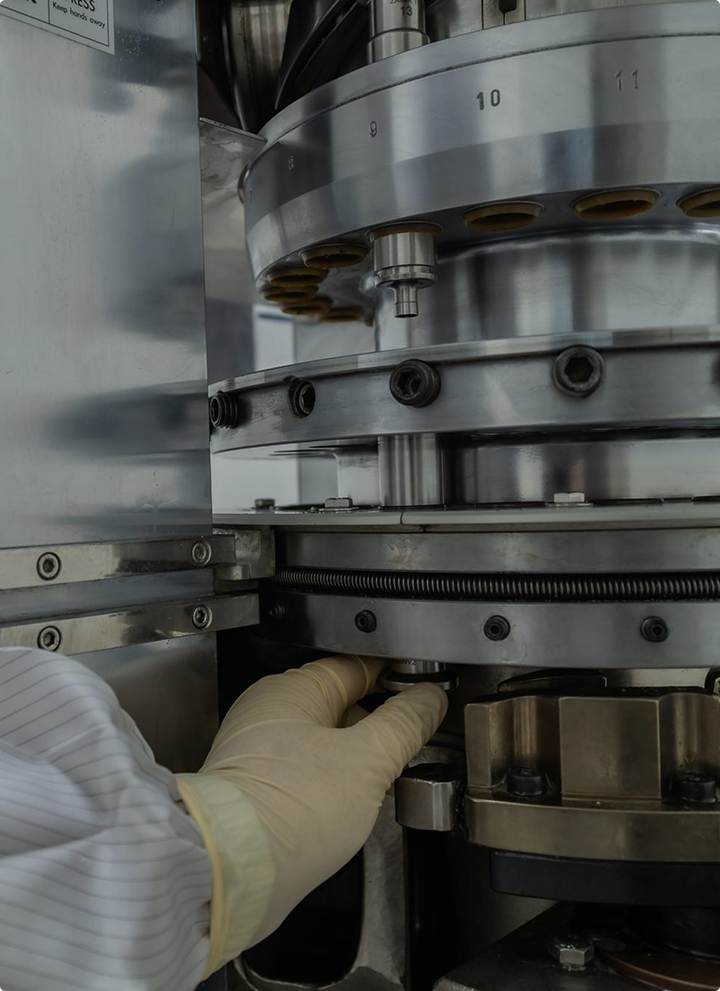
Workers place the pre-forms into steel molds, then apply heat and pressure at around 150–180°C. This allows the silicone to flow into the mold details and begin cross-linking. - Curing
The silicone remains in the mold for around 3 to 10 minutes depending on part thickness. At this stage, the material transforms into a durable and flexible finished shape. - Trimming and post-curing
After molding, parts are removed and excess flash is trimmed away. Many products are then post-cured in ovens to stabilize performance and remove any trace volatiles. - Finishing and overmolding
Premium products may be hand-finished for smoother edges. In hybrid products, the silicone can also be overmolded directly onto stainless steel or nylon cores for a strong, permanent bond. - Quality control
Reputable manufacturers test hardness, tensile strength, elongation, tear resistance, and migration performance for food-contact applications. This is also where compliance with FDA 21 CFR 177.2600, EU 1935/2004, BfR XV, and LFGB standards is verified.
KITCHENWARE APPLICATIONS
THAT HOME COOKS LOVE
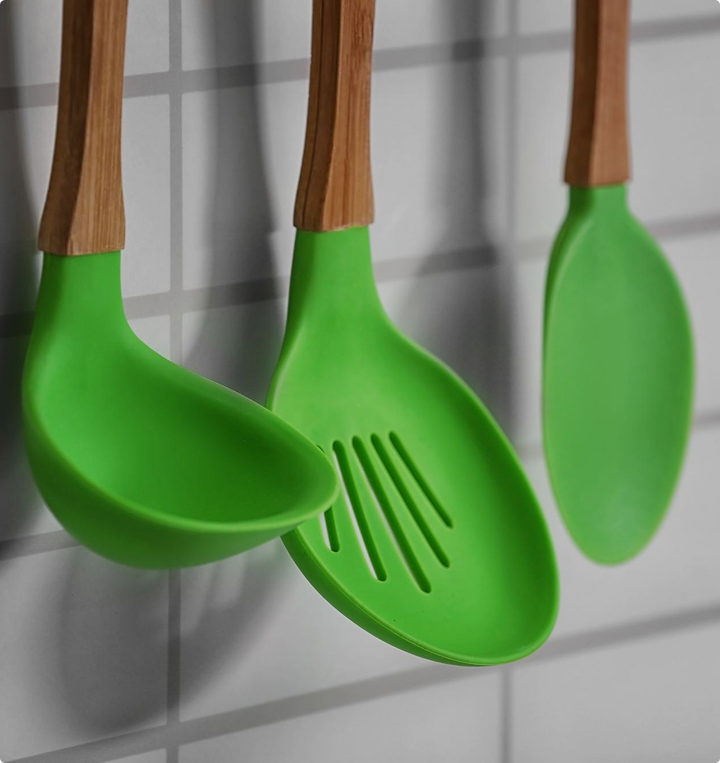
Kitchen tools represent one of the largest uses of HCR silicone. A single spatula must survive scraping hot pans, stirring boiling sauces, scraping bowls, and repeated trips through the dishwasher. HCR handles all of it.
Popular items include:
- Spatulas and scrapers that are flexible enough to clean bowls completely yet stiff enough to flip eggs or burgers. They will not melt or scratch nonstick pans.
- Cooking spoons and ladles with comfortable grips that stay cool enough to hold even when the bowl is hot.
- Trivets and pot holders that insulate counters from hot pots and can be rolled up for storage.
- Collapsible steamers and colanders that expand for use and flatten for drawers.
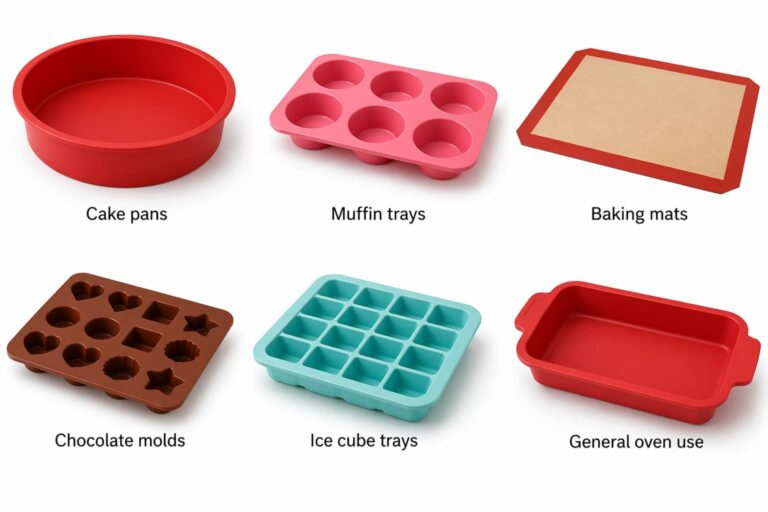
- Microwave splatter covers, reusable storage lids, and silicone baking mats that replace single-use parchment paper.
The material’s biggest advantage is its temperature range. You can take a silicone spoon from the freezer, use it to stir a simmering stew, then place leftovers in the same silicone container and reheat in the microwave. No other common kitchen material offers this seamless performance. Professional chefs and serious home cooks appreciate that these tools do not absorb flavors or colors the way plastic or wood can. A quick wash is usually enough, although baking at 200°C for half an hour removes any stubborn garlic or curry smells.
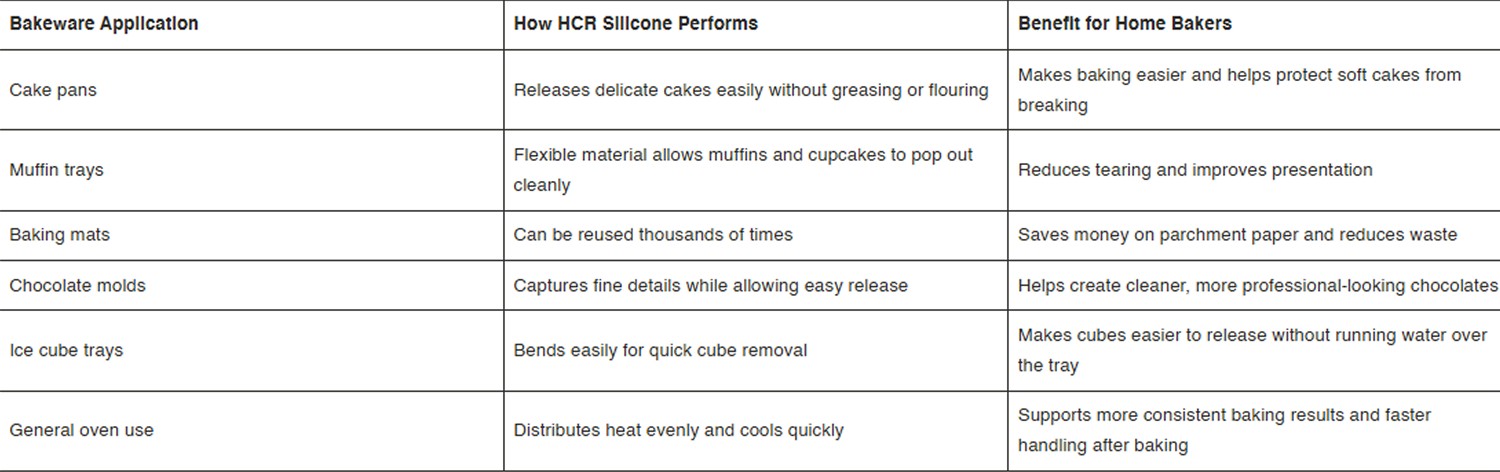
BAKEWARE THAT GIVES
PROFESSIONAL RESULTS AT HOME
PERSONAL CARE, BABY PRODUCTS,
AND GENTLE DAILY USE
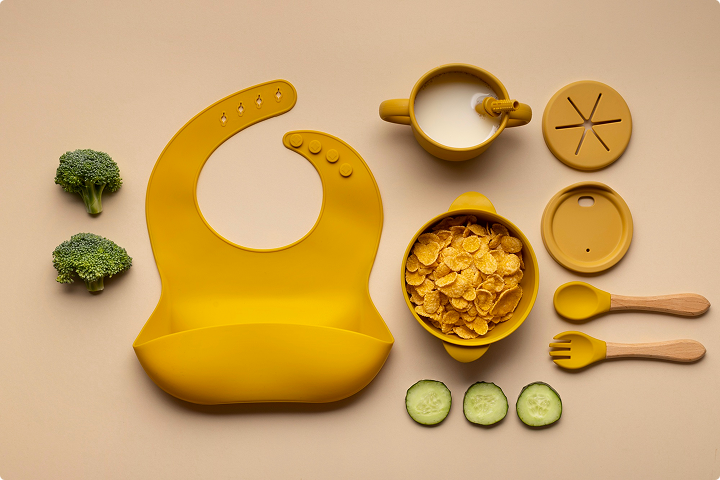
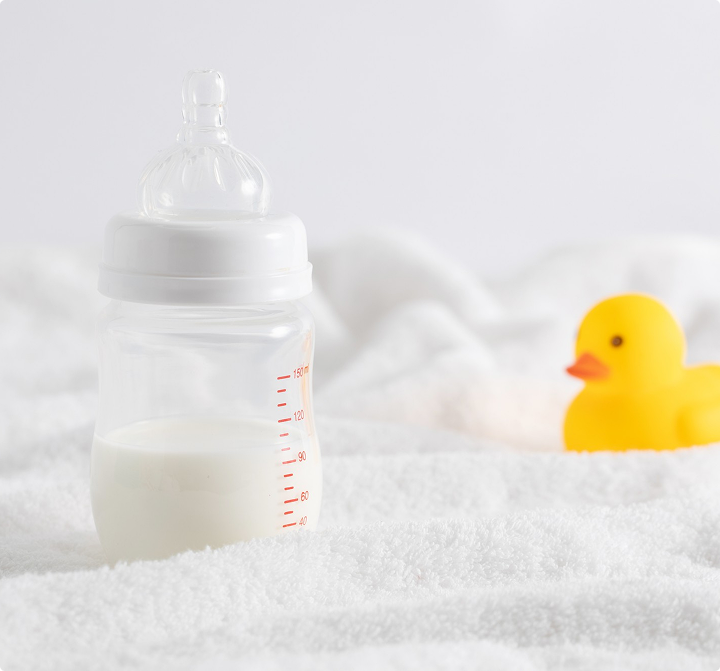
Parents choose HCR silicone for baby bottles, nipples, pacifiers, and teething toys because it is soft, durable, and free of harmful chemicals. These items can be sterilized by boiling or in a steam sterilizer hundreds of times without degrading. The smooth surface resists bacteria buildup when cleaned properly.
In adult personal care, HCR appears in facial cleansing brushes that exfoliate gently, makeup sponges and applicators that are easy to rinse, and handles for hair tools that stay comfortable even with heat. The hypoallergenic nature makes it suitable for sensitive skin. Unlike latex, it does not contain proteins that trigger common allergies.
HOUSEHOLD AND OUTDOOR USES
Beyond the kitchen and nursery, HCR silicone appears in oven mitts that protect hands up to high heat while remaining flexible. Appliance gaskets and seals stay airtight for years. Tool handles with silicone overmolding reduce vibration and improve grip even when wet. Garden tools with silicone grips are more comfortable during long weeding sessions. Pet toys made from HCR withstand chewing better than many alternatives and are easy to wash.
Electronic cases and protective sleeves benefit from silicone’s shock absorption and water resistance. All these applications share the same core advantages: longevity, safety, easy maintenance, and pleasant tactile qualities.
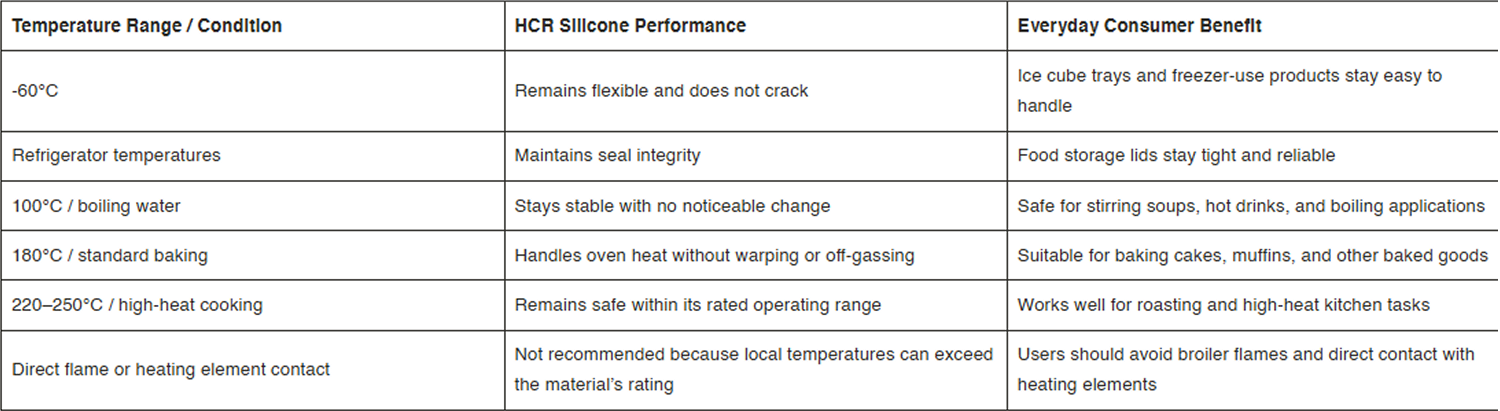
TEMPERATURE RESISTANCE EXPLAINED
WITH EVERYDAY EXAMPLES
SAFETY STANDARDS, REGULATIONS,
AND PLATINUM VS PEROXIDE CURING
Safety is non-negotiable for food and baby products. HCR silicone intended for repeated food contact must pass migration testing, extractable metals analysis, volatile organic compound limits, and sensory tests that check for taste or odor transfer.
The main standards are:
- FDA 21 CFR 177.2600 in the United States for rubber articles intended for repeated food use.
- EU Regulation 1935/2004 for all food-contact materials.
- German BfR Recommendation XV and LFGB for additional strict testing popular in European markets.
Suppliers provide test reports with every batch when requested. Consumers should look for clear labeling that mentions compliance with these standards.
The curing method matters greatly. Platinum-cured (addition cure) HCR is the premium choice in 2026. The platinum catalyst creates strong cross-links without producing volatile byproducts. Peroxide-cured material works but often requires a longer post-cure step to drive off trace residues. For baby bottles, pacifiers, cooking tools that touch food daily, and items used by sensitive individuals, platinum-cured is the clear preference. It delivers the cleanest, purest end product.
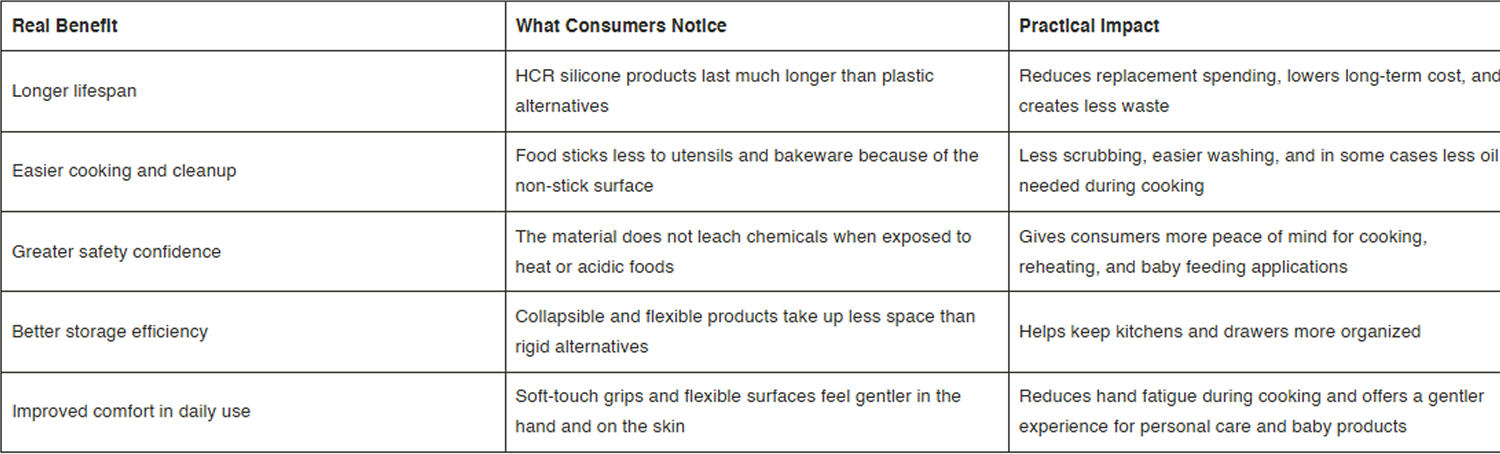
REAL BENEFITS CONSUMERS
NOTICE EVERY DAY
UNDERSTANDING COST
AND LONG-TEAM VALUE
Take a typical family that cooks most meals at home. They might replace cheap plastic utensils every 18 to 24 months. Over ten years that means five or six purchases. A single HCR set can cover the same period. Even at triple the initial price, the lifetime cost is usually lower. Add the reduced waste, fewer trips to the store, and lower frustration from broken tools, and the value becomes clear.

SIMPLE CARE AND
MAINTENANCE INSTRUCTIONS
Caring for HCR silicone is easy and requires no special products.
- Daily cleaning: Wash with warm water and dish soap. A soft sponge is all you need. The non-porous surface releases most residues quickly.
- Stubborn stains or odors: Make a paste of baking soda and water, apply it, let it sit for 15 minutes, then rinse. For strong smells, place the item in a 200°C oven for 30 minutes on a baking tray. The heat drives off absorbed odors without damaging the material.
- Dishwasher use: Most HCR items are dishwasher safe. Place them on the top rack to reduce exposure to the hottest water and detergents. Some brightly colored products may fade slightly after many cycles, so hand washing preserves appearance longer.
- Sterilization for baby items: Boil nipples, pacifiers, and teething toys for five minutes or use a steam sterilizer. The material handles repeated sterilization without hardening or losing elasticity.
- Storage: Keep items away from sharp knives that could nick the surface. Fold or roll collapsible items rather than creasing them sharply for long periods.
Following these simple steps keeps HCR products looking and performing like new for many years.
SUSTAINABILITY OUTLOOK
AND TRENDS IN 2026
Silicone cannot be melted down and remolded like thermoplastic the way PET plastic can. However, its extremely long service life already makes it more sustainable than materials replaced every year or two. Mechanical recycling is well established, ground silicone becomes filler for playground tiles, athletic tracks, and industrial mats.
In 2026 several suppliers offer grades that incorporate recycled silicone content. Chemical recycling technologies that break silicone back down to starting siloxanes are expanding, although they are not yet available at every recycling center. Many responsible brands now include recycling instructions and partner with specialized programs.
Consumers help by buying fewer, better-quality items and using them fully. When a product finally reaches the end of its life after a decade of service, the environmental impact per year of use is very low. This “buy once, buy well” philosophy aligns perfectly with HCR silicone’s strengths.
Future developments likely include more color-stable pigments, antimicrobial additives that are safe for food contact, and improved traceability so buyers can see exactly where materials came from and how the product was tested.

BUYER'S GUIDE:
HOW TO CHOOSE QUALITY HCR
PRODUCTS IN 2026
Not all silicone products are equal. Follow these practical tips:
- Look for explicit “platinum-cured” or “food-grade” labeling.
- Check for mentions of FDA, EU, or LFGB compliance.
- Buy from brands that share test reports or certificates when asked.
- Feel the product in person when possible, quality HCR feels soft yet resilient, never sticky or overly rigid.
- Examine seams and edges. Good molding leaves minimal flash or rough spots.
- Consider warranty length. Brands confident in their material often offer 5–10 year guarantees against manufacturing defects.
- For baby products, choose items specifically labeled for infant use with appropriate age ratings.
- Compare prices carefully. Extremely cheap silicone is often thinner, uses lower-grade material, or skips full testing.
Ask retailers or manufacturers direct questions: “Is this platinum-cured?” “Can you provide the migration test report?” “What is the expected lifespan under normal home use?” Responsible companies answer these questions clearly.
CONCLUSION
HCR silicone continues to set the standard for high-performance consumer goods, offering unmatched durability, safety, and versatility across kitchenware, personal care, and household applications. From heat resistance to long-term reliability, it remains the preferred material for brands that prioritize quality and user experience.
At Flexion, we specialize in advanced silicone solutions as a trusted High Consistency Rubber Manufacturer, delivering precision-engineered components tailored to your exact specifications. Whether you are developing consumer products or scaling production, our team supports you from material selection to final manufacturing, ensuring performance, compliance, and consistency at every stage. If you’re looking to bring premium silicone products to market, we’re ready to help you build with confidence.
how we help you decide
We assess your operating fluids, temperature profile, sealing dynamics, and cost targets, then recommend fluorosilicone or alternatives where appropriate. If abrasion, dynamic motion, or strict cost caps are dominant constraints, we document why another elastomer may be better and outline the tradeoffs.
Request a Proposal or Book a Discovery Call to get a tailored materials recommendation.
book a
discovery call