
HCR SILICONE FOR CONSTRUCTION
APPLICATIONS 2026:

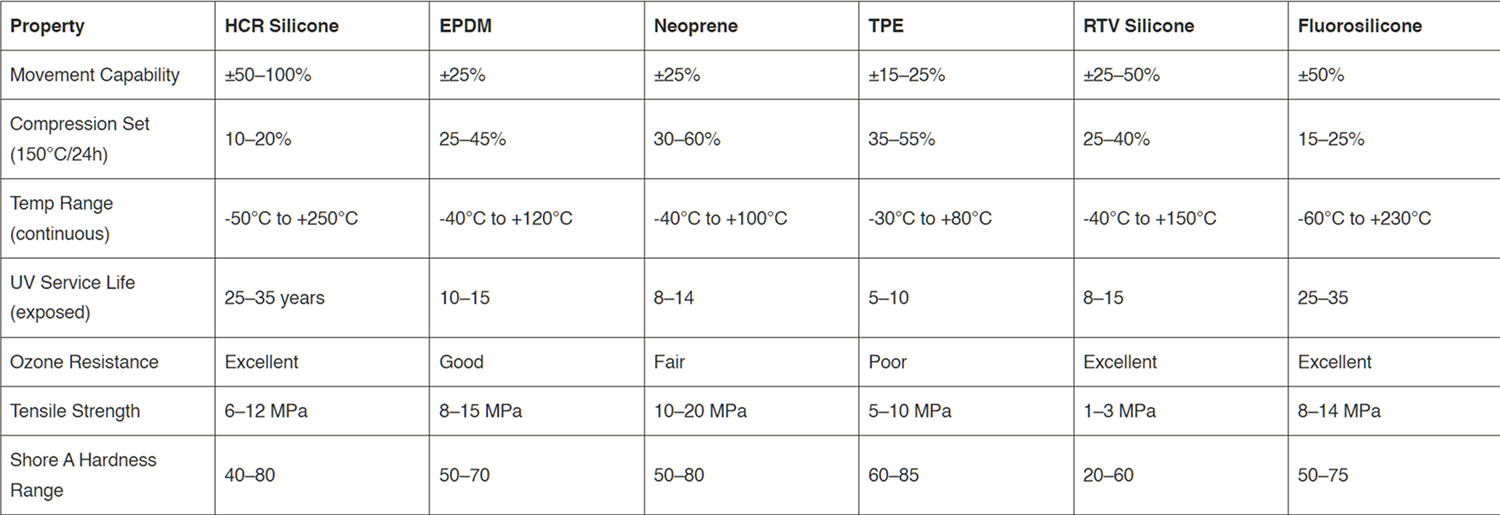
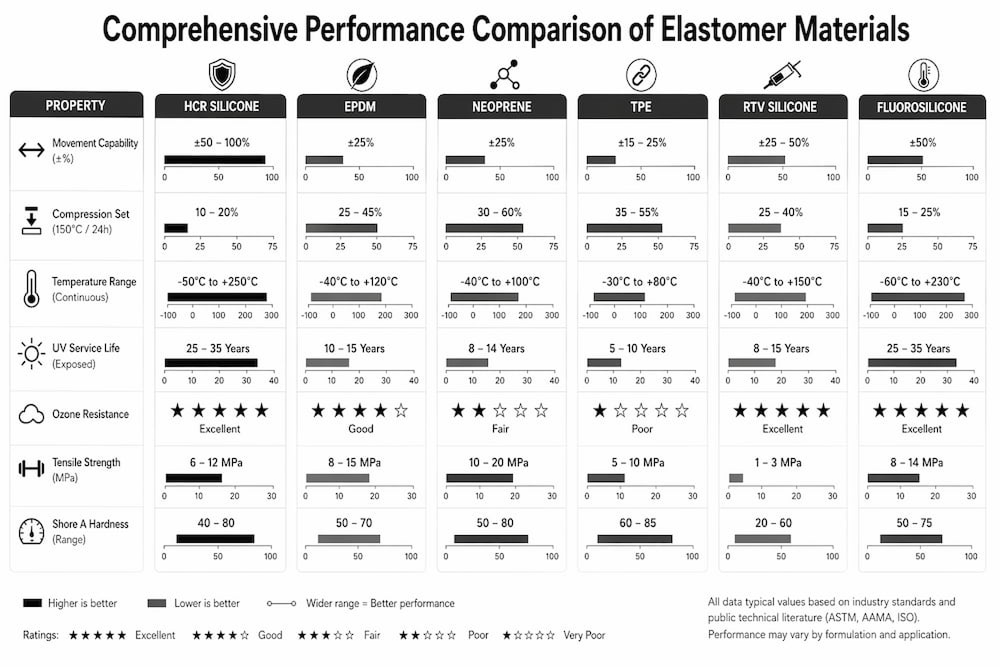
High Consistency Rubber (HCR) silicone is a high-viscosity, heat-cured elastomer that is extruded or molded into precise, factory-vulcanized profiles, gaskets, tapes, and bearings. It delivers consistent mechanical properties, ±50% joint movement capability, compression set values of 10–20%, and service lives of 25–35 years in exposed conditions, far surpassing field-applied RTV sealants, EPDM, neoprene, and TPE that commonly fail between 7 and 15 years.

WHY HCR SILICONE IS
CRITICAL FOR
MODERN
CONSTRUCTION
- Net-zero building codes demand air barriers that last the full service life of the structure
- High-rise curtain walls and seismic zones require movement accommodation beyond ±25%
- Labor shortages increase the cost and risk of field-applied sealants
- Building owners seek 20–30 year warranties to lower total cost of ownership and embodied carbon
WHAT YOU WILL LEARN
- Polysiloxane mechanisms and filler science
- Head-to-head performance matrices against five alternatives
- Application-specific engineering data for six major categories
- Manufacturing, installation, and quality protocols
- Failure case studies and mitigation strategies
- Regional code variations (US, EU, APAC)
- 30-year lifecycle cost models
- 2026–2032 innovation pipeline
- 15-step implementation roadmap
- 22-question technical FAQ

CORE MATERIAL
SCIENCE: HOW HCR
SILICONE DELIVERS
PERFORMANCE
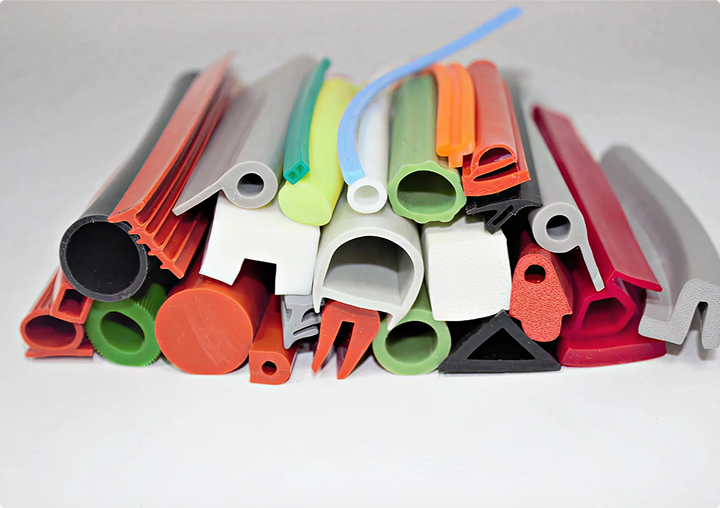
HCR silicone begins as a gum-like polymer (typically polydimethylsiloxane) reinforced with 20–40% fumed silica, platinum catalysts, heat stabilizers (cerium oxide or iron oxide), and functional additives. The compound is extruded or calendered, then cured at 160–200°C under pressure to achieve full cross-linking.
FUNDAMENTAL MECHANISMS
- Siloxane Backbone Stability: The Si-O bond energy (452 kJ/mol) resists UV-induced chain scission and thermal oxidation where C-C bonds (348 kJ/mol) in EPDM/neoprene break down.
- Fumed Silica Reinforcement: Creates a three-dimensional network that provides tear strength of 15–30 kN/m and limits compression set to 10–20% after 10,000 hours at 150°C (ASTM D395 Method B).
- Low Glass Transition Temperature (Tg ≈ -120°C): Maintains elastic modulus below -50°C, preventing brittleness in arctic or high-altitude conditions.
- Surface Energy and Hydrophobicity: Contact angle >110° creates a water-repellent barrier while permitting vapor transmission in breathable formulations.
- Chemical Inertness: Minimal reaction with acids, salts, ozone (0.5 ppm urban levels), or de-icing chemicals, eliminating the swelling and cracking seen in unsaturated rubbers.
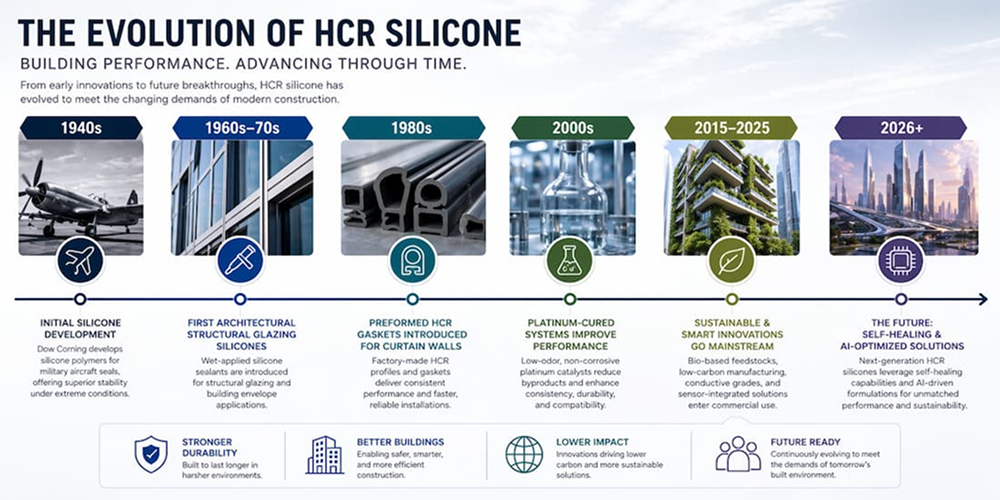
HISTORICAL EVOLUTION TIMELINE
- 1940s: Initial silicone development by Dow Corning for military aircraft seals
- 1960s–70s: First architectural structural glazing silicones (wet-applied)
- 1980s: Preformed HCR gaskets introduced for curtain walls
- 2000s: Platinum-cured systems reduce byproducts and improve consistency
- 2015–2025: Bio-based feedstocks, conductive grades, and sensor integration enter commercial construction
- 2026+: Expected adoption of self-healing and AI-optimized formulations
COMPREHENSIVE PERFORMANCE COMPARISON
PRIMARY PROPERTY MATRIX
FAILURE MODES AND
MITIGATION ANALYSIS
Common sealant failures in construction include adhesive debonding (42% of leaks per NRCA studies), cohesive tearing (28%), permanent set leading to gaps (19%), and surface degradation (11%).
HOW HCR PREVENTS EACH MODE
- Adhesive Failure: Factory-applied primers and consistent surface energy achieve >95% cohesive failure in ASTM C794 testing versus variable field results.
- Cohesive Tear: Silica-reinforced tear strength prevents propagation of micro-cuts from installation damage or wind-driven debris.
- Compression Set: Elastic recovery >80% after cyclic loading maintains contact pressure where EPDM drops to <50%.
- Surface Cracking: No unsaturated bonds means zero ozone cracking even at 0.5 ppm for decades.
KEY CONSTRUCTION
APPLICATIONS WITH
ENGINEERING DATA
CURTAIN WALL AND HIGH-RISE
FACADE SYSTEMS
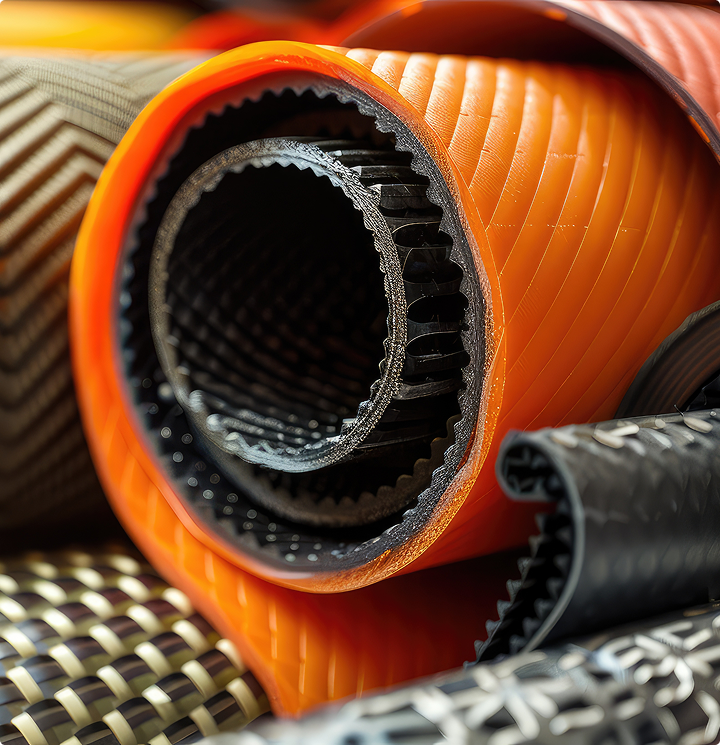
Preformed HCR pressure plates, wedge gaskets, and stack joints create four-line defense weather barriers. They reduce thermal bridging (U-values improved by 15–25% versus metal-to-metal contact), dampen harmonics between aluminum mullions, and accommodate inter-story drift up to 0.02 radians in seismic zones per ASCE 7-22.
EXPANSION JOINT SYSTEMS
Used in parking structures, stadiums, airports, and bridges.
EXPANSION JOINT PERFORMANCE SPECIFICATIONS

WINDOW, DOOR, AND PENESTRATION
GASKETS
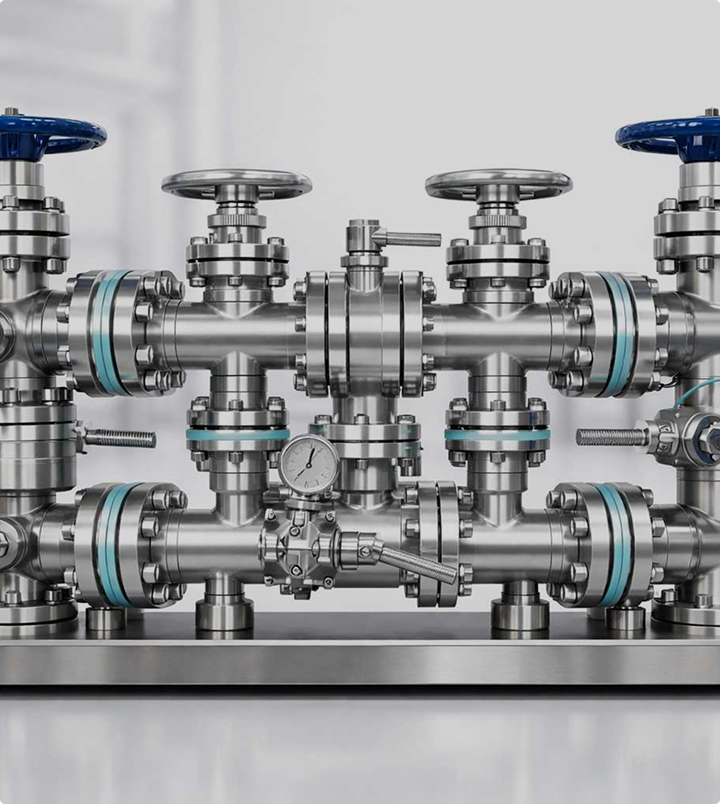
Perimeter compression gaskets achieve <0.2 cfm/ft² air leakage (IECC 2024 requirement) and pass AAMA 910 accelerated life-cycle testing (5,000 thermal cycles + wind loads). Low set ensures consistent sealing force despite frame deflection or glass expansion.
ROOFING PENETRATIONS, FLASHINGS,
AND TERMINATIONS
Pipe boots, parapet transitions, and drain details withstand ponding water, UV intensity at altitude, and extreme thermal shock. NRCA reports silicone details reduce leak callbacks by 65% compared to asphalt or TPO systems.
STRUCTURAL GLAZING AND GLASS
ATTACHMENT
Factory-produced HCR tapes and gaskets support dead loads up to 40 kg/m while accommodating ±15% movement. They meet ETAG 002 and ASTM C1184 with design tensile stresses of 0.14 MPa (20 psi) sustained for 25+ years. Eliminating wet silicone application reduces installation time by 40% on unitized curtain walls.
INFRASTRUCTURE BEARINGS AND
BRIDGE EXPANSION JOINTS
HCR elastomeric bearings distribute loads while accommodating rotation and translation. FHWA studies document 50-year design life with minimal creep (<5%) versus 20–30 years for neoprene. Salt, oil, and abrasion resistance extends maintenance intervals from 5 years to 15–20 years.

MANUFACTURING
PROCESSES FOR
CONSTRUCTION-
GRADE HCR
PRIMARY PRODUCTION STEPS
- Compound mixing under vacuum to eliminate air entrapment
- Extrusion or calendering to exact profile geometry (±0.2 mm tolerance)
- Continuous hot-air or steam vulcanization at 180–220°C
- Application of factory primers or adhesive backing where required
- Inline quality checks: durometer, dimensional scan, visual surface inspection
- Batch traceability marking and certification labeling
Platinum-cured systems are preferred in 2026 for zero byproducts, faster line speeds, and lower VOC emissions during processing.
STANDARDS, TESTING, AND GLOBAL REGULATORY CONTEXT
CORE TESTING REQUIREMENTS TABLE

REGIONAL REGULATORY VARIATIONS
- United States: IECC 2024/ASHRAE 90.1-2022 emphasize continuous air barriers; seismic requirements per ASCE 7-22 favor high-movement HCR in Zones 3–5. California Title 24 adds stringent VOC limits.
- European Union: ETAG 002 and EN 15651 drive CE marking. CPR (Construction Products Regulation) requires Declaration of Performance for fire, weather, and mechanical properties. REACH restricts certain platinum catalysts in some member states.
- Asia-Pacific: Singapore’s BCA Green Mark and China’s GB standards emphasize 20-year durability for high-rises. Japan’s seismic codes (Building Standard Law) heavily favor ±100% movement capability.
LIFECYCLE COST AND ROI MODELING
30-YEAR TOTAL COST OF OWNERSHIP
(CURTAIN WALL - 15,000 LINEAR METERS)

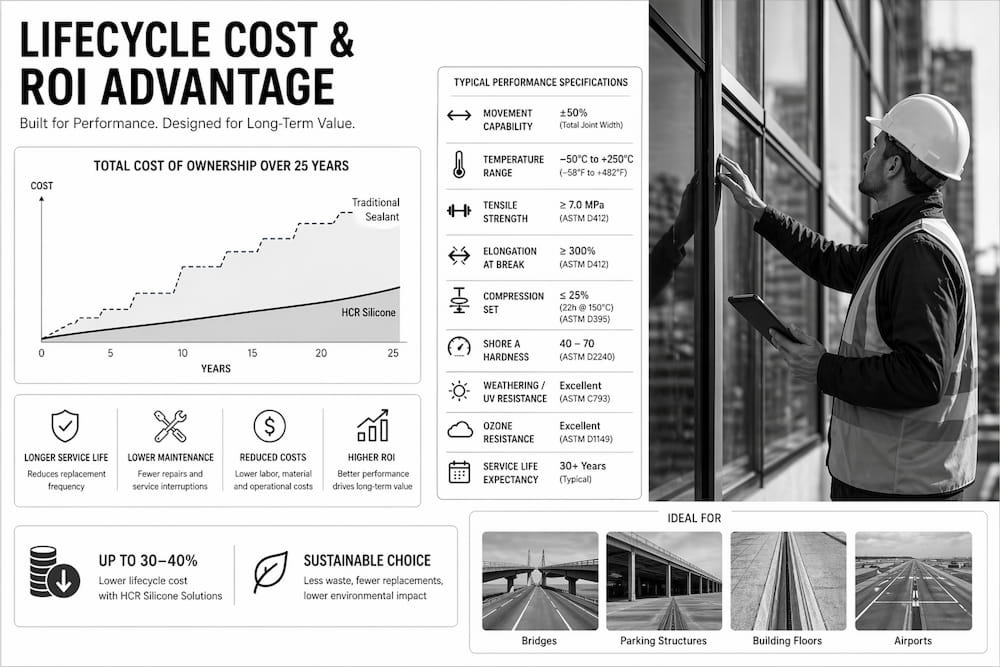
HCR typically breaks even in Year 9–11 on premium projects and delivers 2.8–4.1× ROI over 30 years when access costs and energy penalties are included.
SUSTAINABILITY AND CIRCULAR
ECONOMY METRICS
- Embodied carbon reduced 55–65% per year of service versus EPDM due to fewer replacements (2025 LCA data, Momentive).
- End-of-life mechanical recycling rate now reaches 35–45% in closed-loop programs offered by major suppliers.
- No plasticizers, halogens, or heavy metals in standard formulations.
- Supports LEED v4.1 Material Ingredients credits, BREEAM Mat 03, and Living Building Challenge Red List compliance.
MATURITY MODEL FOR HCR ADOPTION
Level 1 (Basic): Specify standard black compression gaskets for windows
Level 2 (Advanced): Use structural glazing tapes and colored profiles on mid-rise facades
Level 3 (Optimized): Integrate sensor-enabled expansion joints with full digital traceability
Level 4 (Future-Ready): Deploy self-healing, bio-based HCR on net-zero high-rises with performance-based warranties
2026-2023 INNOVATION PIPELINE

IMPLEMENTATION
ROADMAP FOR
MANUFACTURERS,
SPECIFIERS, AND
CONTRACTORS
- Conduct project-specific movement and exposure analysis
- Select HCR Shore hardness and catalyst system
- Perform substrate compatibility testing (ASTM C794)
- Develop detailed profile drawings with ±0.2 mm tolerances
- Qualify supplier with IATF/ISO 9001 and batch traceability
- Order pilot run for mock-up testing
- Execute AAMA 910 or equivalent life-cycle protocol
- Train installation crews on compression vs adhesive methods
- Implement digital QR code traceability on every profile
- Establish baseline photographs and inspection schedule (Years 1, 5, 10, 20)
- Integrate with BIM model for future maintenance access planning
- Contract performance-based warranty tied to third-party audits
- Plan end-of-life take-back with supplier recycling program
- Capture field performance data to inform next project
- Scale specification language across entire portfolio
CONCLUSION
HCR silicone has moved beyond being a niche material and is now a strategic choice for modern construction projects that demand long-term durability, weather resistance, movement capability, and lower lifecycle cost. Compared with many conventional elastomers, it offers stronger performance in exposed environments, better recovery under repeated stress, and a much longer service life, making it especially valuable for curtain walls, expansion joints, glazing systems, fenestration, and other critical sealing applications. For architects, contractors, and building owners, this translates into better envelope reliability, fewer maintenance issues, and stronger long-term value across the life of the building.
For businesses looking to implement these solutions effectively, choosing the right manufacturing partner is just as important as selecting the right material. Flexion is an advanced silicone manufacturing company that supports custom-engineered elastomer solutions across industries, with capabilities in formulation, extrusion, and molded silicone production. With experience in performance-driven silicone applications, Flexion is well positioned to support projects that require reliable, consistent, and application-specific High Consistency Rubber solutions. For construction teams aiming to improve durability, reduce replacement cycles, and build with greater confidence, partnering with a technically capable supplier like Flexion can help turn material advantages into practical, production-ready results.

how we help you decide
We assess your operating fluids, temperature profile, sealing dynamics, and cost targets, then recommend fluorosilicone or alternatives where appropriate. If abrasion, dynamic motion, or strict cost caps are dominant constraints, we document why another elastomer may be better and outline the tradeoffs.
Request a Proposal or Book a Discovery Call to get a tailored materials recommendation.
book a
discovery call