
FLUOROSILICONE FOR MEDICAL DEVICES:
BIOCOMPATIBILITY, STERILIZATION, AND
SEALING SOLUTIONS 2026
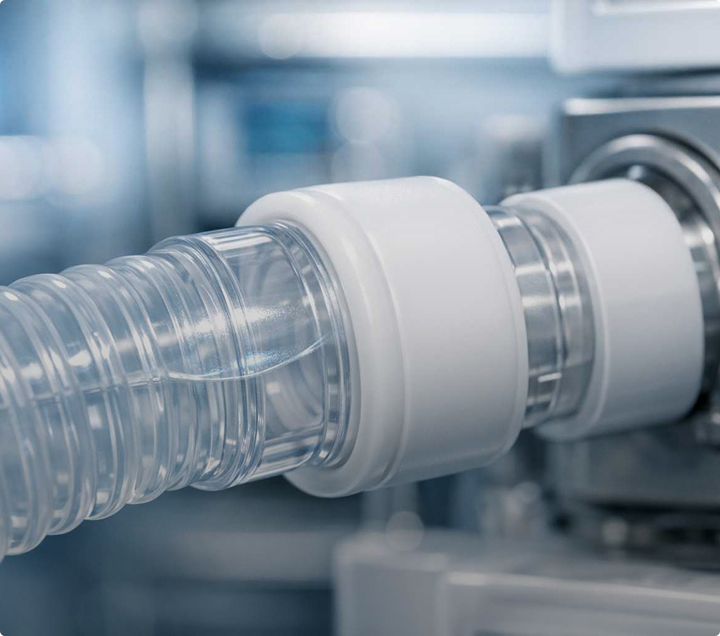
Medical devices demand materials that ensure patient safety while withstanding aggressive sterilization protocols and cleaning regimens. Fluorosilicone rubber (FVMQ) serves critical sealing functions in medical equipment where resistance to sterilants, disinfectants, and pharmaceutical chemicals is essential.
From pump seals in drug delivery systems to gaskets in diagnostic equipment, fluorosilicone provides the chemical resistance and biocompatibility required for modern healthcare applications. The material’s ability to maintain properties through repeated sterilization cycles makes it invaluable for reusable medical devices.

MEDICAL
APPLICATIONS FOR
FLUOROSOLICONE
Medical device manufacturers specify fluorosilicone for applications requiring the unique combination of biocompatibility and chemical resistance. The material excels where standard silicone would degrade from exposure to aggressive cleaning agents or pharmaceutical compounds.
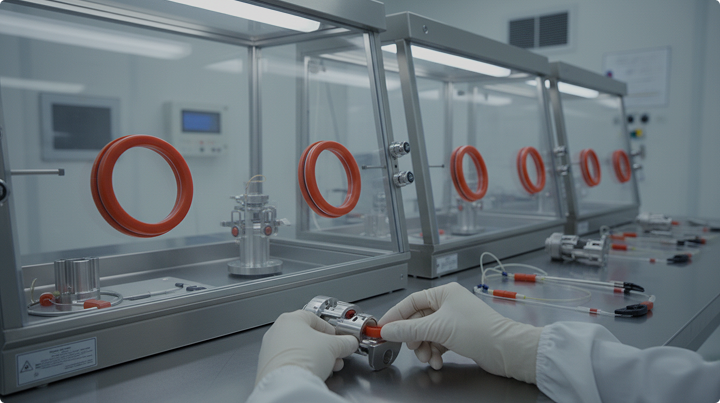
KEY MEDICAL DEVICE APPLICATIONS

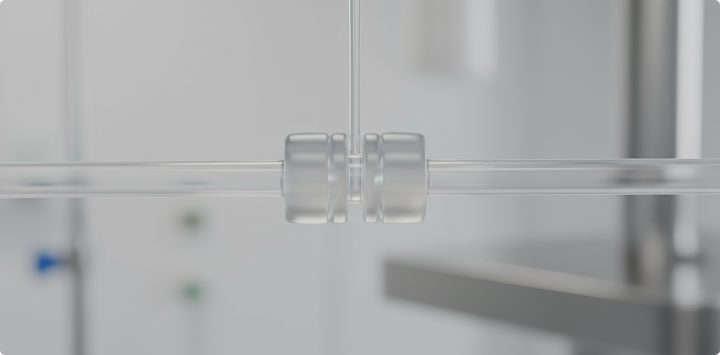
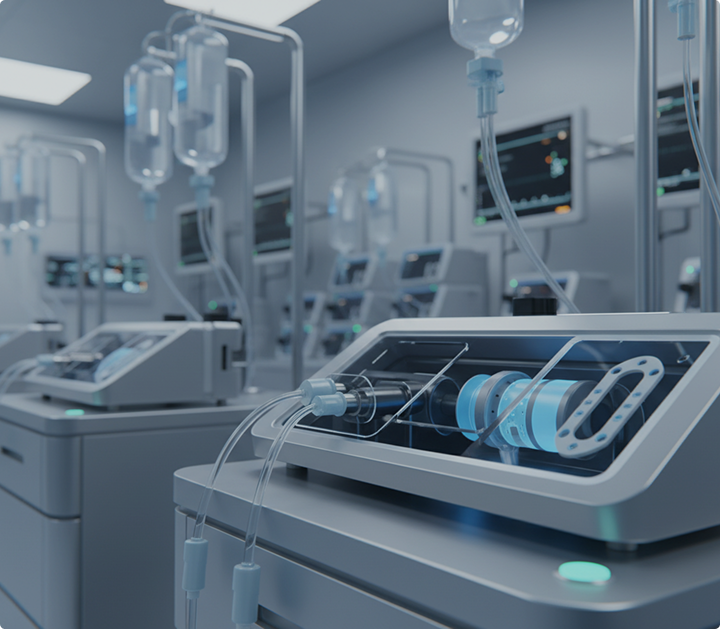
DRUG DELIVERY AND INFUSION
SYSTEMS
Infusion pumps and drug delivery devices require seals that:
- Resist pharmaceutical formulations (lipids, solvents, preservatives)
- Maintain dimensional stability through sterilization
- Prevent drug adsorption or leaching
- Function reliably through millions of cycles
Fluorosilicone’s chemical structure provides superior resistance to the lipids and solvents found in modern drug formulations compared to standard silicone.
RESPIRATORY AND ANESTHESIA
EQUIPMENT
Breathing circuits and anesthesia delivery systems expose seals to:
- Oxygen and ozone (oxidative stress)
- Cleaning and disinfection chemicals
- Temperature cycling (sterilization)
- Mechanical flexing (portable equipment)
Fluorosilicone’s ozone resistance and low compression set make it ideal for these dynamic sealing applications.
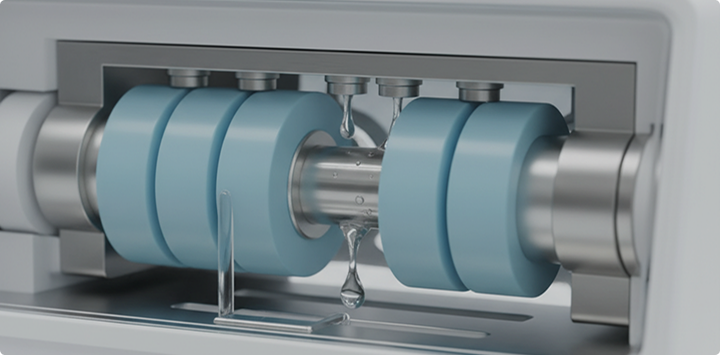
BIOCOMPATIBILITY CONSIDERATIONS
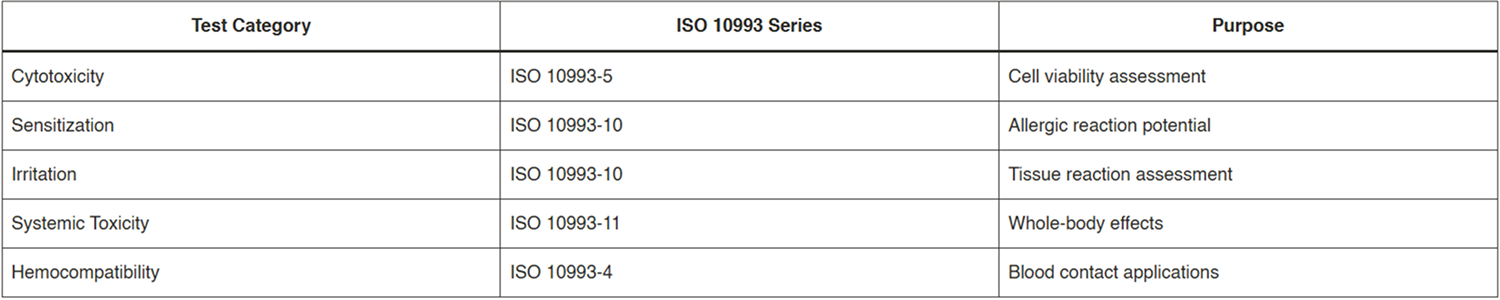
ISO 10993 AND BIOCOMPATILITY TESTING
Medical-grade fluorosilicone must meet biocompatibility requirements per ISO 10993 standards:
USP CLASS VI TESTING
United States Pharmacopeia Class VI testing evaluates materials for:
- Systemic injection test: Acute toxicity assessment
- Intracutaneous test: Local tissue reaction
- Implantation test: 72-hour muscle implant evaluation
Medical-grade fluorosilicone compounds passing USP Class VI are suitable for short-term and limited-duration contact applications.
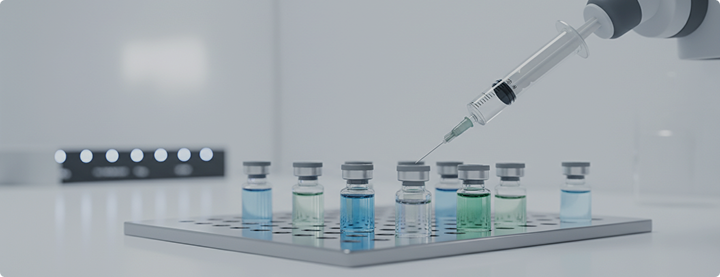
MATERIAL GRADES FOR MEDICAL APPLICATIONS

STERILIZATION COMPATIBILITY
Medical devices require sterilization between uses. Fluorosilicone withstands common sterilization methods better than many alternative materials:
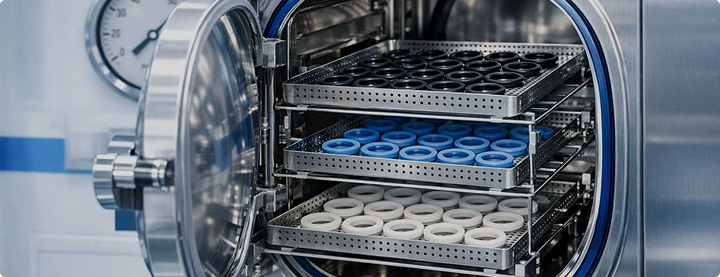
STEAM AUTOCLAVE STERILIZATION

ALTERNATIVE STERILIZATION METHODS

STERILIZATION EFFECTS ON PROPERTIES

CHEMICAL RESISTANCE IN MEDICAL
ENVIRONMENTS
PHARMACEUTICAL AND BIOLOGICAL FLUIDS
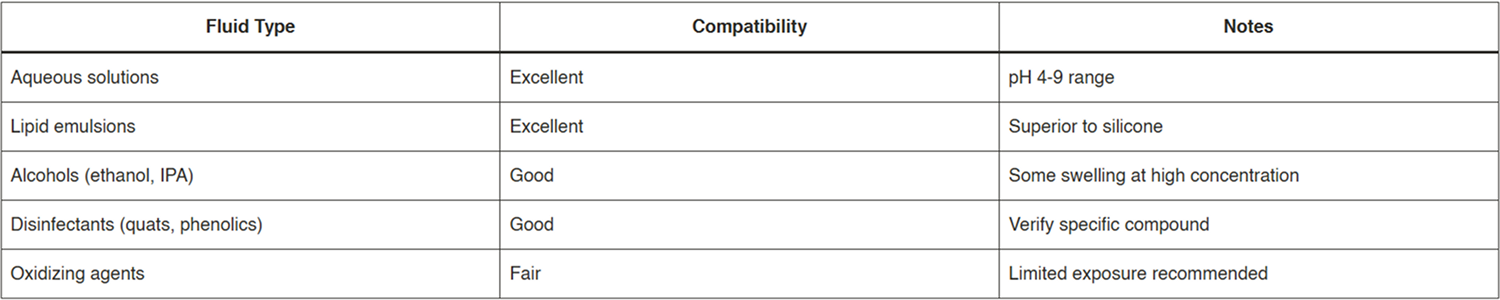
CLEANING AND DISINFECTION CHEMICALS
Medical devices undergo rigorous cleaning between uses. Fluorosilicone resists common cleaning agents:

MATERIAL SPECIFICATIONS FOR MEDICAL
DEVICES
HARDNEDD SELECTION

CURING SYSTEMS

Platinum-cured fluorosilicone is preferred for medical applications due to lower extractables and faster processing.
COMPARISON:
FLUOROSILICONE VS. MEDICAL-GRADE ALTERNATIVES
Selecting the optimal material requires comparing fluorosilicone against other medical-grade elastomers:

MATERIAL SELECTION DECISION MATRIX

DESIGN AND MANUFACTURING
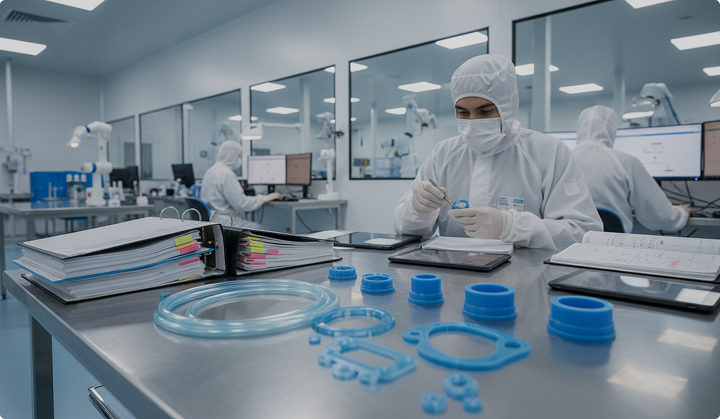
CLEANROOM MANUFACTURING
Medical-grade fluorosilicone components require controlled manufacturing environments:

QUALITY SYSTEMS
Medical device suppliers must maintain:
- ISO 13485 quality management system
- FDA registration (for US market)
- Device Master Records (DMR)
- Lot traceability
- Certificate of conformance
TESTING AND VALIDATION

REGULATORY
CONSIDERATIONS
FDA REQUIREMENTS
Medical devices using fluorosilicone must comply with:
- 21 CFR Part 820: Quality System Regulation
- 21 CFR 177.2600: Indirect food additives (if applicable)
- FDA Master File: Material supplier documentation (MAF)**
EUROPEAN REGULATIONS

CONCLUSION
In medical device applications, where patient safety, chemical exposure, and repeated sterilization cycles are critical factors, selecting the right sealing material is essential. At GoFlexion, we position fluorosilicone as a high-performance solution for medical components that require both biocompatibility and resistance to aggressive disinfectants and pharmaceutical formulations. As a trusted Flourosilicone Manufacturer, we support device manufacturers with precision-engineered sealing solutions that maintain integrity across infusion systems, respiratory equipment, and diagnostic devices—ensuring consistent performance even under demanding sterilization and cleaning conditions .
As medical technologies continue to advance, the demand for reliable, reusable, and chemically resistant materials will only increase. Go Flexion works closely with engineering and regulatory teams to align fluorosilicone solutions with ISO 10993, USP Class VI, and sterilization requirements, helping streamline validation and ensure compliance. By combining material expertise with controlled manufacturing environments, we enable the development of durable medical components that support long-term device reliability, reduce maintenance risks, and enhance overall patient safety.
HOW WE HELP DECIDE
We assess your operating fluids, temperature profile, sealing dynamics, and cost targets, then recommend fluorosilicone or alternatives where appropriate. If abrasion, dynamic motion, or strict cost caps are dominant constraints, we document why another elastomer may be better and outline the tradeoffs.
Request a Proposal or Book a Discovery Call to get a tailored materials recommendation.