
FLUORSILICONE FOR FOOD AND BEVERAGE
PROCESSING: CHEMICAL RESISTANCE FOR
CLEANING SYSTEMS 2026

Food and beverage processing presents unique material challenges, equipment must withstand aggressive cleaning chemicals while maintaining hygienic standards. Fluorosilicone rubber (FVMQ) serves critical roles in processing equipment where resistance to sanitizers, steam, and cleaning agents is essential.
While standard fluorosilicone is not FDA-approved for direct food contact, it excels in non-contact applications within food processing environments. The material’s exceptional resistance to acids, alkalis, and oxidizing agents used in CIP (Clean-in-Place) systems makes it invaluable for seals in cleaning equipment, external machinery components, and processing infrastructure.

UNDERSTANDING
FLUOROSILICONE'S
ROLE IN FOOD
PROCESSING
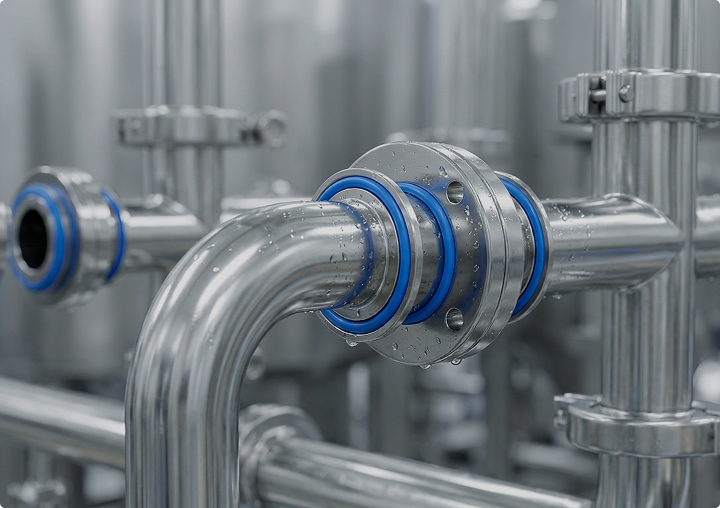
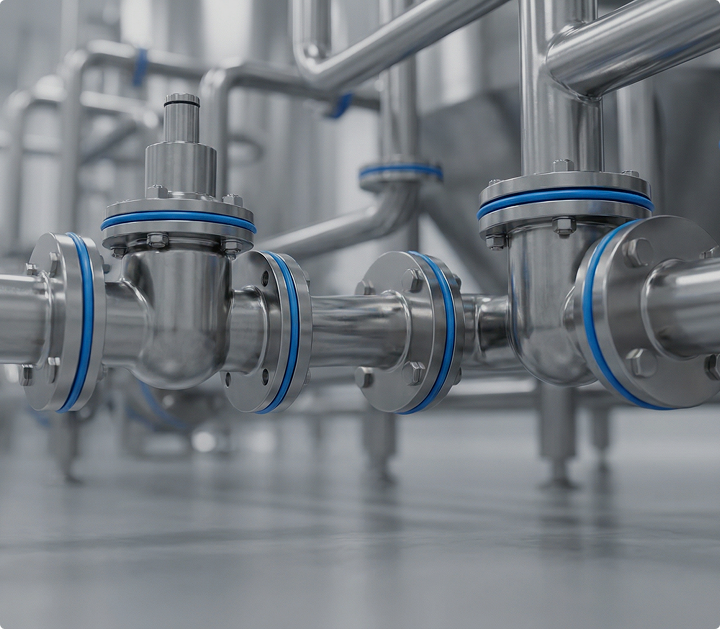
Food processing facilities rely on rigorous cleaning protocols to prevent contamination and ensure product safety. CIP systems circulate hot water, caustic solutions, acids, and sanitizers throughout processing equipment. Seals and gaskets in these systems must resist chemical attack while maintaining sealing integrity through thermal cycling.
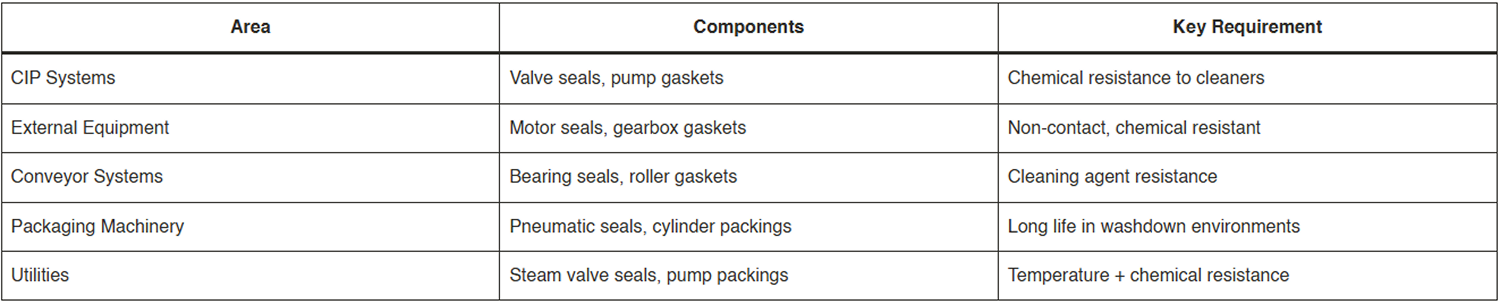
KEY APPLICATIONS IN FOOD AND BEVERAGE

DIRECT FOOD CONTACT LIMITATIONS
Important: Standard fluorosilicone compounds are NOT FDA-compliant for direct food contact under 21 CFR 177.2600. For direct food contact applications, specify [FDA-grade silicone](/materials/high-consistency-rubber/food-beverage) or platinum-cured food-grade materials.
Fluorosilicone’s fluorinated structure can potentially migrate into food products, making it unsuitable for:
- Product contact seals
- Transfer hose liners
- Tank gaskets in direct contact
- Pump diaphragms handling product
CHEMICAL
RESISTANCE FOR
CLEANING
APPLICATIONS
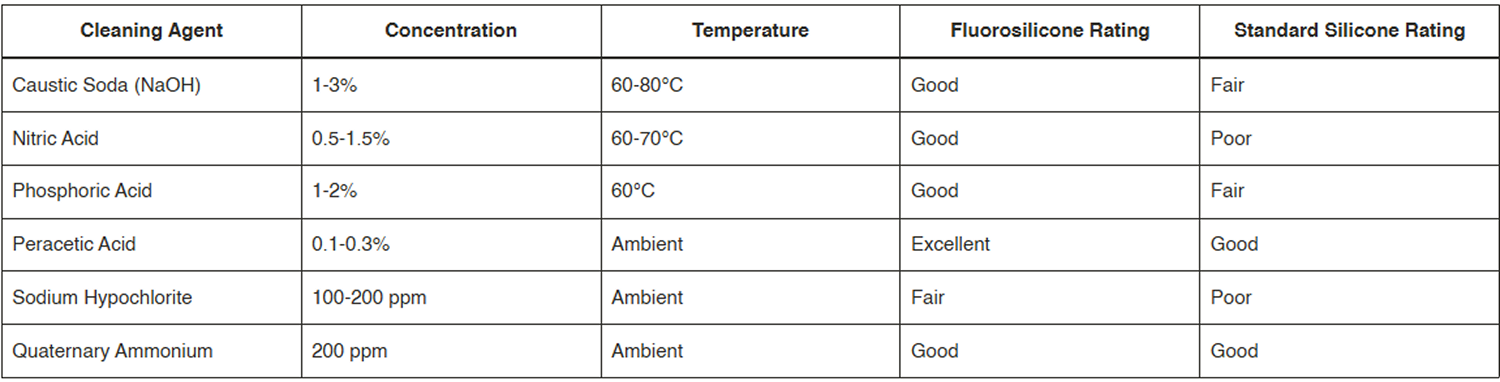
CIP systems use aggressive chemicals that challenge conventional elastomers. Fluorosilicone’s chemical structure provides superior resistance to these cleaning agents compared to standard silicone:

CIP CHEMICAL COMPATIBILITY

CIP CHEMICAL COMPATIBILITY
Food processing equipment undergoes frequent steam sterilization. Fluorosilicone withstands these conditions better than many hydrocarbon-resistant elastomers:

Note: Prolonged steam exposure can cause silicone reversion. For continuous steam service, consider EPDM or specialized steam-resistant compounds.
MATERIAL SPACIFICATIONS FOR
FOOD PROCESSING
Selecting the right elastomer requires balancing multiple performance criteria. This comparison examines the three most common aerospace sealing materials:
HARDNESS SELECTION

CURING SYSTEMA

COMPARISON:
FLUORSIICONE VS. FOOD-GRADE ALTERNATIVES
Understanding the differences between fluorosilicone and food-grade materials guides proper selection:


WHEN TO SPECIFY FLUOROSILICONE IN FOOD PLANTS
Appropriate Applications:
- CIP system valve seals and pump gaskets
- External equipment seals (motors, gearboxes)
- Cleaning chemical transfer equipment
- Non-product contact pneumatic seals
- Waste handling system seals
- Utility steam and condensate systems
Avoid For:
- Direct food contact seals
- Product transfer hoses
- Tank manway gaskets (product side)
- Any application requiring FDA compliance
DESIGN
CONSIDERATIONS
FOR CLEANING
EQUIPMENT
CIP VALVE SEAL DESIGN
CIP valve seals face unique challenges, chemical exposure, thermal cycling, and mechanical stress. Design recommendations include:
Gland Geometry:
- Compression: 15-25% for O-rings
- Fill: Maximum 85% groove fill
- Surface finish: 16-32 μin Ra
- Backup rings: For pressures >500 psi
Material Selection:
- Standard CIP: 70 Shore A fluorosilicone
- High-temperature: Peroxide-cured compound
- Aggressive chemicals: 80 Shore A for extrusion resistance
PUMP SEAL APPLICATIONS
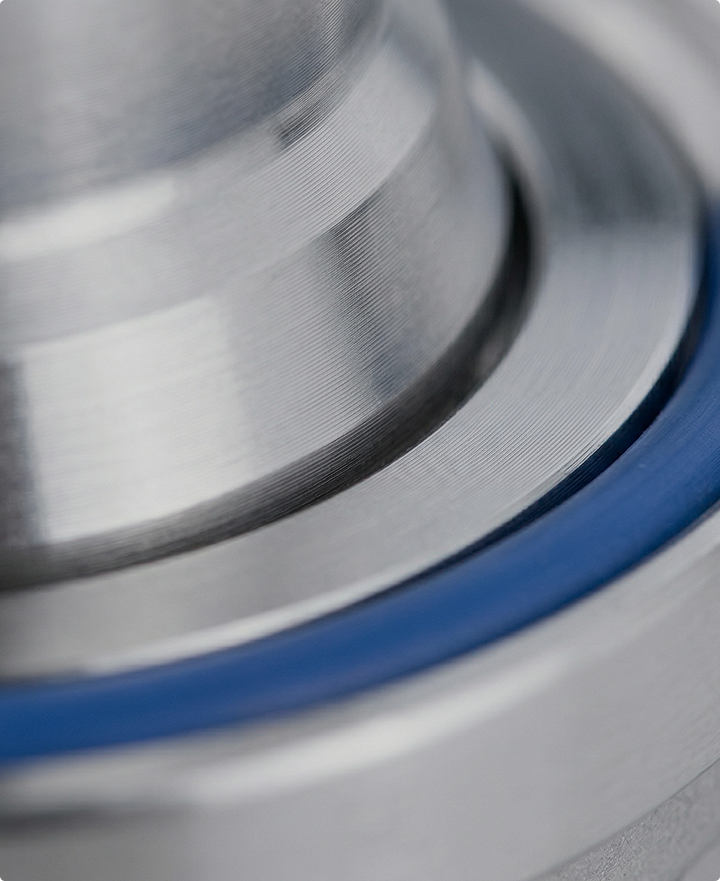
CIP pump seals must handle both cleaning chemicals and product (if product-contact). For non-product side seals:

INSTALLATION
AND MAINTENANCE
Proper installation extends seal life in cleaning system applications:
INSTALLATION BEST PRACTICES
- Pre-cleaning: Remove all debris and old seal material
- Lubrication: Use food-grade lubricant for assembly
- Avoid twisting: Install O-rings without spiral twist
- Torque properly: Follow manufacturer specifications
- Initial inspection: Check for proper seating after first cycle

MAINTENANCE SCHEDULED

REGULATORY
CONSIDERATIONS
FDA COMPLIANCE STATUS
Standard fluorosilicone does NOT meet FDA 21 CFR 177.2600 requirements for repeated food contact. Key regulatory points:
- 21 CFR 177.2600: Governs rubber articles for repeated food contact
- Extractables limits: Fluorosilicone may exceed limits for certain extractables
- Migration concerns: Fluorinated compounds require specific testing
EU AND INTERNATIONAL STANDARDS

DOCUMENTATION REQUIREMENTS
For food processing applications, maintain documentation including:
- Material specifications and certificates
- Chemical compatibility testing
- Temperature ratings
- Installation dates and maintenance records
- Supplier certifications
CONCLUSION
In food and beverage processing environments, where strict hygiene standards and aggressive cleaning protocols are essential, selecting the right sealing material is critical for maintaining operational integrity. At Go Flexion, fluorosilicone is positioned as a high-performance solution for non-product contact applications, delivering exceptional resistance to CIP chemicals, sanitizers, and temperature fluctuations. As a reliable Flourosilicone Manufacturer, Go Flexion provides sealing solutions designed to perform consistently in valves, pumps, and external equipment exposed to repeated cleaning cycles and harsh processing conditions.
As cleaning protocols become more rigorous and processing systems more advanced, the importance of selecting the right material for each application continues to grow. Go Flexion works closely with engineering and maintenance teams to align fluorosilicone solutions with specific chemical exposure, temperature conditions, and service requirements—while ensuring compliance with food safety standards by clearly separating contact and non-contact applications. By combining material expertise with precision manufacturing, we help food and beverage facilities improve equipment longevity, reduce downtime, and maintain high standards of cleanliness across their operations.
HOW WE HELP YOU DECIDE
We assess your operating fluids, temperature profile, sealing dynamics, and cost targets, then recommend fluorosilicone or alternatives where appropriate. If abrasion, dynamic motion, or strict cost caps are dominant constraints, we document why another elastomer may be better and outline the tradeoffs.
Request a Proposal or Book a Discovery Call to get a tailored materials recommendation.