
Fluorosilicone for Aerospace Industry:
The Complete Technical Guide to
Fuel-Resistant Sealing Solutions
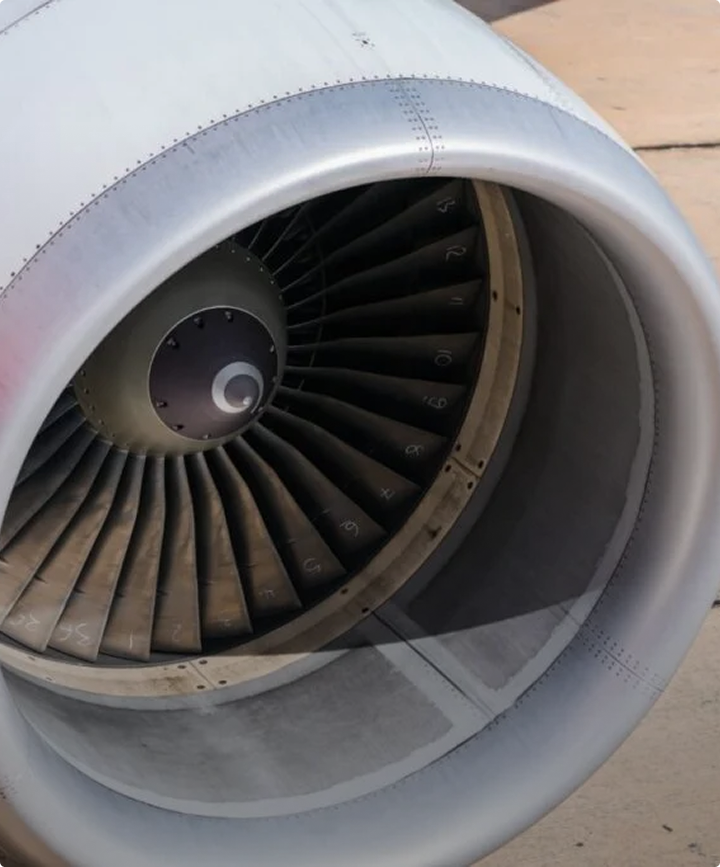
WHY FLUOROSILICONE DOMINATES AEROSPACE SEALING APPLICATIONS
Aerospace engineers face a unique materials challenge: finding sealing solutions that withstand both the extreme cold of high-altitude flight and the aggressive chemical exposure of jet fuel systems. Standard silicone rubber offers excellent temperature performance but fails catastrophically when exposed to hydrocarbon fuels. Fluorocarbon elastomers like FKM (Viton) resist fuels effectively but become brittle at the cryogenic temperatures encountered in aviation environments.
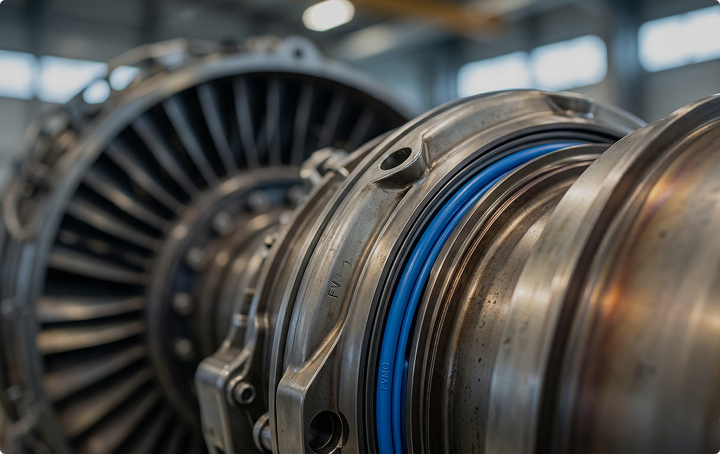
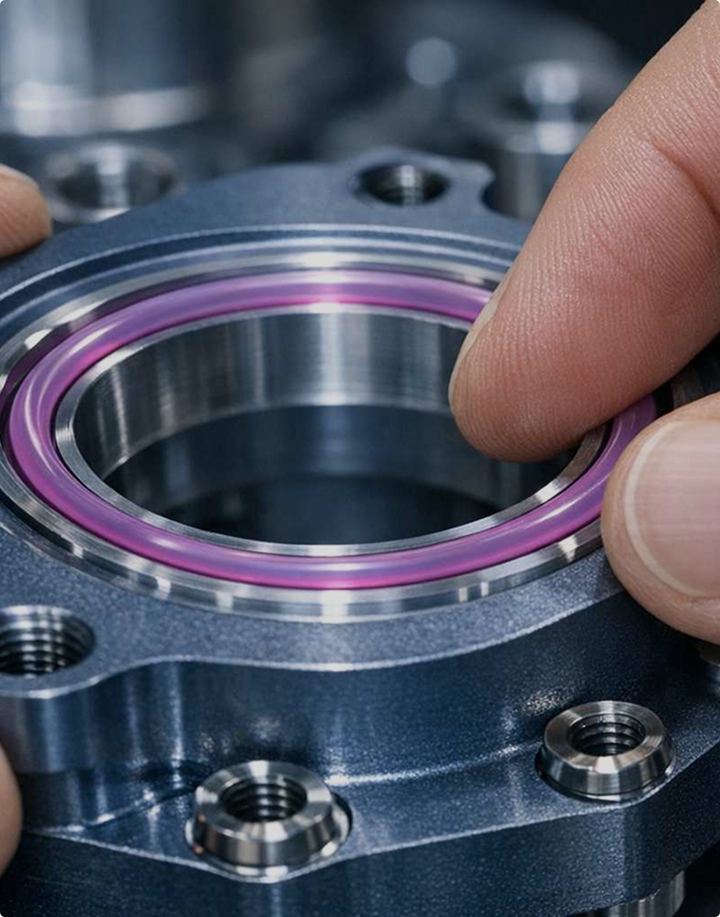
Fluorosilicone (FVMQ) bridges this gap by combining the low-temperature flexibility of silicone with the fuel resistance of fluorocarbons. This hybrid elastomer has become the material of choice for critical aerospace sealing applications, from fuel system O-rings to engine gaskets and electrical housing seals.
This technical guide examines fluorosilicone’s properties, MIL-spec compliance requirements, application-specific recommendations, and comparative performance against alternative aerospace elastomers.

WHAT IS
FLUOROSILICONE
(FVMQ)?
MOLECULAR STRUCTURE AND
OMPOSITION
THE CHEMISTRY BEHIND THE
PERFORMANCE
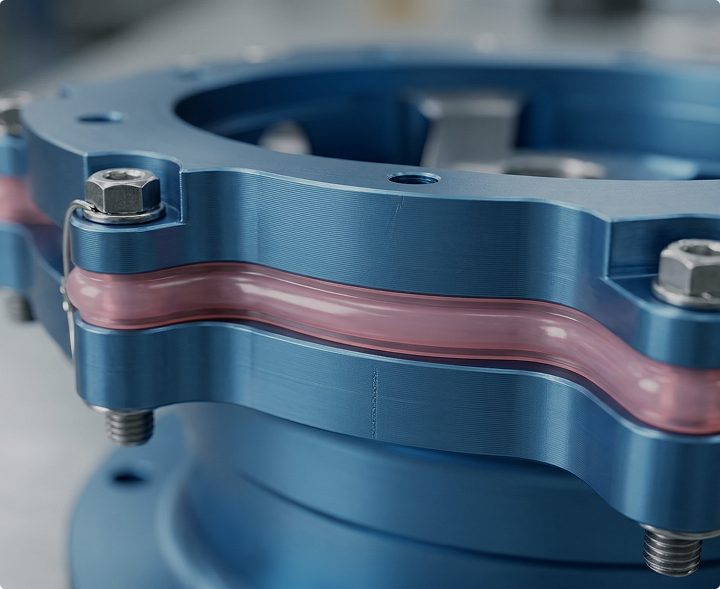
Fluorosilicone rubber is a specialized elastomer created by introducing fluorinated side chains, specifically trifluoropropyl groups, onto a silicone polymer backbone. This molecular architecture delivers the key performance characteristics that make FVMQ indispensable for aerospace applications:
SILICONE BACKBONE BENEFITS:
-
Siloxane (Si-O) bonds provide exceptional thermal stability
-
Wide operational temperature range from -73°C to +177°C (-100°F to +350°F)
-
Flexibility retention at cryogenic temperatures
-
UV and ozone resistance for exterior applications
FLUORINATED SIDE CHAIN BENEFITS:
-
Trifluoropropyl groups create a fluorocarbon-like chemical barrier
-
Excellent resistance to petroleum-based fuels and oils
-
Compatibility with aromatic hydrocarbons
-
Reduced swelling in aggressive chemical environments
COMMON TRADE NAMES AND
DESIGNATIONS
Fluorosilicone is known by several commercial designations across the industry:
- FE (Fluoro-Elastomer silicone)
-
FVMQ (Fluorovinylmethylsilicone – ASTM designation)
-
FSR (Fluorosilicone Rubber)
- FSE (Fluorosilicone Elastomer)
- Silastic FSR (Dow Corning tradename)
- Elastosil (Wacker tradename)
CRITICAL PROPERTIES
FOR AEROSPACE APPLICATIONS
TEMPERATURE PERFORMANCE: FROM
ARCTIC COLD TO ENGINE HEAT
Aerospace seals must function across an extraordinary temperature spectrum. Commercial aircraft routinely encounter ambient temperatures below -50°C at cruising altitude, while engine compartments and exhaust systems generate heat exceeding 200°C.
STANDARD FLUOROSILICONE
TEMPERATURE RANGE:
- Low-temperature limit: -73°C (-100°F) – maintains sealing force and flexibility
- High-temperature limit: +177°C (+350°F) – continuous operation
- Short-term exposure: Up to +204°C (+400°F) – intermittent peaks
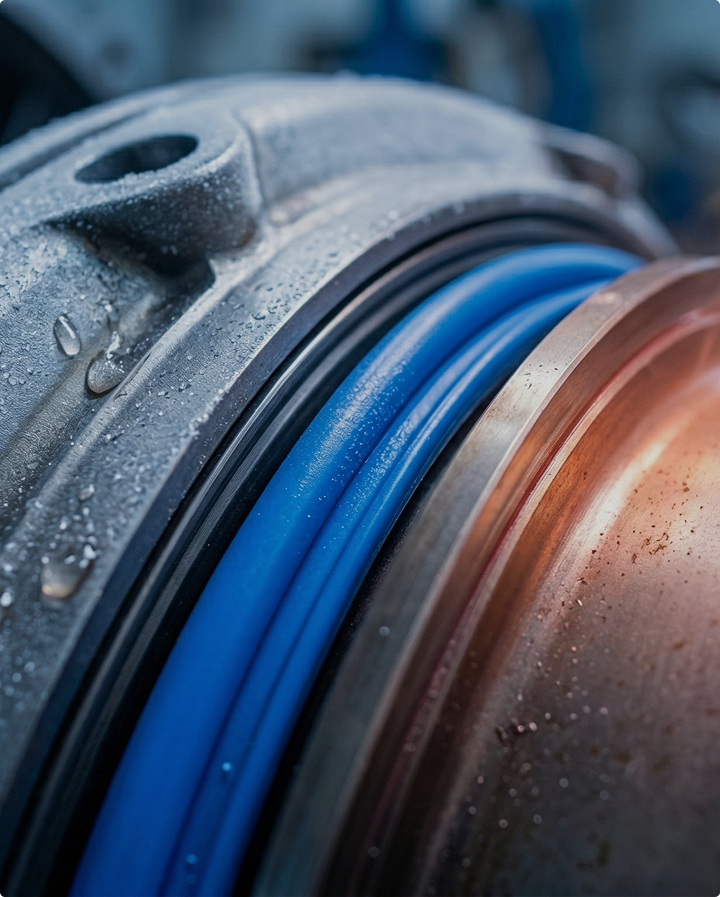
This range accommodates nearly all aerospace sealing requirements, from fuel tank seals in the wings to engine compartment gaskets. The silicone backbone’s unique flexibility at low temperatures distinguishes FVMQ from fluorocarbon alternatives, which typically stiffen below -20°C.
FUEL AND OIL RESISTANCE: THE PRIMARY ADVANTAGE
Jet fuels present a particularly aggressive chemical environment. Aviation fuels like Jet-A, JP-5, and JP-8 contain aromatic hydrocarbons, additives, and contaminants that
cause standard elastomers to swell, soften, and lose mechanical properties.
FLUOROSILICONE FUEL COMPATIBILITY:

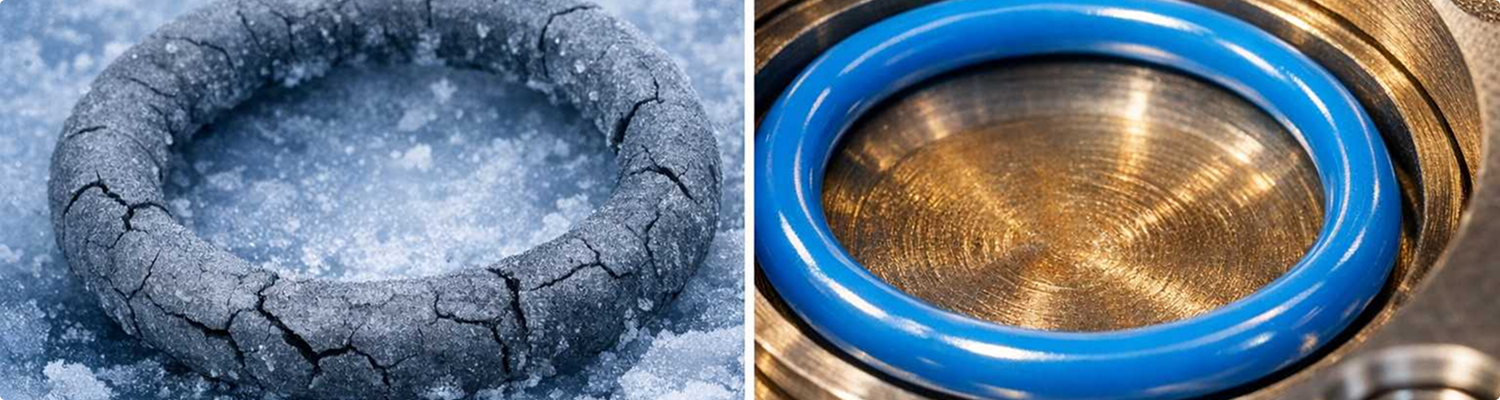
Testing in ASTM Fuel B (equivalent to aggressive aromatic fuel blends) demonstrates fluorosilicone’s superior hydrocarbon compatibility compared to standard silicone,
which can swell 100% or more and lose all mechanical integrity.
MECHANICAL PROERTIES AND
LIMITATIONS
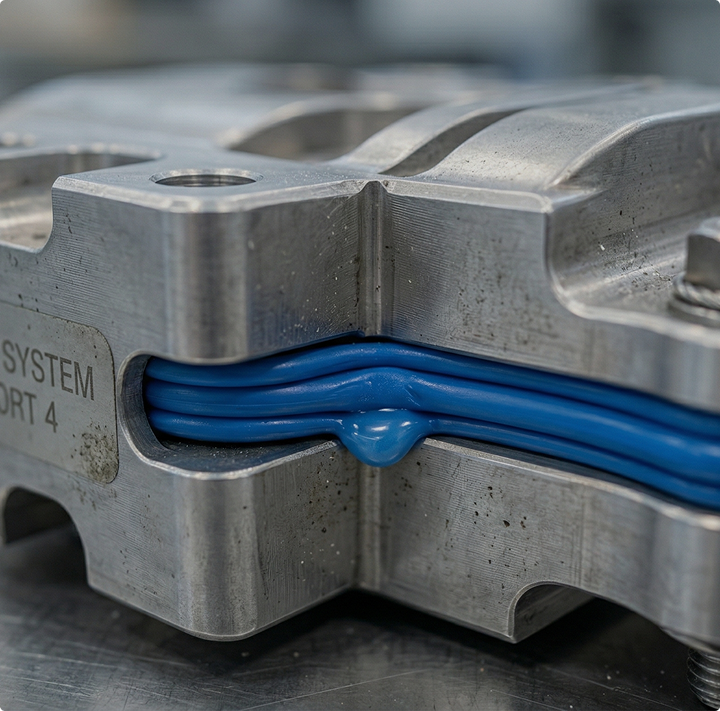
While fluorosilicone excels in chemical and temperature resistance, engineers must account for its mechanical limitations:
Strengths:
- Good compression set resistance – maintains seal force over time
- Excellent resilience – recovers shape after deformation
- Low gas permeability compared to standard silicone
- Good electrical insulation properties
Limitations:
- Poor abrasion resistance – not suitable for dynamic friction applications
- Limited physical strength – lower tensile strength than FKM
- High friction coefficient – challenging for moving seals
- Poor resistance to brake fluids and ketones
These characteristics make fluorosilicone optimal for static sealing applications in fuel systems, electrical housings, and environmental seals where movement is minimal or non-existent.
MIL-DTL-25988:
MILITARY
SPECIFICATION
COMPLIANCE
UNDERSTANDING THE AEROSPACE
STANDARD
MIL-DTL-25988 is the primary U.S. military specification governing fluorosilicone rubber for aircraft and aviation applications. This standard ensures that materials meet rigorous performance requirements for critical aerospace sealing.
Specification Coverage:
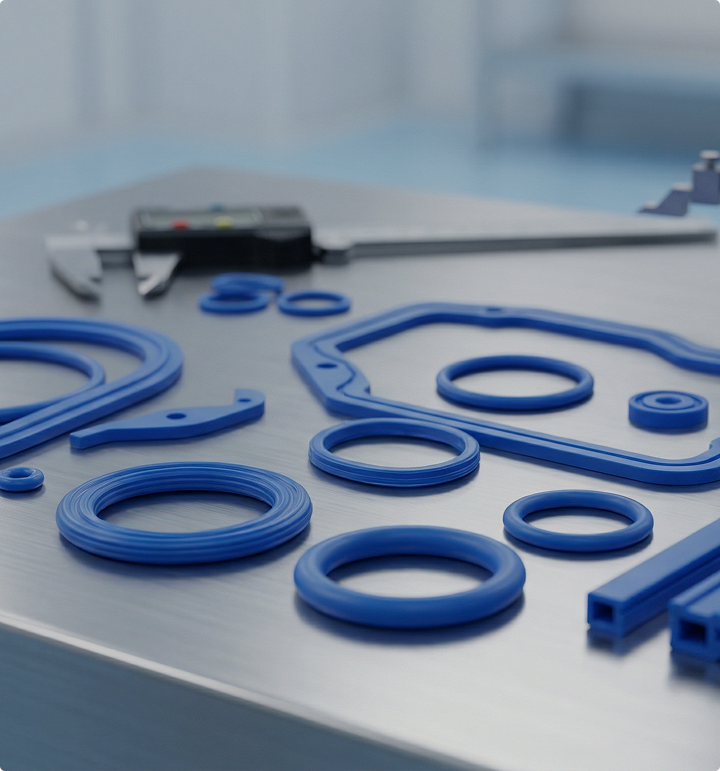
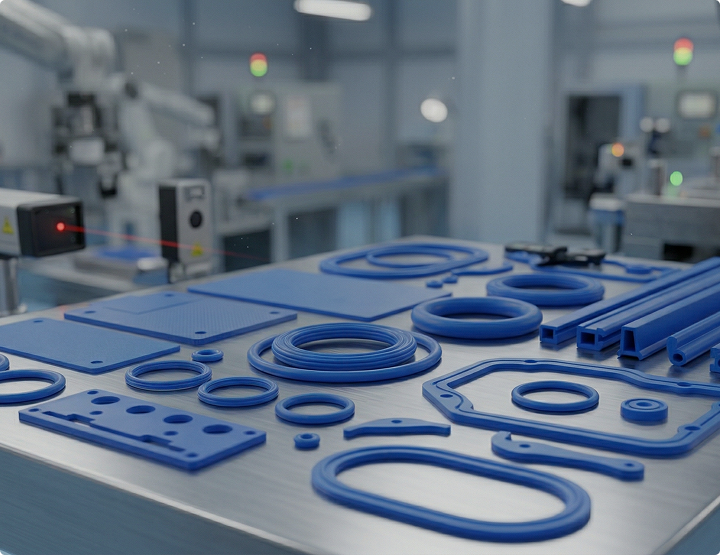
- Molded O-rings and compression seals
- Sheet and strip materials
- Extruded shapes and profiles
- Molded-in-place gaskets
TYPE, CLASS, AND GRADE
CLASSIFICATIONS
MIL-DTL-25988 organizes fluorosilicone materials into a hierarchical classification system:
Types (by form/shape):
- Types 1: O-rings and compression seals
- Types 2: Sheets, strips, molded parts, and extruded shapes
Classes (by strength):
- Class 1: General-purpose compounds
- Class 2: High-strength compounds with enhanced mechanical properties
Grades (by hardness):
- Grades correspond to Shore A durometer: 40, 50, 60, 70, 75, 80
MIL-DTL-25988 MATERIAL SPECIFICATIONS
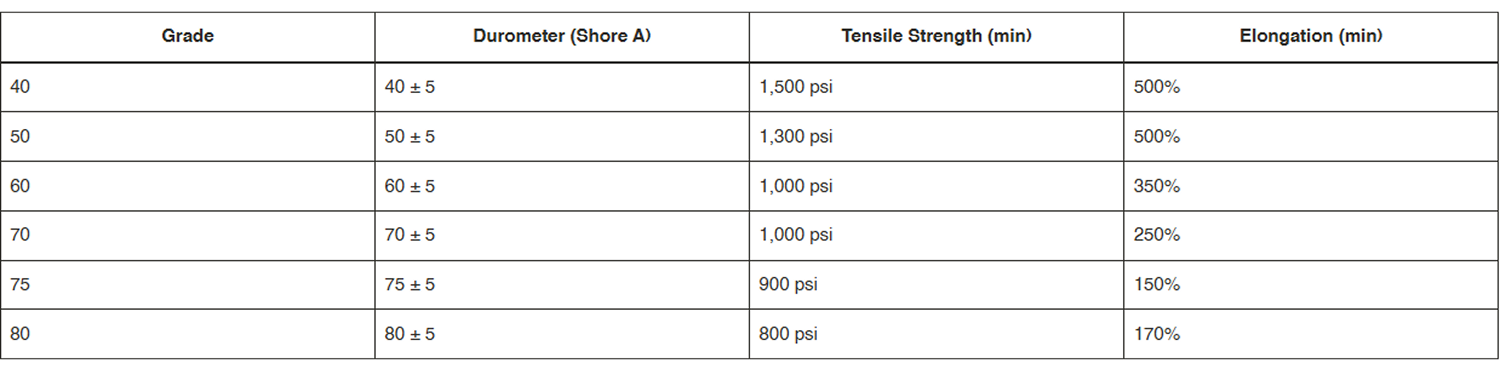
*Data sourced from MIL-DTL-25988C specification requirements*
CERTIFICATION AND TRACEABILITY
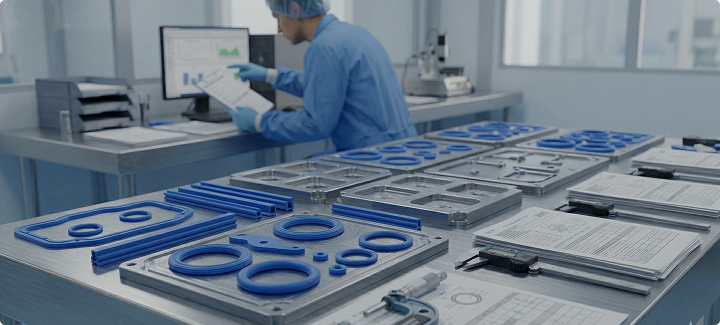
Aerospace applications require full material traceability. Certified fluorosilicone suppliers provide:
- Certificate of Analysis (COA) for each batch
- Physical property test results
- Fuel immersion test data
- Lot traceability documentation
- Compliance certificates for specific material callouts
AEROSPACEAPPLICATIONS:WHEREFLUOROSILICONEEXCELS
FUEL SYSTEM SEALING
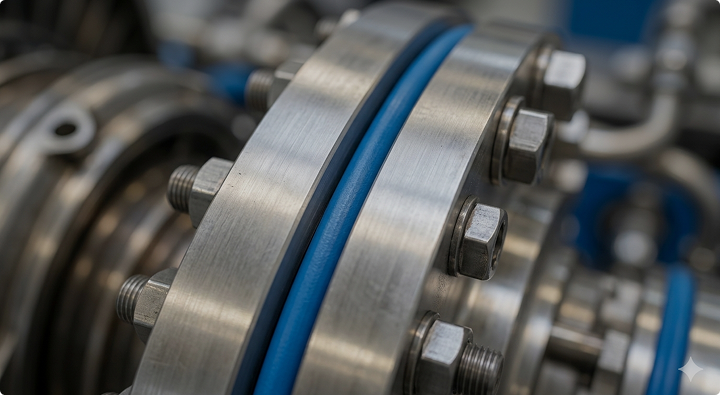
The primary application for fluorosilicone in aerospace is fuel system sealing. Aircraft fuel systems present the perfect storm of challenges: aromatic hydrocarbon exposure, extreme temperature cycling, and zero-failure tolerance.
Specific Fuel System Applications:
- Fuel tank access panel seals
- Fuel pump O-rings and gaskets
- Fuel line connector seals
- Fuel injector seals
- Fuel control system diaphragms
- Fuel quantity probe seals
Parker Hannifin, a leading aerospace seal manufacturer, describes fluorosilicone as the “Gold Standard for Jet Fuel” due to its unmatched combination of hydrocarbon compatibility and low-temperature performance.

ENGINE AND APU SEALING
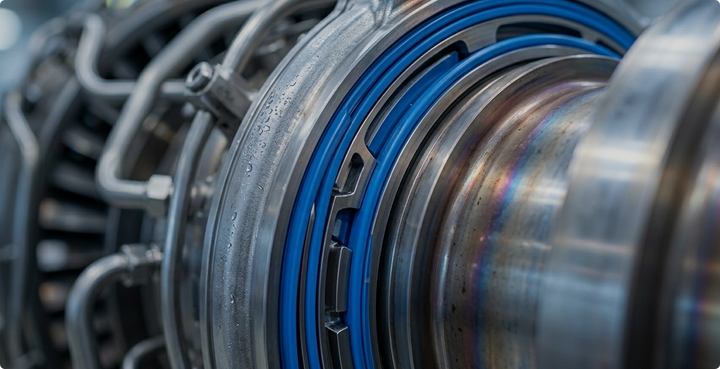
Aircraft engines and Auxiliary Power Units (APUs) generate significant heat while requiring seals that maintain integrity during cold-start conditions.
Engine Applications:
- Engine gaskets and shrouds
- Oil system seals
- Hydraulic system static seals
- Bleed air system seals
- Engine control system seals
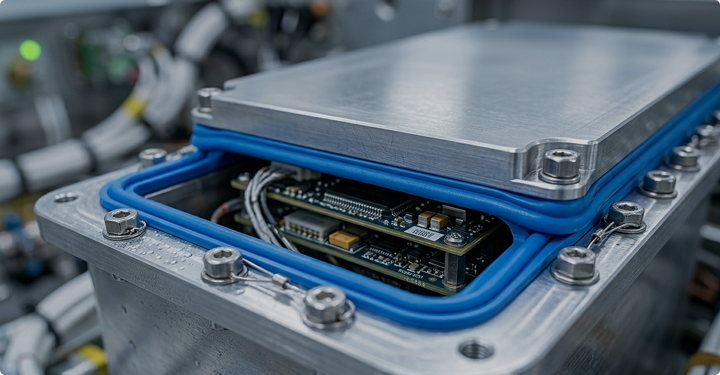
ELECTRICAL AND AVIONICS HOUSING
SEALS
Fluorosilicone’s electrical insulation properties combined with environmental
resistance make it ideal for protecting sensitive avionics.
Electrical Applications:
- Electrical connector seals
- Junction box gaskets
- Avionics housing environmental seals
- Low-outgassing applications for space systems
ENVIRONMENTAL AND EXTERIOR SEALS
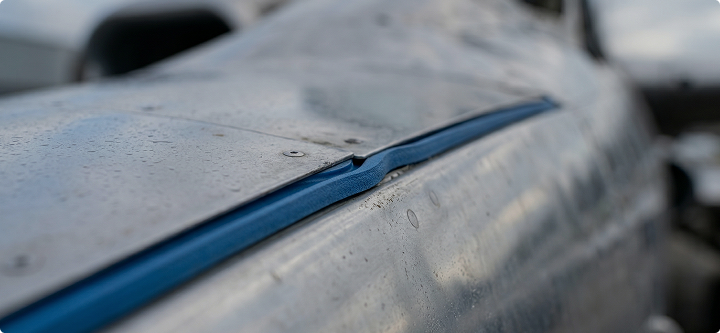
Aircraft exterior seals must withstand UV radiation, ozone, weathering, and temperature extremes while maintaining sealing integrity.
Exterior Applications:
- Door and hatch seals
- Window frame seals
- Access panel gaskets
- Antenna mounting seals
MATERIAL COMPARISON:
FLUORSILICONE VS ALTERNATIVE AEROSPACE ELASTOMERS
FVMQ VS FKM (VITON) VS NBR (NITRILE)
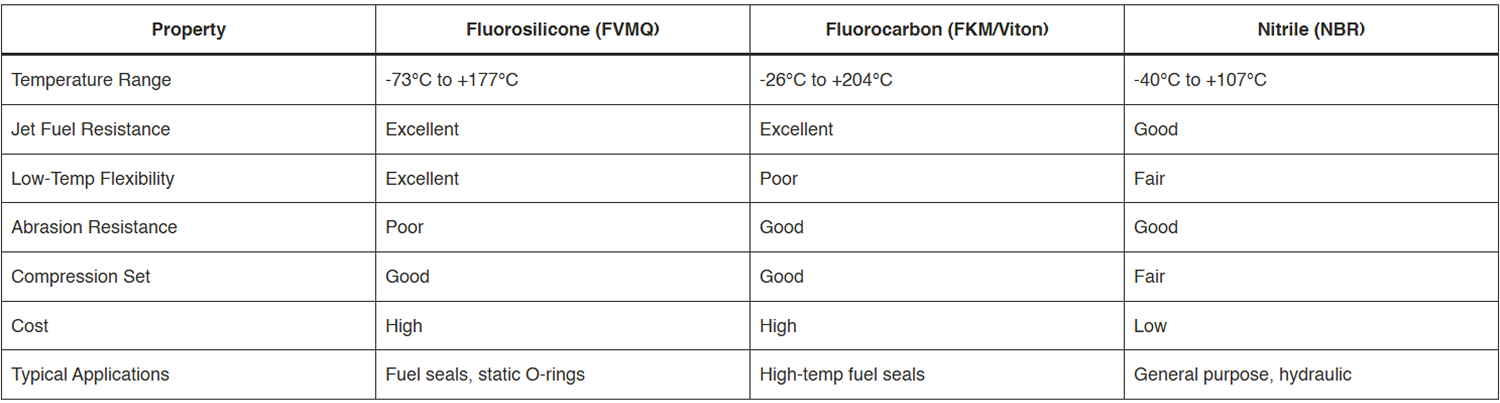
Selecting the right elastomer requires balancing multiple performance criteria. This comparison examines the three most common aerospace sealing materials:
WHEN TO CHOOSE FLUOROSILICONE
OVER FKM
While FKM offers superior high-temperature performance and better mechanical properties, fluorosilicone is the better choice when:
- Operating temperatures drop below -26°C – FKM becomes too rigid to seal effectively
- Static sealing is required – FVMQ’s lower abrasion resistance is irrelevant
- Fuel system integration – both materials resist fuels, but FVMQ handles the cold-start to operating temperature transition better
- Cost is secondary to reliability – both are premium materials; FVMQ’s unique low-temp capability justifies the investment
TEMPERATURE AND FUEL RESISTANCE COMPARISON MATRIX

DESIGNCONSIDERATIONSFOR AEROSPACE ENGINEERS
STATIC VS. DYNAMIC APPICATIONS
Recommended for Static Sealing:
- Fuel tank and line seals
- Electrical housing gaskets
- Access panel seals
- Engine compartment static seals
Not Recommended for Dynamic Applications:
- Reciprocating shaft seals
- Rotary lip seals
- Piston seals
- Any application with sliding friction
For dynamic fuel system seals, consider PTFE-composite seals or perfluoroelastomer (FFKM) alternatives with better wear characteristics.
COMPRESSION SET AND SEAL FORCE RETENTION
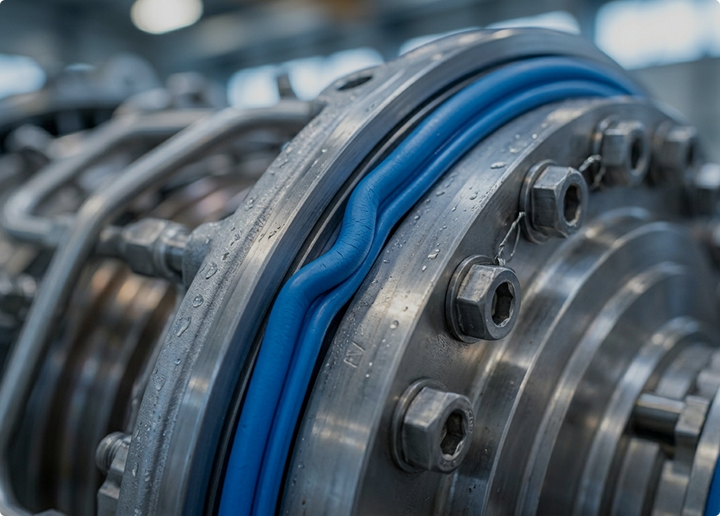
Aerospace seals must maintain sealing force over years of service, including extended periods of compression during aircraft storage. Fluorosilicone compounds formulated to MIL-DTL-25988 requirements demonstrate compression set values typically below 25%, ensuring long-term seal integrity.
GROOVE DESIGN RECOMMENDATIONS
Proper groove design maximizes fluorosilicone seal performance:
- O-Ring Groove Fill: 70-85% of groove volume
- Compression: 15-25% of O-ring cross-section
- Surface Finish: 16-32 µin Ra for static seals
- Corner Radii: Minimum 0.005″ to prevent cutting
SPECIFYING
FLUOROSILICONE FOR
AEROSPACE
SUCCESS
Fluorosilicone’s unique position as the only elastomer combining jet fuel resistance with cryogenic temperature flexibility makes it irreplaceable for critical aerospace sealing applications. When specifying FVMQ for your project:
- Verify MIL-DTL-25988 compliance for traceability and performance assurance
- Match hardness to application – 60-70 Shore A for most O-rings
- Design for static applications – avoid dynamic friction exposure
- Request full certification – COA, test reports, and traceability documentation
- Consider the total temperature range – FVMQ excels where FKM fails at low temperatures
For aerospace fuel systems, engine seals, and electrical housings where failure is not an option, fluorosilicone remains the proven, specification-compliant solution that has protected aircraft systems for decades.
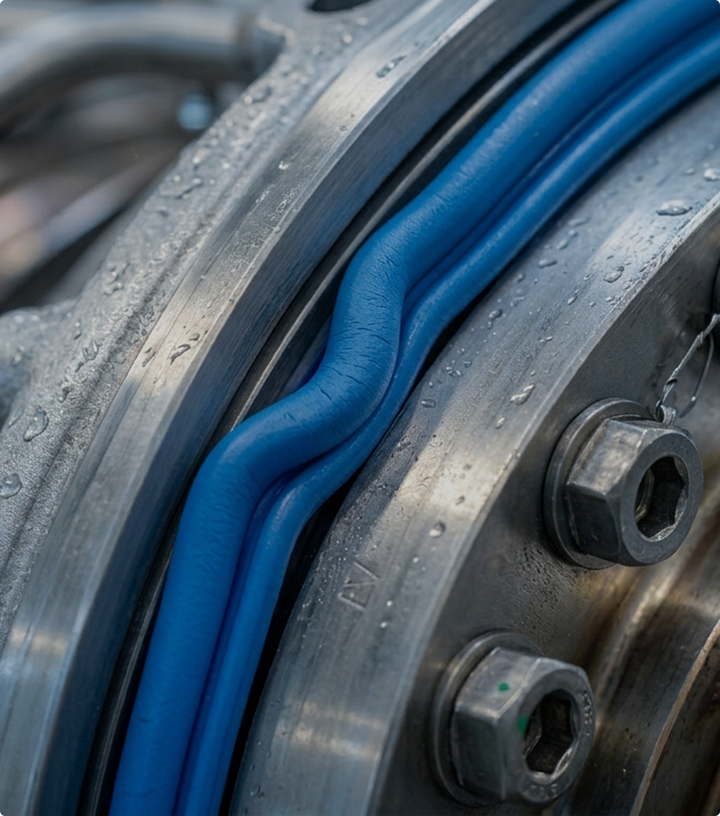
In aerospace applications, where extreme temperature variation and aggressive fuel exposure are constant challenges, selecting the right sealing material is critical to system reliability. At Go Flexion, fluorosilicone stands as a proven solution engineered to perform across these demanding conditions—combining exceptional low-temperature flexibility with outstanding resistance to jet fuels and hydrocarbons. As a trusted Flourosilicone Manufacturer, Go Flexion delivers high-spec sealing solutions that meet stringent aerospace standards, supporting applications from fuel systems and engine components to avionics and environmental sealing.
As aerospace systems continue to evolve toward higher efficiency, longer service intervals, and more demanding operating conditions, material selection plays a critical role in overall system integrity. GoFlexion works closely with engineering and procurement teams to optimize fluorosilicone formulations for specific applicationsม whether for low-temperature fuel sealing or high-reliability static gaskets. By combining deep material expertise with precision manufacturing, we help deliver sealing solutions that extend component lifespan, reduce maintenance cycles, and support the next generation of aerospace innovation.
HOW WE HELP YOU DECIDE
We assess your operating fluids, temperature profile, sealing dynamics, and cost targets, then recommend fluorosilicone or alternatives where appropriate. If abrasion, dynamic motion, or strict cost caps are dominant constraints, we document why another elastomer may be better and outline the tradeoffs.
Request a Proposal or Book a Discovery Call to get a tailored materials recommendation.