
Introduction: Silicone’s Critical Role in Modern Automotive Manufacturing
The automotive industry demands materials that withstand extreme temperatures, resist chemical degradation, and maintain performance across hundreds of thousands of kilometers. Silicone elastomers have emerged as essential materials meeting these rigorous requirements, offering unique combinations of thermal stability, flexibility, and durability that traditional materials cannot match.
From engine seals that must endure 200°C+ temperatures to electrical connectors protecting sensitive electronics, silicone components play vital roles in vehicle safety, performance, and longevity. This guide examines real-world case studies demonstrating how automotive manufacturers leverage silicone technology to solve complex engineering challenges.
Understanding Automotive Silicone Requirements
Key Performance Demands
Thermal Extremes:
- Engine bay temperatures: -40°C to 250°C
- Exhaust system proximity: Up to 300°C intermittent
- Brake system heat: 200°C+ during heavy use
- Climate variation: Desert heat to arctic cold
Chemical Resistance:
- Engine oils and lubricants
- Transmission fluids
- Coolants and antifreeze
- Fuel and fuel additives
- Cleaning solvents
- Road salts and chemicals
Mechanical Stress:
- Vibration and resonance
- Pressure cycling
- Compression set resistance
- Dynamic flexing
- Abrasion and wear
Environmental Factors:
- UV exposure
- Ozone degradation
- Moisture and humidity
- Dust and particulate
Silicone Advantages in Automotive Applications
| Property | Silicone Performance | Automotive Benefit |
|---|---|---|
| Temperature range | -60°C to 300°C | Extreme environment survival |
| Compression set | <15% at 150°C | Long-term sealing integrity |
| UV resistance | Excellent | Exterior durability |
| Electrical insulation | High dielectric strength | Electrical system protection |
| Flexibility retention | Maintains elasticity | Dynamic seal performance |
| Chemical resistance | Broad fluid compatibility | Fluid sealing applications |
Case Study 1: Turbocharger Intercooler Hoses
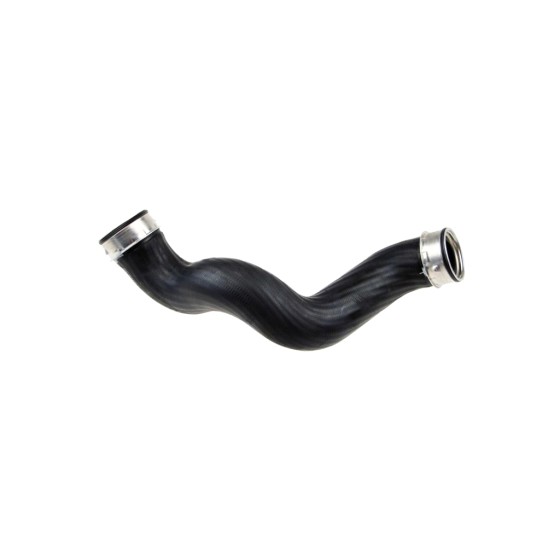
The Challenge
A major European automaker experienced recurring failures in turbocharger intercooler hoses on high-performance diesel engines. Traditional rubber hoses degraded rapidly under the combined stress of:
- Temperature cycling: 80°C to 220°C
- Oil vapor exposure from crankcase ventilation
- Pressure pulses from turbocharger boost
- Vibration from engine operation
Failure modes included cracking, softening, and eventual burst failures, resulting in warranty claims and customer dissatisfaction.
The Silicone Solution
Material Selection:
- High-strength silicone elastomer (VMQ)
- Fluorosilicone inner liner for oil resistance
- Aramid fiber reinforcement for pressure rating
- Heat-resistant pigment for under-hood temperatures
Design Features:
- Convoluted sections for flexibility and vibration isolation
- Smooth bore for optimal airflow
- Reinforced cuffs for secure clamping
- Integrated sensors mounts where required
Results and Benefits
Performance Improvements:
- Service life extended from 60,000 km to 250,000+ km
- Zero warranty claims related to hose failure
- Operating temperature range expanded
- Weight reduction of 15% compared to rubber alternatives
Manufacturing Benefits:
- Consistent quality through molding process
- Reduced part complexity
- Integration of multiple functions in single component
- Color coding for assembly line efficiency
Case Study 2: Electric Vehicle Battery Sealing
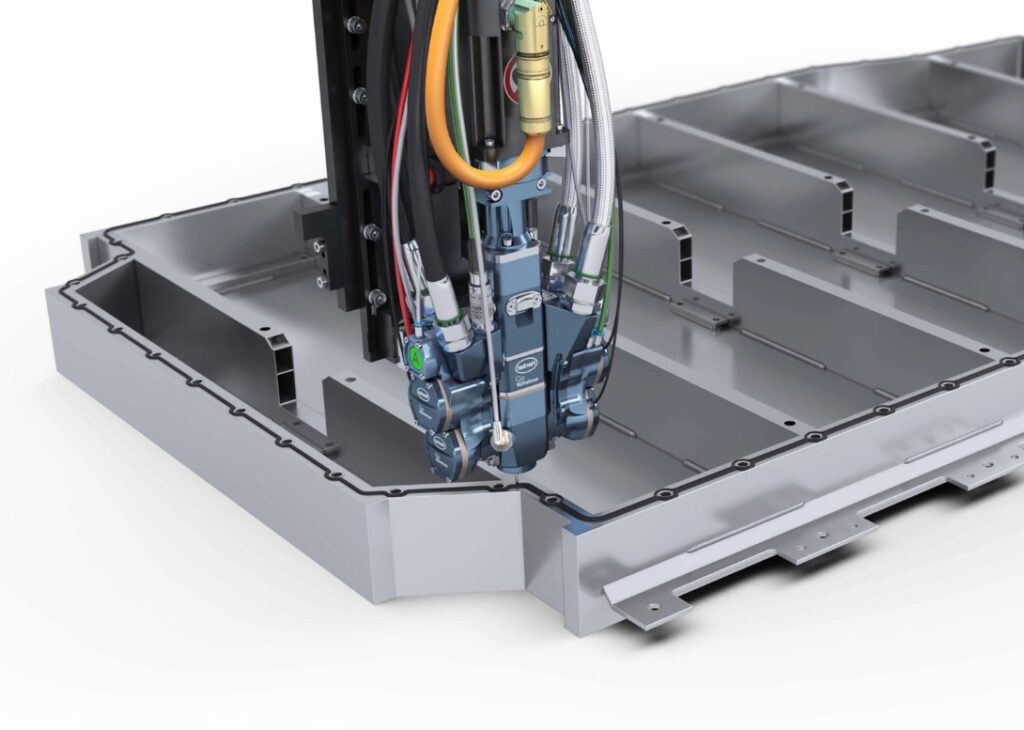
The Challenge
An electric vehicle startup required sealing solutions for battery pack enclosures that would:
- Maintain IP67 rating (complete dust and water protection)
- Accommodate thermal expansion of battery modules
- Provide electrical insulation between cells
- Resist electrolyte exposure from potential cell venting
- Survive 15-year vehicle lifespan
Traditional gasket materials failed to meet the combination of chemical resistance, temperature range, and compression set requirements.
The Silicone Solution
Material Selection:
- Electrically conductive silicone for EMI shielding
- High-purity silicone for cell isolation
- Flame-retardant additive (UL94 V-0 rating)
- Low-outgassing formulation for clean environment
Design Approach:
- Custom-molded frame gaskets for enclosure sealing
- Individual cell pads for thermal management
- Compression limiters for controlled seal force
- Integrated cooling channel seals
Results and Benefits
Safety and Reliability:
- Maintained IP67 rating through 2,000+ thermal cycles
- Passed nail penetration and crush tests without thermal runaway propagation
- Zero field failures over 3 years of production
- Meets UN ECE R100 EV safety standards
Performance Metrics:
- Operating range: -40°C to 85°C continuous
- Compression set: <10% after 1,000 hours at 85°C
- Dielectric strength: >20 kV/mm
- Thermal conductivity: 2.5 W/mK (filled grades)
Case Study 3: Headlamp Sealing and Venting

The Challenge
LED headlamp assemblies require sophisticated sealing solutions that must:
- Prevent water and dust ingress (IP6K9K rating)
- Allow pressure equalization to prevent condensation
- Withstand high-pressure washing
- Resist UV degradation from sunlight
- Maintain seal integrity over 10+ year lifespan
Traditional venting solutions used porous PTFE membranes that clogged with dust or allowed water ingress under pressure.
The Silicone Solution
Dual-Component System:
Primary Seal:
- High-consistency silicone rubber (HCR)
- UV-stable formulation
- Compression seal design
- Integrated mounting features
Venting Solution:
- Silicone membrane with controlled porosity
- Oleophobic coating to resist contamination
- Pressure-responsive permeability
- Integrated splash guard
Results and Benefits
Reliability Improvements:
- 100% pressure wash test compliance
- Zero condensation-related warranty claims
- Extended service life vs. previous PTFE solution
- Reduced assembly complexity
Cost Benefits:
- 30% reduction in warranty costs
- Simplified assembly process
- Reduced part count
- Improved manufacturing yield
Case Study 4: Engine Gasket and Sealing System

The Challenge
A heavy-duty diesel engine manufacturer faced sealing challenges with:
- Cylinder head gaskets requiring precise thickness control
- Valve cover gaskets needing reusability for service
- Oil pan gaskets surviving extreme vibration
- Water pump seals handling coolant chemistry
Cork and rubber composite gaskets showed inconsistent performance and short service life under severe duty cycles.
The Silicone Solution
Multi-Application Approach:
Cylinder Head:
- Multi-layer steel (MLS) with silicone coating
- Precise thickness control (±0.025mm)
- Micro-sealing beads for coolant and oil passages
- Fire ring integration for combustion sealing
Valve Covers:
- Molded silicone gaskets with integrated spark plug tube seals
- Reusable design for service intervals
- Compression limiters for controlled loading
- Molded-in alignment features
Oil Pan:
- Liquid silicone rubber (LSR) formed-in-place gasket
- Excellent adhesion to aluminum and steel
- Vibration damping properties
- Instant green strength for assembly
Results and Benefits
Performance Gains:
- Extended service intervals to 50,000 km
- Elimination of weepage and seepage issues
- Reduced warranty claims by 85%
- Improved cold-start sealing
Manufacturing Efficiency:
- Reduced assembly line complexity
- Elimination of gasket inventory
- Improved quality consistency
- Lower total installed cost
Case Study 5: HVAC System Components

The Challenge
Automotive HVAC systems require components that:
- Seal refrigerant (R-134a, R-1234yf) effectively
- Withstand temperature extremes (-40°C to 120°C)
- Resist compressor oil and desiccant exposure
- Maintain flexibility for vibration isolation
- Meet increasingly stringent leak rate requirements
Traditional NBR and HNBR materials showed limitations in low-temperature flexibility and long-term compression set.
The Silicone Solution
Material Development:
- Low-temperature silicone (-60°C capability)
- Refrigerant-resistant formulation
- Low permeability for leak prevention
- Compression set resistant to 150°C
Component Applications:
- O-rings for compressor connections
- Gaskets for expansion valves
- Seals for accumulator/drier units
- Vibration dampers for compressor mounts
Results and Benefits
System Performance:
- 50% reduction in refrigerant leakage
- Extended service life to 15+ years
- Improved cold-weather performance
- Compatibility with new low-GWP refrigerants
Environmental Impact:
- Reduced refrigerant emissions
- Lower global warming potential
- Compliance with EPA Section 608
- Support for electrification (heat pump systems)
Case Study 6: Connector Sealing in ADAS Systems
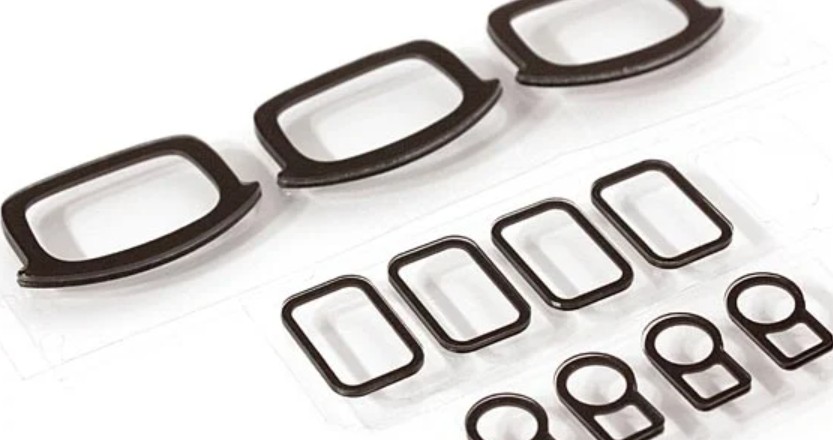
The Challenge
Advanced Driver Assistance Systems (ADAS) require electrical connectors that:
- Protect sensitive electronics from moisture and contamination
- Maintain signal integrity in high-vibration environments
- Survive under-hood temperature extremes
- Allow for serviceability
- Meet ISO 26262 functional safety requirements
Traditional connector seals using TPE and rubber showed inconsistent performance in long-term environmental exposure.
The Silicone Solution
Multi-Cavity Connector Seals:
- Liquid silicone rubber (LSR) injection molding
- Individual wire seals with membrane technology
- Interface seals for connector mating
- Integrated wire strain relief
Material Specifications:
- High-purity silicone for dielectric properties
- Flame retardant (UL94 V-0)
- Low outgassing for optical systems
- EMI shielding options (conductive fillers)
Results and Benefits
Reliability Metrics:
- IP6K9K rating maintained through thermal cycling
- Zero corrosion-related failures
- Signal integrity maintained to 10 Gbps
- Passes USCAR-2 rev 6 testing
Safety Compliance:
- Meets ISO 26262 ASIL requirements
- Supports autonomous driving systems
- Enables functional safety architectures
- Long-term reliability for safety-critical applications
Material Selection Guide
Silicone Types for Automotive Applications
| Type | Designation | Key Properties | Typical Applications |
|---|---|---|---|
| Dimethyl silicone | MQ, VMQ | General purpose, cost-effective | Gaskets, seals, hoses |
| Methyl vinyl silicone | VMQ | High strength, heat cured | Engine seals, turbo hoses |
| Fluorosilicone | FVMQ | Fuel and oil resistance | Fuel system seals, transmission |
| Phenyl silicone | PMQ | Extreme low temperature | Cold climate applications |
| Liquid silicone | LSR | Precision molding, fast cure | Connector seals, medical-grade |
| High-consistency | HCR | High strength, extrusion | Hoses, profiles, sheets |
Selection Criteria
Temperature Requirements:
- Standard: VMQ (-60°C to 225°C)
- High temp: Special formulations to 300°C
- Low temp: Phenyl silicone to -100°C
Chemical Exposure:
- Fuel/oil: Fluorosilicone (FVMQ)
- Coolant: VMQ with stabilizers
- Brake fluid: VMQ (DOT 3, 4, 5.1)
- Greases: Material-specific testing required
Mechanical Requirements:
- High strength: High-consistency rubber (HCR)
- Precision: Liquid silicone rubber (LSR)
- Flexibility: Low-durometer formulations
- Durability: High-tear-strength grades
Design and Manufacturing Considerations
Mold Design for Automotive Silicone
Key Principles:
- Precision tooling for tight tolerances
- Venting for air escape during cure
- Temperature control for consistent cure
- Surface finish for release and appearance
Process Selection:
| Process | Best For | Tolerance | Volume |
|---|---|---|---|
| Compression molding | Large parts, gaskets | ±0.1mm | Low-medium |
| Transfer molding | Medium complexity | ±0.05mm | Medium |
| Injection molding (LSR) | Precision parts | ±0.025mm | High |
| Extrusion | Profiles, hoses | ±0.1mm | High |
Quality Assurance
Testing Protocols:
- Compression set (ASTM D395)
- Tensile strength and elongation (ASTM D412)
- Hardness (ASTM D2240)
- Fluid resistance (ASTM D471)
- Low-temperature flexibility (ASTM D2137)
- Heat aging (ASTM D573)
Automotive Standards:
- SAE J200 classification
- ASTM D2000 line call-outs
- OEM material specifications
- IATF 16949 quality system
Future Trends in Automotive Silicone
Electrification Impact
Battery Electric Vehicles (BEV):
- Thermal management system seals
- Battery pack enclosure gaskets
- High-voltage connector seals
- Fire-resistant materials
Fuel Cell Vehicles:
- Hydrogen system seals
- Ion exchange membrane compatibility
- Low-permeability formulations
- Chemical resistance to methanol/water
Autonomous Driving
Sensor Protection:
- LiDAR housing seals
- Camera module gaskets
- Radar enclosure sealing
- Cleaning system compatibility
Safety Systems:
- Airbag component seals
- Brake system redundancy
- Steering system backup seals
- Functional safety compliance
Sustainability
Bio-based Silicones:
- Renewable raw materials
- Reduced carbon footprint
- Recyclability improvements
- Life cycle assessment optimization
Lightweighting:
- Density reduction
- Thin-wall designs
- Structural optimization
- Material substitution
Conclusion: Silicone’s Essential Role
These case studies show why silicone remains such a critical material in modern automotive manufacturing. Across applications such as turbocharger hoses, EV battery seals, headlamp systems, engine gaskets, HVAC components, and ADAS connectors, Silicone Rubber consistently delivers the thermal stability, chemical resistance, flexibility, and long-term durability that automotive environments demand. As vehicles continue to evolve through electrification, connectivity, and more advanced safety systems, the role of silicone will only become more important in helping manufacturers meet higher performance and reliability standards.
At Goflexion, we see this blog context as a clear reflection of where advanced material engineering creates real value for automotive brands. From supporting complex sealing challenges to helping manufacturers choose the right formulation for demanding use cases, Goflexion brings together application knowledge, material expertise, and manufacturing capability to develop Silicone Rubber solutions that align with today’s automotive performance requirements and tomorrow’s innovation goals.
*For technical consultation on automotive silicone applications, contact Flexion (GoFlexion) engineering team.*
Frequently Asked Questions (FAQ)
1. Why is silicone widely used in automotive applications?
Silicone is used in automotive applications because it offers excellent resistance to extreme temperatures, chemicals, UV exposure, and mechanical stress. Unlike traditional rubber or plastic, silicone maintains flexibility and sealing performance over long periods, making it ideal for critical components such as gaskets, hoses, and electrical connectors.
2. What temperature range can automotive silicone withstand?
Automotive-grade silicone typically operates within a wide temperature range of approximately -60°C to 300°C, depending on the formulation. This allows it to perform reliably in environments such as engine bays, exhaust-adjacent systems, and cold climate conditions.
3. What is the difference between HCR and LSR silicone?
High Consistency Rubber (HCR) is a solid, dough-like material used for extrusion and compression molding, making it suitable for hoses, seals, and large components. Liquid Silicone Rubber (LSR) is a flowable material used in injection molding, ideal for high-precision parts such as connectors and intricate seals.
4. Why is fluorosilicone used in fuel systems?
Fluorosilicone (FVMQ) is specifically engineered to resist fuels, oils, and harsh automotive fluids. It maintains its mechanical properties even when exposed to gasoline, diesel, and transmission fluids, making it essential for fuel system seals and components.
5. How does silicone improve vehicle reliability?
Silicone improves reliability by maintaining sealing integrity under thermal cycling, resisting degradation from chemicals, and reducing failure risks such as cracking or leakage. This results in longer service life, fewer warranty claims, and more consistent performance across the vehicle lifespan.
6. Is silicone suitable for electric vehicle (EV) applications?
Yes, silicone is critical in EV applications. It is used for battery sealing, thermal management, electrical insulation, and EMI shielding. Its ability to handle thermal expansion, maintain dielectric strength, and resist environmental exposure makes it essential for EV safety and performance.
7. How long do silicone automotive components typically last?
Silicone components can last the full lifespan of a vehicle (10–15+ years) when properly designed. In many cases, they significantly outlast traditional rubber alternatives, especially in high-temperature or chemically aggressive environments.
8. What are the main manufacturing processes for silicone automotive parts?
The main processes include:
- Compression molding for large or simple parts
- Transfer molding for medium-complexity components
- Injection molding (LSR) for precision, high-volume parts
- Extrusion for hoses and continuous profiles
Each process is selected based on tolerance, volume, and design complexity.
9. Can silicone be customized for specific automotive requirements?
Yes. Silicone formulations can be tailored for:
- Flame resistance (UL94 V-0)
- Conductivity for EMI shielding
- Low outgassing for sensitive electronics
- Enhanced thermal conductivity
- Specific chemical resistance
This flexibility is one of the key reasons silicone is preferred in advanced automotive engineering.
10. How do I choose the right silicone material for my application?
Material selection depends on:
- Temperature exposure
- Chemical environment
- Mechanical stress requirements
- Electrical properties
- Manufacturing method
Working with an experienced supplier like Flexion (GoFlexion) ensures the right formulation and design are matched to your application for optimal performance.