
High-Consistency Rubber in Aviation and Space
The aerospace industry represents one of the most demanding environments for elastomeric materials. Extreme temperatures, aggressive chemicals, high altitudes, and zero-failure tolerance requirements push materials to their absolute limits. High-Consistency Rubber (HCR) silicone elastomers have proven essential in meeting these challenges, offering unique combinations of thermal stability, chemical resistance, and mechanical reliability that aerospace engineers depend on.
From commercial airliners flying at 35,000 feet to spacecraft experiencing the vacuum of space, HCR silicone components perform critical functions in sealing, insulation, vibration management, and environmental protection. This guide explores the applications, specifications, and performance characteristics of HCR silicone in aerospace environments.
Understanding HCR Silicone in Aerospace Context
What is High-Consistency Rubber (HCR)?
HCR silicone, also known as solid silicone rubber or high-temperature vulcanizing (HTV) silicone, is a two-component material consisting of:
- Base polymer: Long-chain silicone molecules (polydimethylsiloxane)
- Reinforcing fillers: Fumed silica for strength and elasticity
- Crosslinking agents: Peroxides or platinum catalysts for curing
- Additives: Heat stabilizers, pigments, and functional fillers
Key Characteristics:
- High molecular weight (500,000-1,000,000 g/mol)
- Putty-like consistency before curing
- Requires heat and pressure for vulcanization
- Post-cure processing for optimal properties
Why HCR for Aerospace?
| Property | HCR Performance | Aerospace Benefit |
|---|---|---|
| Temperature range | -65°C to 260°C (standard), -80°C to 300°C (special) | Extreme environment operation |
| UV resistance | Excellent | Space radiation survival |
| Ozone resistance | Outstanding | High-altitude durability |
| Compression set | <15% at 175°C | Long-term sealing integrity |
| Flame resistance | UL94 V-0 available | Fire safety compliance |
| Outgassing | Low volatile content | Space vacuum compatibility |
Critical Aerospace Applications
1. Engine Seals and Gaskets
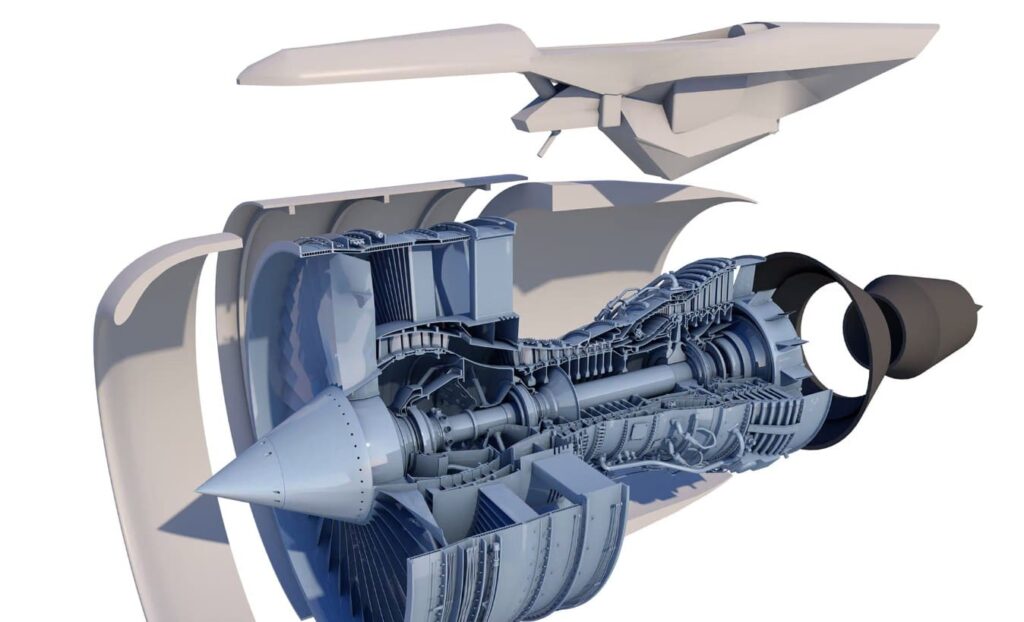
Operating Environment:
- Temperature: -40°C to 250°C
- Pressure: Up to 500 psi
- Media: Jet fuel, hydraulic fluid, lubricating oils
- Vibration: High-frequency engine vibration
HCR Applications:
Turbine Seals:
- Blade tip seals
- Interstage seals
- Bearing compartment seals
- Accessory drive seals
Material Requirements:
- High-temperature stability (250°C continuous)
- Jet fuel resistance (JP-4, JP-5, JP-8)
- Low compression set
- High tear strength
Performance Specifications:
- AMS-R-83485 (fluorosilicone)
- AMS 3304 (high-temperature)
- SAE AMS 3216 (fuel-resistant)
2. Environmental Control Systems
System Functions:
- Cabin pressurization
- Temperature regulation
- Humidity control
- Air quality management
HCR Components:
Duct Seals:
- Flexible connections between duct sections
- Vibration isolation
- Thermal expansion accommodation
- Pressure sealing
Valve Seals:
- Butterfly valve seals
- Check valve seats
- Control valve packings
- Pressure relief valve seals
Material Specifications:
- AMS 3301 (general purpose)
- AMS 3302 (low-temperature)
- AMS 3303 (high-temperature)
3. Fuel System Sealing
Challenges:
- Aggressive fuel chemistry
- Wide temperature range
- Fire safety requirements
- Long service life (30+ years)
HCR Solutions:
Fluorosilicone HCR (FVMQ):
- Superior fuel resistance
- Temperature range: -60°C to 225°C
- Compatible with aromatics in jet fuel
- Meets AMS-R-83485 specification
Applications:
- Fuel tank access panel seals
- Fuel pump seals
- Fuel line couplings
- Fuel control system seals
- Floating seals for fuel tanks
4. Electrical Connectors and Cable Harnesses
Requirements:
- Electrical insulation
- Environmental sealing
- EMI/RFI shielding (when conductive)
- Fire resistance
- Long-term reliability
HCR Applications:
Connector Seals:
- Multi-cavity connector grommets
- Individual wire seals
- Interface seals
- Environmental resistant connectors
Cable Management:
- Cable grommets
- Firewall feedthroughs
- Strain relief boots
- Cable tie cushions
Conductive HCR:
- EMI shielding gaskets
- Grounding pads
- Static dissipation
- Lightning protection
Specifications:
- MIL-DTL-25988 (connector seals)
- SAE AS 85049 (connector accessories)
- AMS 3357 (conductive silicone)
5. Vibration Isolation and Damping
Aerospace Vibration Sources:
- Engine operation
- Aerodynamic forces
- Landing gear impact
- Control surface movement
HCR Solutions:
Vibration Isolators:
- Engine mount bushings
- Equipment isolation mounts
- Avionics rack isolators
- Panel damping pads
Material Properties:
- Tunable durometer (30-80 Shore A)
- High damping coefficient
- Fatigue resistance
- Temperature-stable properties
6. Space Applications
Space Environment Challenges:
- Vacuum (10^-6 to 10^-12 Torr)
- Extreme temperature cycling (-150°C to +120°C in orbit)
- Atomic oxygen (LEO)
- Radiation (UV, gamma, particle)
- Outgassing constraints
HCR for Space:
Low Outgassing Formulations:
- Total Mass Loss (TML) <1.0%
- Collected Volatile Condensable Material (CVCM) <0.10%
- Meets NASA outgassing requirements
- Post-cure processing essential
Applications:
- Spacecraft sealing systems
- Solar array deployment mechanisms
- Antenna gimbal seals
- Docking system seals
- Thermal control system seals
Material Specifications and Standards
AMS (Aerospace Material Specifications)
Common HCR Specifications:
| Specification | Type | Key Properties | Applications |
|---|---|---|---|
| AMS 3301 | General purpose | -54°C to 204°C | General sealing |
| AMS 3302 | Low temperature | -65°C to 204°C | Cold climate |
| AMS 3303 | High temperature | -54°C to 260°C | Engine applications |
| AMS 3304 | Ultra high temp | -54°C to 300°C | Extreme environments |
| AMS 3305 | Low compression set | <10% at 175°C | Critical seals |
| AMS-R-83485 | Fluorosilicone | Fuel resistant | Fuel systems |
| AMS 3357 | Conductive | EMI shielding | Electronics |
SAE Standards
AS (Aerospace Standards):
- AS 568: O-ring sizes
- AS 85049: Connector accessories
- AS 4373: Insulation tubing
ARP (Aerospace Recommended Practices):
- ARP 5316: Storage of elastomer seals
- ARP 1234: Elastomer shelf life
Military Specifications
MIL-DTL Standards:
- MIL-DTL-25988: Silicone rubber, electric grade
- MIL-PRF-6855: Rubber, synthetic, general purpose
- MIL-PRF-83461: O-rings, fluorosilicone
Testing Requirements
Physical Properties:
- Tensile strength (ASTM D412)
- Elongation (ASTM D412)
- Hardness (ASTM D2240)
- Compression set (ASTM D395)
- Tear strength (ASTM D624)
Environmental Resistance:
- Heat aging (AMS 3216)
- Fluid resistance (AMS 3216)
- Low-temperature flexibility (ASTM D2137)
- Ozone resistance (ASTM D1171)
Aerospace-Specific:
- Outgassing (ASTM E595)
- Flammability (14 CFR 25.853)
- Smoke density (ASTM F814)
- Toxicity (BSS 7239)
Manufacturing Processes for Aerospace HCR
Compression Molding
Process Description:
- Preform placed in heated mold cavity
- Mold closes under pressure (500-3000 psi)
- Heat (150-200°C) activates cure
- Part removed, post-cured if required
Aerospace Applications:
- Large seals and gaskets
- Complex geometry parts
- Low to medium volume production
Advantages:
- Lower tooling cost
- Good for large parts
- Material versatility
Challenges:
- Longer cycle times
- Flash removal required
- Dimensional tolerance limits
Transfer Molding
Process Description:
- Material preheated in transfer pot
- Forced into closed mold cavity
- Cures under heat and pressure
- Automatic flash removal possible
Aerospace Applications:
- Precision seals
- Multi-cavity production
- Medium volume requirements
Advantages:
- Better part consistency
- Shorter cycle times than compression
- Good for complex inserts
Injection Molding
Process Description:
- Material plasticized in barrel
- Injected into heated mold
- High pressure (10,000-20,000 psi)
- Fast cure cycles
Aerospace Applications:
- High-volume production
- Precision components
- Complex geometries
Advantages:
- Fastest cycle times
- Excellent dimensional control
- Minimal flash
- High automation potential
Challenges:
- Higher tooling costs
- Material must have injection viscosity
- Shrinkage control critical
Extrusion
Process Description:
- Material forced through die
- Continuous profile production
- Hot air or salt bath curing
- Cut to length or coiled
Aerospace Applications:
- Tubing and hose
- Profile seals
- Cord stock
- Sheet products
Advantages:
- Continuous production
- Consistent cross-section
- Cost-effective for long lengths
Quality Assurance for Aerospace
IATF 16949 and AS9100
Quality Management Systems:
- AS9100: Aerospace-specific QMS
- IATF 16949: Automotive (often dual-certified)
- ISO 9001: Foundation standard
Key Requirements:
- Documented procedures
- Traceability
- Statistical process control
- Corrective action systems
- Continuous improvement
First Article Inspection (FAI)
AS9102 Requirements:
- Dimensional verification
- Material certification
- Special process validation
- Test report review
- Configuration verification
Production Part Approval Process (PPAP)
Aerospace PPAP Levels:
- Level 3: Standard submission
- Dimensional results
- Material test results
- Performance test results
- Process flow diagram
- Control plan
Traceability
Lot Control:
- Raw material lot tracking
- Manufacturing batch records
- Cure date tracking
- Shelf life monitoring
Serialization:
- Individual part marking
- Laser etching
- Ink marking (where allowed)
- RFID tags (emerging)
Design Guidelines for Aerospace HCR
Groove Design for Seals
O-Ring Groove Dimensions:
- Follow AS 568 standard sizes
- Groove width: 1.05-1.10 × O-ring cross-section
- Groove depth: 0.70-0.85 × O-ring cross-section
- Surface finish: 32-63 µin Ra
Rectangular Seal Grooves:
- 15-20% compression for static seals
- 10-15% compression for dynamic seals
- Lead-in chamfers required
- Avoid sharp corners
Tolerance Considerations
Standard Tolerances:
- Compression molded: ±0.005″ or ±0.13mm
- Transfer molded: ±0.003″ or ±0.08mm
- Injection molded: ±0.002″ or ±0.05mm
Critical Dimensions:
- Seal surfaces: Tighter tolerances
- Mounting features: Standard tolerances
- Non-critical areas: Looser tolerances
Surface Finish Requirements
Sealing Surfaces:
- 16-32 µin Ra (0.4-0.8 µm)
- No scratches or defects
- Proper lay direction
Non-Sealing Surfaces:
- 63-125 µin Ra (1.6-3.2 µm)
- Tool marks acceptable
- Flash must be removed
Storage and Shelf Life
Proper Storage Conditions
Temperature:
- 15-25°C (59-77°F) preferred
- Avoid >35°C (95°F)
- Freeze storage possible for extended shelf life
Humidity:
- <75% relative humidity
- Desiccant packaging recommended
- Avoid condensation
Light:
- Protection from UV/sunlight
- Opaque packaging
- Dark storage areas
Other Factors:
- Away from ozone sources
- Away from solvents and fuels
- No heavy stacking
- First-in-first-out rotation
Shelf Life Guidelines
Uncured HCR:
- Standard storage: 12 months
- Refrigerated storage: 24 months
- Frozen storage: 36+ months
Cured HCR Parts:
- Standard formulations: 10-20 years
- Fluorosilicone: 15-25 years
- Special formulations: 25+ years
Shelf Life Extension:
- Testing required for extension
- Visual inspection
- Physical property verification
- Documentation review
Future Trends in Aerospace HCR
Advanced Formulations
Extreme Temperature:
- -100°C to 350°C capability
- Space exploration applications
- Hypersonic vehicles
Chemical Resistance:
- Alternative fuel compatibility
- Biofuel resistance
- Advanced hydraulic fluids
Functional Fillers:
- Carbon nanotube reinforcement
- Graphene-enhanced properties
- Self-healing formulations
Manufacturing Innovations
3D Printing:
- Silicone additive manufacturing
- Complex geometries
- Rapid prototyping
- Low-volume production
Smart Materials:
- Shape-memory silicones
- Self-sensing seals
- Condition monitoring
- Predictive maintenance
Sustainability
Bio-based Silicones:
- Renewable raw materials
- Reduced carbon footprint
- Life cycle benefits
- Recycling initiatives
Lightweighting:
- Lower density formulations
- Thin-wall designs
- Structural optimization
- Fuel efficiency contribution
Conclusion: HCR’s Critical Aerospace Role
Aerospace applications demand materials that can perform reliably under some of the harshest operating conditions possible, from extreme temperatures and aggressive chemicals to vibration, pressure changes, and strict safety requirements. That is exactly why High Consistency Rubber Vietnam continues to be such an important topic for manufacturers looking for durable, high-performance silicone solutions. In critical aerospace components such as seals, gaskets, insulation systems, and vibration-control parts, HCR delivers the consistency, thermal stability, and long-term mechanical reliability needed to support both current aviation platforms and the next generation of aerospace innovation.
At Goflexion, we see the value of this blog context as more than technical education. It reflects the real-world engineering challenges our customers face when selecting materials for demanding applications. By combining material expertise, manufacturing knowledge, and a practical understanding of performance requirements, Goflexion helps turn complex aerospace needs into dependable silicone solutions. This is where our experience in High Consistency Rubber Vietnam becomes especially relevant, supporting companies that need quality, precision, and confidence in every component they produce.
*For technical consultation on aerospace HCR applications and material selection, contact Flexion (GoFlexion) engineering team.*
Frequently Asked Questions (FAQ)
1. What is HCR silicone and why is it used in aerospace?
High-Consistency Rubber (HCR) silicone is a solid, high-molecular-weight elastomer that offers exceptional thermal stability, chemical resistance, and mechanical durability. It is widely used in aerospace because it can withstand extreme environments such as high altitudes, engine heat, and even space vacuum conditions while maintaining reliable performance.
2. What temperature range can HCR silicone handle in aerospace applications?
HCR silicone typically operates between -65°C and 260°C, with specialized formulations reaching up to 300°C or lower than -80°C. This makes it suitable for applications ranging from engine systems to high-altitude and space environments.
3. Why is fluorosilicone (FVMQ) important in aerospace fuel systems?
Fluorosilicone is essential because it offers superior resistance to jet fuels, oils, and aggressive chemicals. It maintains sealing performance even when exposed to aromatic fuels, making it ideal for fuel tanks, fuel lines, and fuel system components.
4. What are the main aerospace applications of HCR silicone?
HCR silicone is used across multiple critical systems, including:
- Engine seals and gaskets
- Environmental control systems (air ducts and valves)
- Fuel system sealing
- Electrical connectors and cable harnesses
- Vibration isolation components
- Spacecraft sealing systems
These applications require long-term reliability with zero-failure tolerance.
5. How does HCR silicone perform in space environments?
HCR silicone is well-suited for space due to its low outgassing properties, resistance to radiation, and ability to withstand extreme temperature cycling. It meets strict aerospace standards such as NASA outgassing requirements, ensuring performance in vacuum conditions.
6. What standards and certifications apply to aerospace HCR materials?
Common aerospace standards include:
- AMS (Aerospace Material Specifications) such as AMS 3301–3305
- SAE standards (e.g., AS568 for O-rings)
- MIL specifications (e.g., MIL-DTL-25988)
- Testing standards such as ASTM and aerospace-specific flammability and outgassing requirements
These ensure materials meet strict safety and performance criteria.
7. What manufacturing processes are used for HCR silicone parts?
Key processes include:
- Compression molding for large or complex parts
- Transfer molding for medium-complexity components
- Injection molding for high-precision parts
- Extrusion for continuous profiles like tubing and seals
The choice depends on part geometry, tolerance requirements, and production volume.
8. How long do aerospace HCR silicone components last?
HCR silicone components can last 10–25+ years depending on formulation and application. In many aerospace systems, they are designed to match or exceed the service life of the aircraft or spacecraft component.
9. What makes HCR silicone suitable for vibration isolation?
HCR silicone offers excellent damping properties, fatigue resistance, and stable mechanical performance across temperature ranges. This makes it ideal for isolating vibration from engines, avionics, and structural components, improving system reliability and longevity.
10. How do engineers select the right HCR material for aerospace use?
Material selection depends on:
- Temperature exposure
- Chemical environment (fuel, hydraulic fluids, etc.)
- Mechanical stress and vibration
- Electrical requirements (insulation or conductivity)
- Regulatory and certification standards
Working with an experienced supplier like Flexion (GoFlexion) ensures the right formulation, compliance, and performance for mission-critical aerospace applications.