
FLUOROSILICONE FOR INDUSTRIAL
MACHINERY: HYDRAULIC SEALS AND HEAVY
EQUIPMENT SOLUTIONS 2026
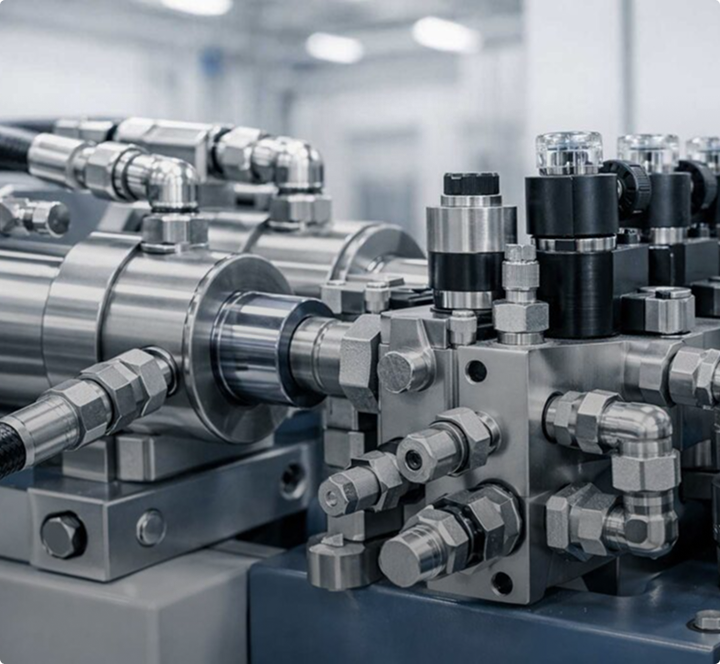
Industrial machinery operates in environments where hydraulic fluids, lubricating oils, and extreme temperatures challenge conventional sealing materials. Fluorosilicone rubber (FVMQ) provides the chemical resistance and temperature stability required for reliable sealing in pumps, valves, cylinders, and rotating equipment.
From hydraulic system seals that resist petroleum-based fluids to outdoor machinery components requiring UV and ozone resistance, fluorosilicone delivers performance that extends maintenance intervals and reduces equipment downtime. The material’s unique combination of fuel resistance and low-temperature flexibility addresses applications where other elastomers fail.

INDUSTRIAL
APPLICATIONS FOR
FLUOROSILICONE
SEALS
Industrial equipment demands sealing materials that withstand mechanical stress, chemical exposure, and thermal cycling. Fluorosilicone serves critical functions across diverse machinery types:
HYDRAULIC SYSTEM SEALS
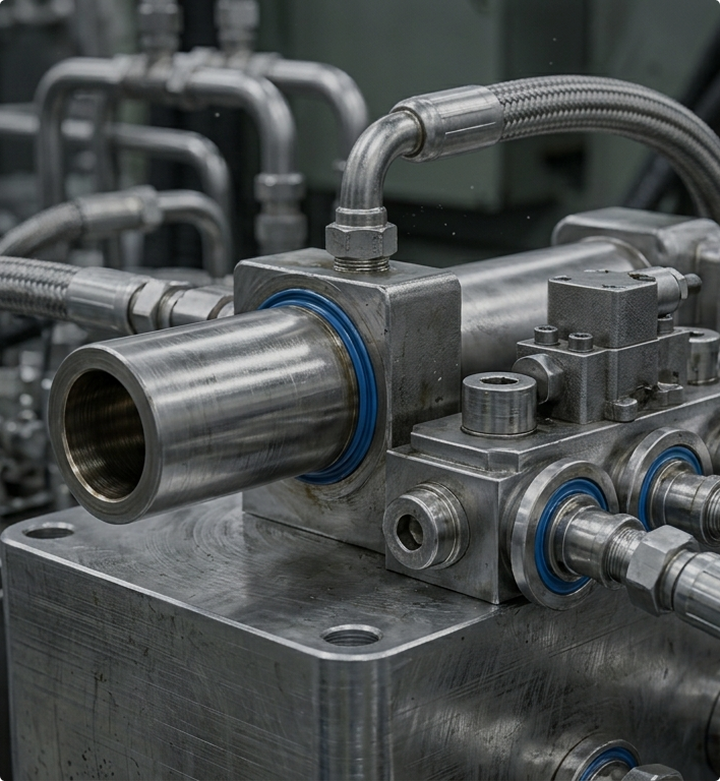
Hydraulic systems rely on seals to maintain pressure and prevent fluid leakage. Fluorosilicone excels in hydraulic applications where:
- Petroleum-based fluids are used (mineral oil, hydraulic oil)
- Synthetic fluids require compatibility (phosphate esters, polyol esters)
- Wide temperature ranges occur (cold start to operating temperature)
- Biodegradable fluids present compatibility challenges

HEAVY EQUIPMENT AND
CONSTRUCTION MACHINERY
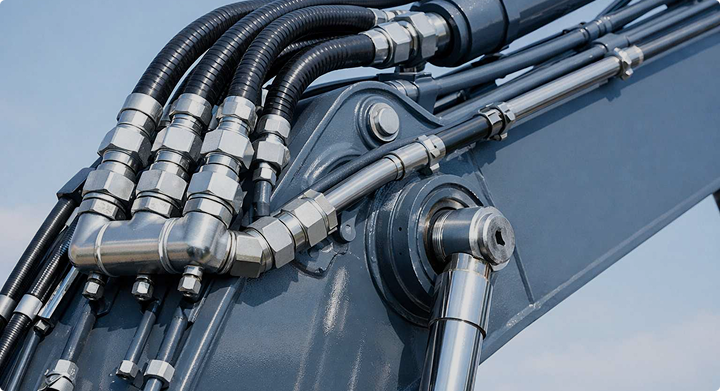
Construction and mining equipment operates in harsh conditions with exposure to:
- Hydraulic oils and greases
- Diesel fuel and engine oil
- Outdoor weathering (UV, ozone)
- Temperature extremes
- Abrasive contamination
Fluorosilicone seals in these applications provide extended service life compared to standard elastomers.
MANUFACTURING EQUIPMENT
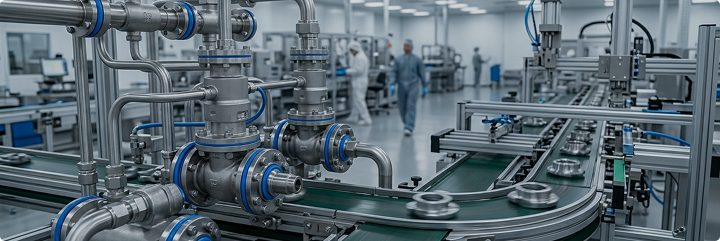
Industrial manufacturing relies on fluorosilicone for:
- Pneumatic cylinder seals: Resists compressor oils
- Vacuum system seals: Maintains integrity in pump applications
- Process valve seals: Chemical resistance for process fluids
- Conveyor components: Bearing seals, roller gaskets
MATERIAL PROPERTIES FOR INDUSTRIAL
APPLICATIONS
TEMPERATURE PERFORMANCE
Industrial machinery experiences wide temperature variations. Fluorosilicone maintains sealing integrity across the entire operating range:

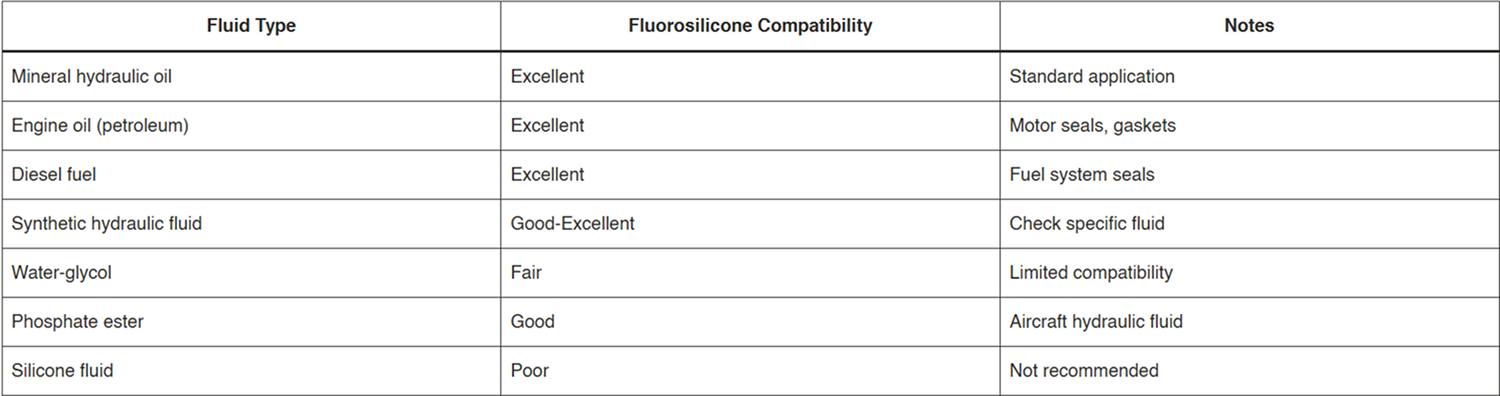
CHEMICAL RESISTANCE IN INDUSTRIAL FLUIDS
MECHANICAL PROPERTIES

HYDRAULIC SEAL DESIGN
SEAL TYPES AND APPLICATIONS

GLAND DESIGN FOR HYDRAULIC O-RINGS
Proper gland design ensures optimal seal performance:

PRESSURE RATINGS
Fluorosilicone O-ring pressure limits depend on hardness and gland design:

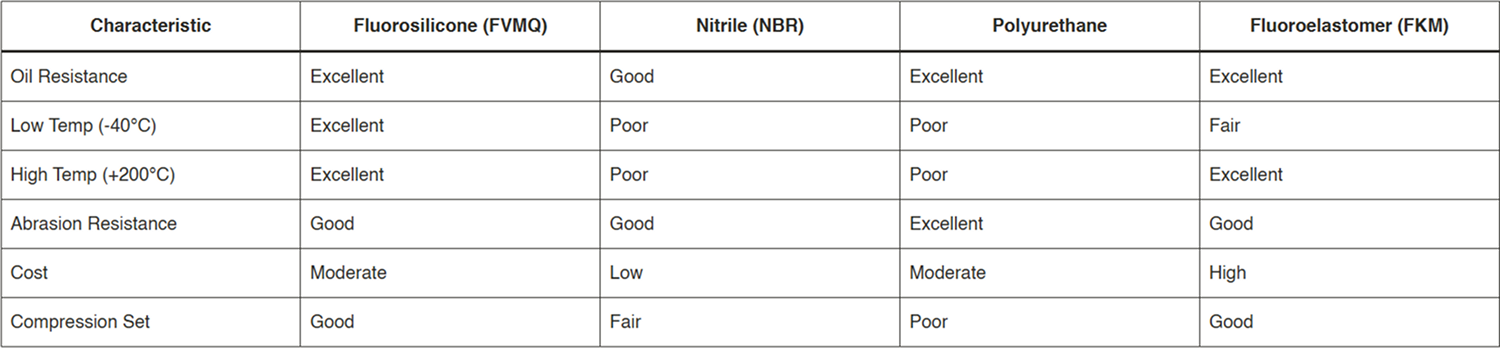
COMPARISON:
FLUOROSILICONE VS. INDUSTRIAL SEAL MATERIALS
Selecting the optimal material requires comparing fluorosilicone against common industrial elastomers:
MATERIAL SELECTION GUIDE

MANUFACTURING AND QUALITY CONTROL
COMPOUND FORMULATION
Industrial fluorosilicone compounds are formulated for specific applications:

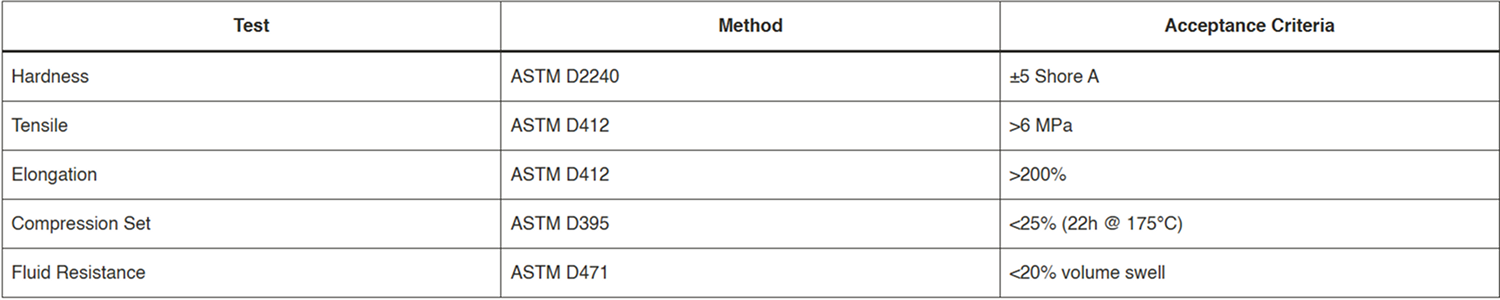
QUALITY TESTING
INSTALLATION AND
MAINTENANCE
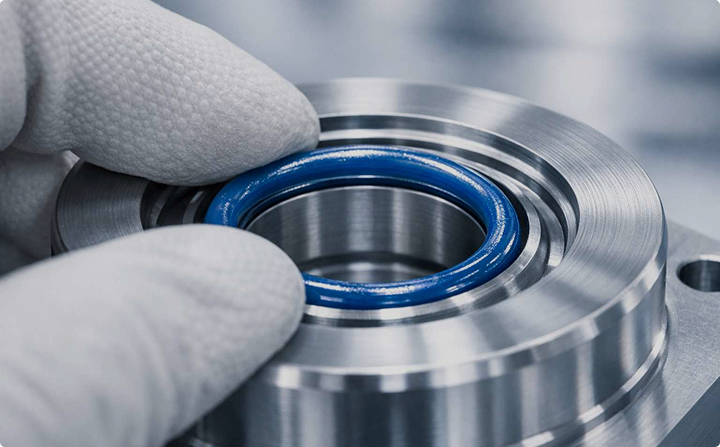
INSTALLATION BEST PRACTICES
- Inspect components: Check for burrs, scratches, damage
- Clean thoroughly: Remove debris, old seal material
- Lubricate: Use system fluid or compatible lubricant
- Avoid damage: Don’t roll or twist O-rings over threads
- Verify seating: Ensure proper positioning before pressurization
MAINTENANCE INTERVALS

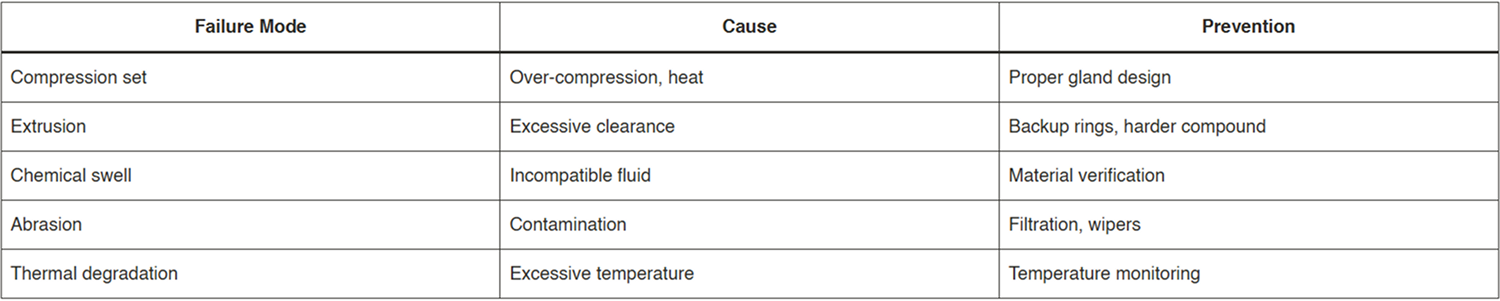
FAILURE ANALYSIS
Common fluorosilicone seal failure modes in industrial service:
INDUSTRY STANDARDS AND SPECIFICATIONS
MILITARY SPECIFICATIONS

ASTM STANDARDS

CONCLUSION
In industrial machinery, where hydraulic pressure, chemical exposure, and temperature fluctuations are constant challenges, selecting the right sealing material is essential for maintaining performance and minimizing downtime. At Go Flexion, we position fluorosilicone as a high-performance solution for demanding hydraulic and heavy equipment applications. As an experienced Flourosilicone Manufacturer, we support manufacturers and maintenance teams with sealing components that deliver consistent reliability in pumps, valves, cylinders, and rotating systems, especially in environments where conventional elastomers may fail under combined thermal and chemical stress.
As industrial systems continue to evolve toward higher efficiency and longer service cycles, the role of advanced materials becomes increasingly critical. Go Flexion works closely with engineering teams to match fluorosilicone formulations to specific operating conditions, including fluid compatibility, pressure requirements, and temperature ranges. By combining material expertise with precision manufacturing capabilities, we help extend equipment lifespan, reduce maintenance frequency, and ensure dependable performance across a wide range of industrial machinery applications.
HOW WE HELP YOU DECIDE
We assess your operating fluids, temperature profile, sealing dynamics, and cost targets, then recommend fluorosilicone or alternatives where appropriate. If abrasion, dynamic motion, or strict cost caps are dominant constraints, we document why another elastomer may be better and outline the tradeoffs.
Request a Proposal or Book a Discovery Call to get a tailored materials recommendation.