
FLUOROSILICONE FOR ELECTRONICS: EMI
SHIELDING, POTTING, AND PROTECTION
SOLUTIONS 2026
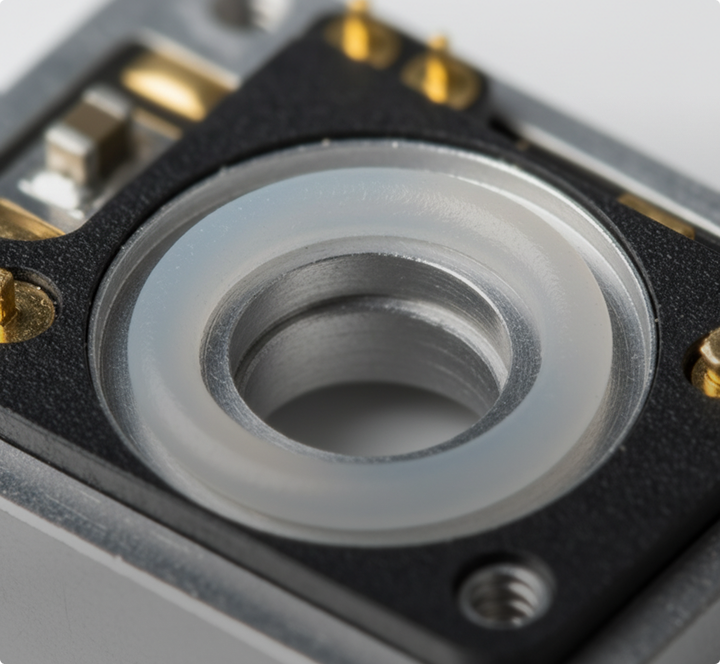
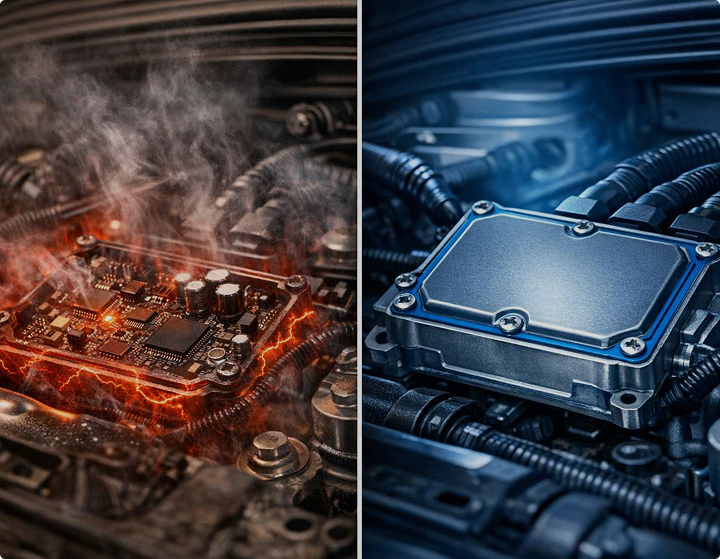
Electronic Devices operating in harsh environments require protection from electromagnetic interference, chemical exposure, and thermal stress. Fluorosilicone rubber delivers a unique combination of electrical insulation, chemical resistance, and temperature stability that makes it indispensable for aerospace, automotive, and industrial electronics.
From EMI shielding gaskets that prevent signal interference to potting compounds that protect sensitive circuitry, fluorosilicone addresses challenges that standard silicone cannot. The material’s resistance to fuels, solvents, and aggressive cleaning agents ensures long-term reliability in applications where electronic components face chemical exposure.

WHY
FLUOROSILICONE
EXCELS IN
ELECTRONIC
APPLICATIONS
Electronic systems increasingly operate in demanding environments, under automotive hoods, in aerospace avionics, and within industrial control cabinets. These applications expose components to temperature cycling, chemical vapors, and electromagnetic noise. Fluorosilicone provides comprehensive protection while maintaining the processing advantages of silicone elastomers.
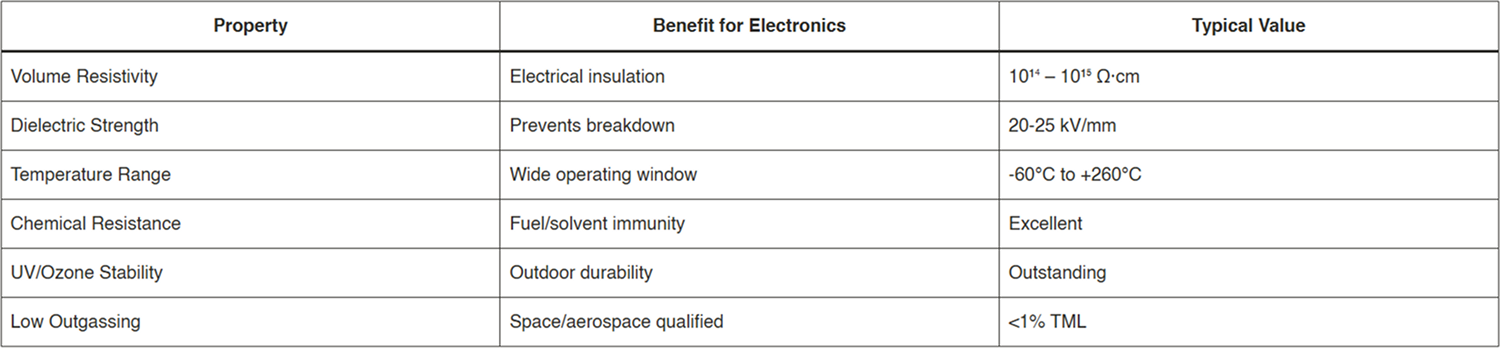
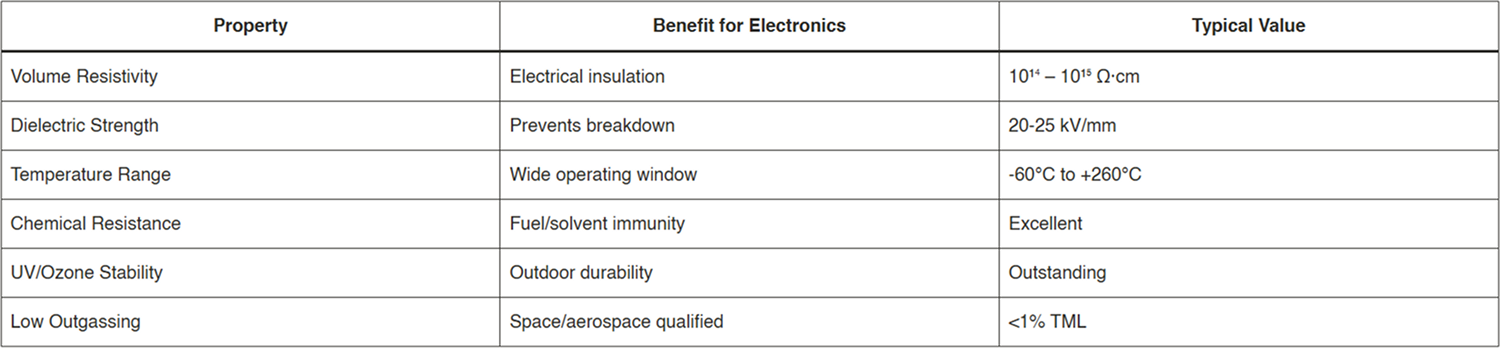
KEY PROPERTIES FOR ELECTRONICS
EMI SHIELDING
APPLICATIONS
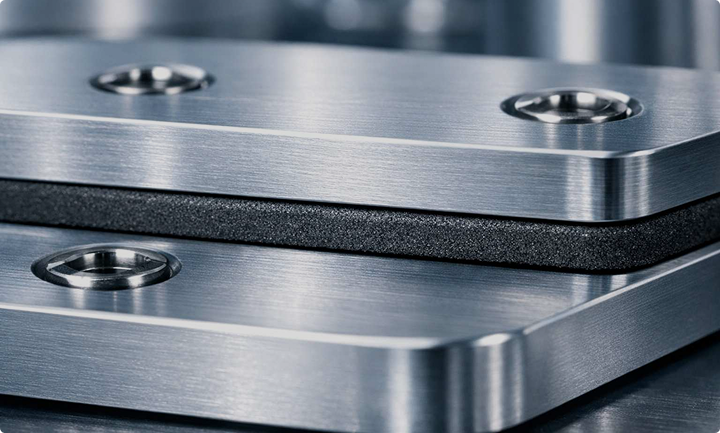
Electromagnetic interference (EMI) can disrupt electronic device operation, cause data corruption, and create regulatory compliance issues. Conductive fluorosilicone gaskets provide both environmental sealing and EMI shielding in a single component.
HOW EMI SHIELDING GASKETS WORK
Conductive fluorosilicone compounds incorporate metal fillers that create conductive pathways across the gasket surface. When compressed between mating surfaces, the gasket completes an electromagnetic barrier that attenuates radiated emissions:
COMMON FILLER SYSTEMS
SHIELDING EFFECTIVENESS BY FREQUENCY

EMI GASKET DESIGN CONSIDERATIONS
Effective EMI shielding requires attention to gasket design and installation:
Gland Design:
- Compression: 15-30% for solid profiles; 10-20% for hollow profiles
- Surface finish: 63 μin Ra or better for conductive mating surfaces
- Joint design: Continuous path with no gaps exceeding 1/20 wavelength
Material Selection:
- Fuel exposure: Fluorosilicone required
- General environment: Silicone or fluorosilicone
- Galvanic compatibility: Match filler to housing material
POTTING AND
ENCAPSULATION
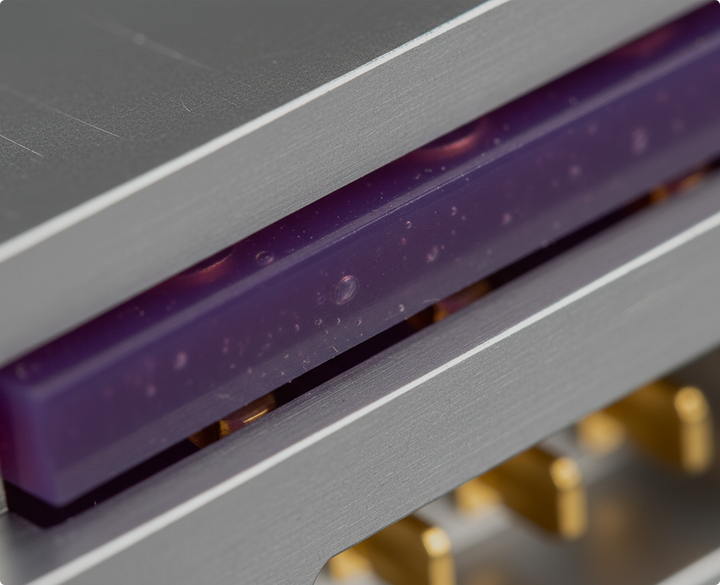
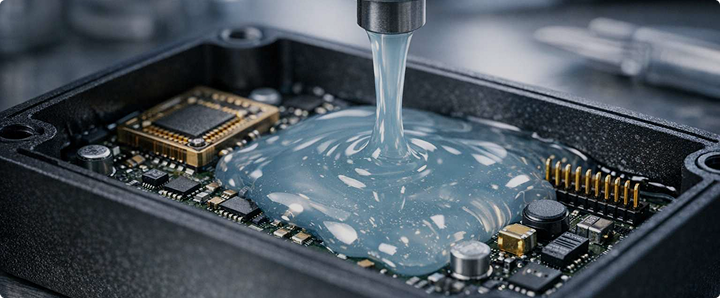
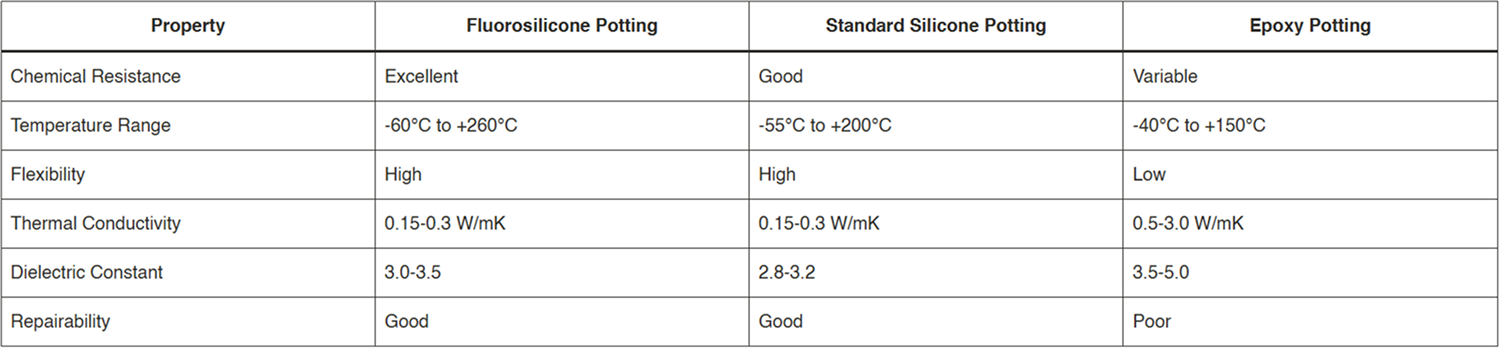
Potting compounds protect electronic assemblies from moisture, chemicals, mechanical shock, and thermal cycling. Fluorosilicone potting materials provide superior chemical resistance compared to standard silicone potting compounds.
POTTING COMPOUND PROPERTIES

APPLICATION METHODS
Dispensing:
- Two-component systems mix base and curing agent
- Meter-mix equipment ensures proper ratio
- Vacuum deaeration eliminates bubbles
Curing:
- Room temperature cure: 24-72 hours
- Heat acceleration: 100°C for 1-2 hours
- Post-cure: Optional for optimal properties
POTTING DESIGN GUIDELINES
Successful potting requires attention to:
- Thermal expansion: Match CTE to substrate or use flexible compound
- Cure stress: Avoid excessive shrinkage on sensitive components
- Repair access: Design for serviceability when required
- Thermal management: Consider conductivity for heat-generating components
CONNECTOR AND
CABLE SEALS
Environmental seals for electrical connectors prevent moisture and contaminant ingress while maintaining signal integrity. Fluorosilicone connector seals excel in applications with fuel or solvent exposure.
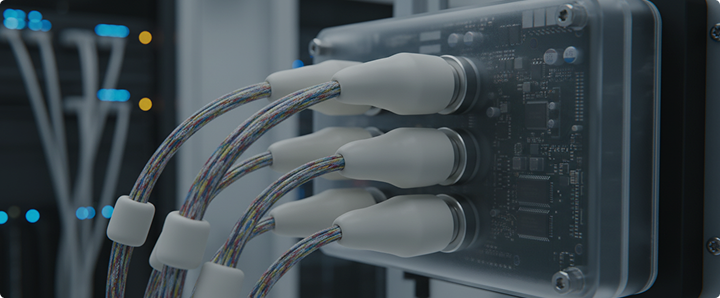
CONNECTOR SEAL APPLICATIONS


WIRE AND CABLE INSULATION
Fluorosilicone jacketing protects wiring in harsh environments:
- Aerospace: Fire-resistant, low-smoke properties
- Automotive: Fuel and oil resistance under hood
- Industrial: Chemical and abrasion resistance
- Military: MIL-spec compliance, durability
COMPARISON:
FLUOROSILICONE VS. ALTERNATIVE ELECTRONIC MATERIALS
Selecting the optimal material requires comparing fluorosilicone against alternatives for specific electronic applications:
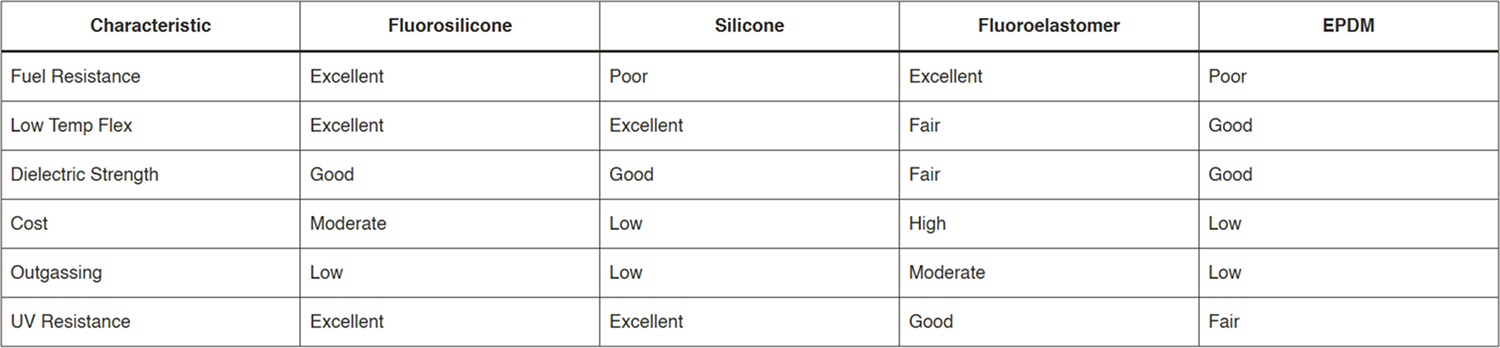
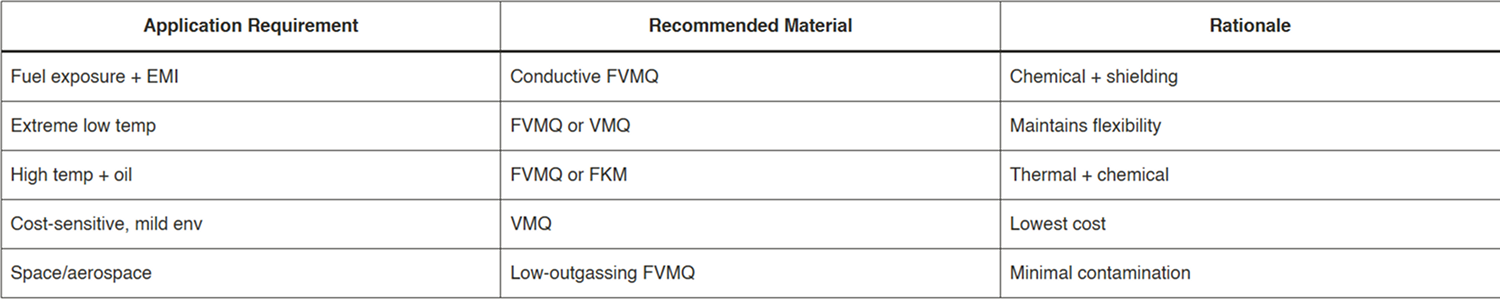
MATERIAL SELECTION DECISION MATRIX
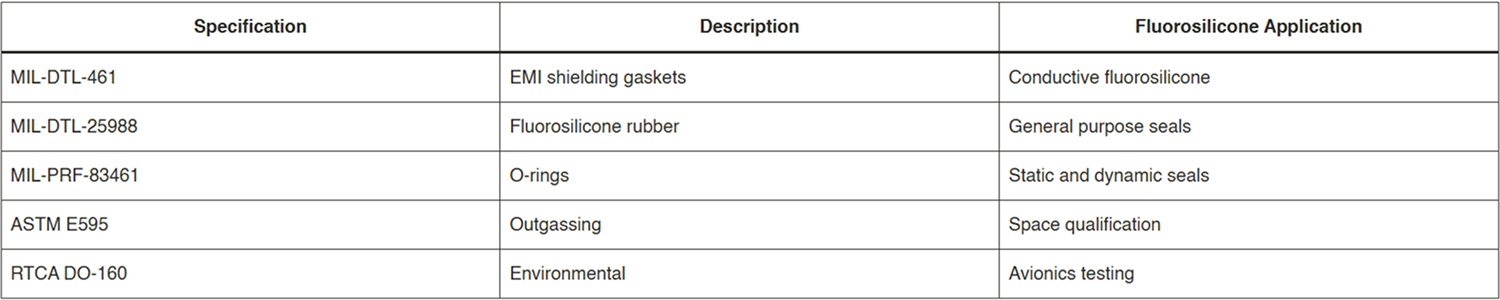
MILITARY AND AEROSPACE SPECIFICATIONS
Electronic components for defense and aerospace applications must meet stringent specifications. Fluorosilicone compounds are qualified to numerous military standards:
KEY SPECIFICATIONS
OUTGASSING REQUIREMENTS
Space and vacuum applications require low-outgassing materials to prevent contamination of optical surfaces and sensitive instruments:

DESIGN AND MANUFACTURING
CONSIDERATIONS
MOLD DESIGN FOR ELECTRONIC
COMPONENTS
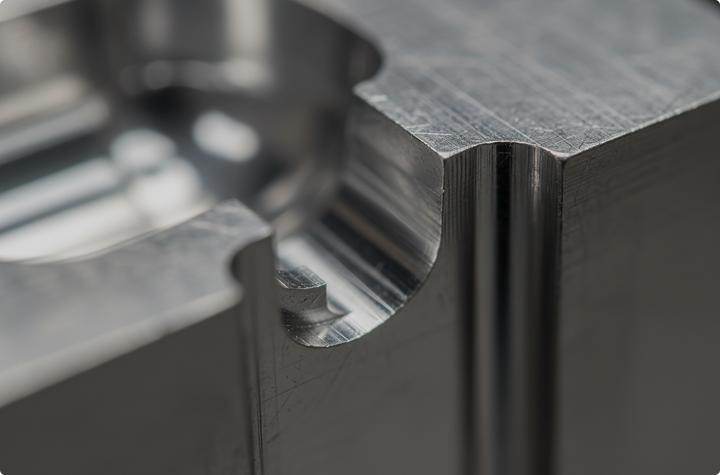
Precision molding of fluorosilicone electronic components requires attention to:
Tooling:
- Tight tolerances: ±0.05 mm for critical dimensions
- Surface finish: SPI A-2 or better for cosmetic parts
- Venting: Critical for thin sections
Processing:
- Temperature: 160-180°C typical
- Pressure: 500-1500 psi injection pressure
- Cure time: 30-120 seconds depending on thickness
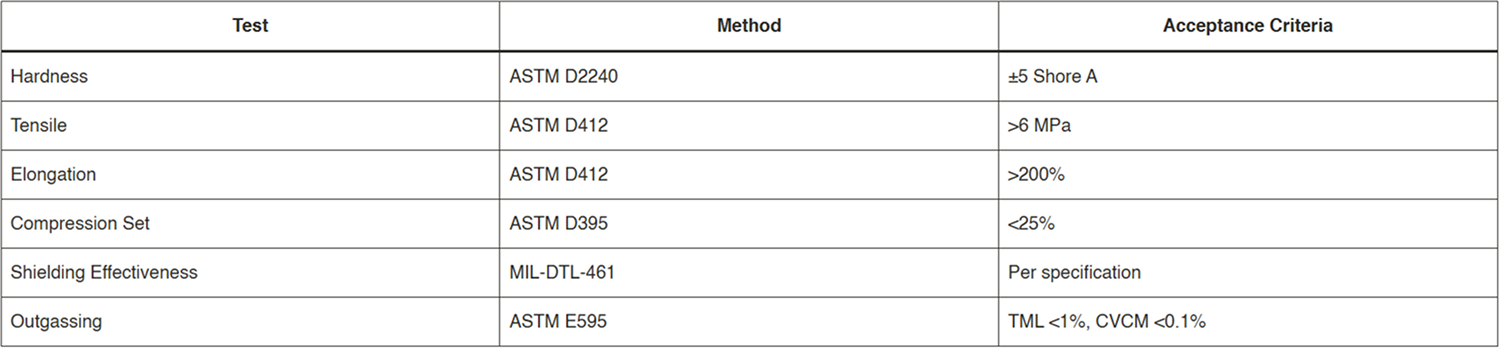
QUALITY CONTROL FOR ELECTRONEC APPLICATIONS
INSTALLATION AND
HANDLING
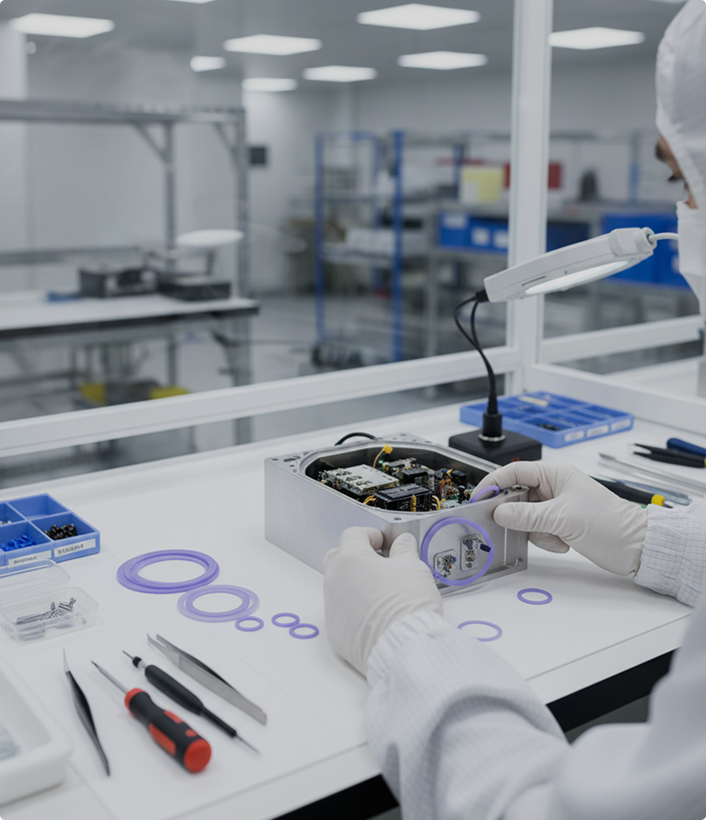
Proper handling ensures fluorosilicone electronic components perform as designed:
STORAGE AND SHELF LIFE
- Temperature: 15–25°C preferred; maximum 40°C
- Humidity: <75% relative humidity
- Light: Protect from UV exposure
- Shelf life: 12 months typical; 24+ months with proper storage
INSTALLATION BEST PRACTICES
- Clean surfaces: Remove oils, dust, and contamination
- Proper compression: Follow design specifications
- Avoid overstretch: Prevent stress cracking
- Torque sequence: Cross-pattern for flange bolts
- Verification: Electrical continuity test for EMI gaskets
CONCLUSION
As electronic systems continue to operate in increasingly harsh and complex environments, selecting the right material becomes essential to ensure long-term performance and reliability. At Go Flexion, we position fluorosilicone as a critical solution for applications that require a balance of electrical insulation, chemical resistance, and thermal stability. From EMI shielding gaskets to potting and connector sealing, our expertise as a Flourosilicone Manufacturer enables us to support advanced electronic designs where exposure to fuels, solvents, and temperature extremes would compromise standard materials.
Looking ahead, the demand for more compact, high-performance, and durable electronic components will continue to grow across automotive, aerospace, and industrial sectors. Go Flexion works closely with engineers and procurement teams to develop fluorosilicone solutions tailored to specific operational requirements, ensuring consistent protection against interference, environmental stress, and chemical exposure. By combining material science knowledge with precision manufacturing, we help deliver reliable sealing and protection systems that support the next generation of electronic technologies.
HOW WE HELP YOU DECIDE
We assess your operating fluids, temperature profile, sealing dynamics, and cost targets, then recommend fluorosilicone or alternatives where appropriate. If abrasion, dynamic motion, or strict cost caps are dominant constraints, we document why another elastomer may be better and outline the tradeoffs.
Request a Proposal or Book a Discovery Call to get a tailored materials recommendation.