
FLUORSILICONE FOR CHEMICAL
PROCESSING: COMPLETE APPLICATIONS
GUIDE 2026
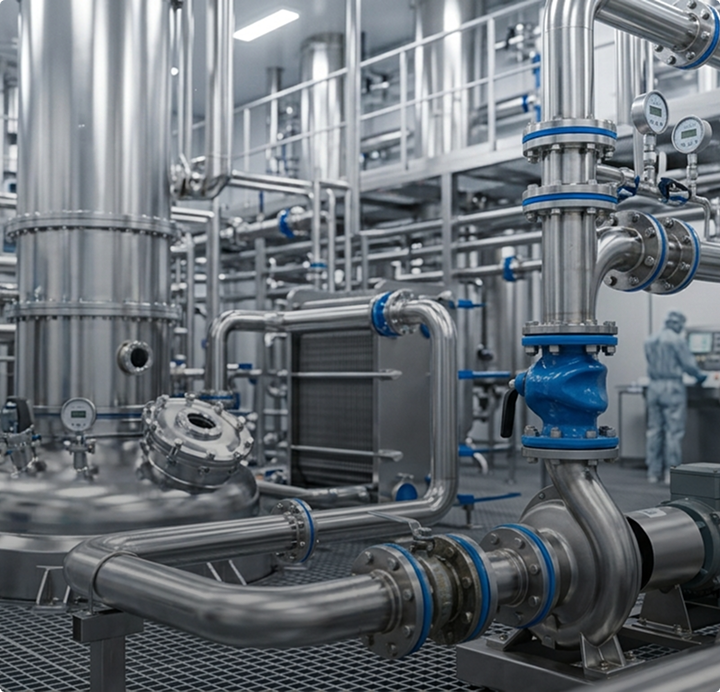
Chemical processing environments demand sealing materials that withstand aggressive media, extreme temperatures, and continuous operational stress. Fluorosilicone rubber (FVMQ) combines the temperature flexibility of silicone with enhanced chemical resistance, making it a critical material for seals, gaskets, and O-rings in processing equipment exposed to fuels, oils, and solvents.
Unlike standard silicone, fluorosilicone incorporates trifluoropropyl groups that dramatically improve resistance to hydrocarbon-based fluids. This molecular modification enables fluorosilicone seals to maintain integrity where conventional elastomers swell, soften, or degrade. For chemical engineers and process equipment designers, understanding fluorosilicone’s capabilities and limitations ensures optimal material selection for demanding applications.

WHAT MAKED FLUOROSILICONE IDEAL FOR
CHEMICAL PROCESSING
Fluorosilicone rubber represents a unique class of elastomers that bridge the performance gap between standard silicone and fluoroelastomers. The material retains silicone’s characteristic flexibility across temperature extremes while offering substantially improved chemical resistance .
MOLECULAR STRUCTURE AND
CHEMICAL RESISTANCE
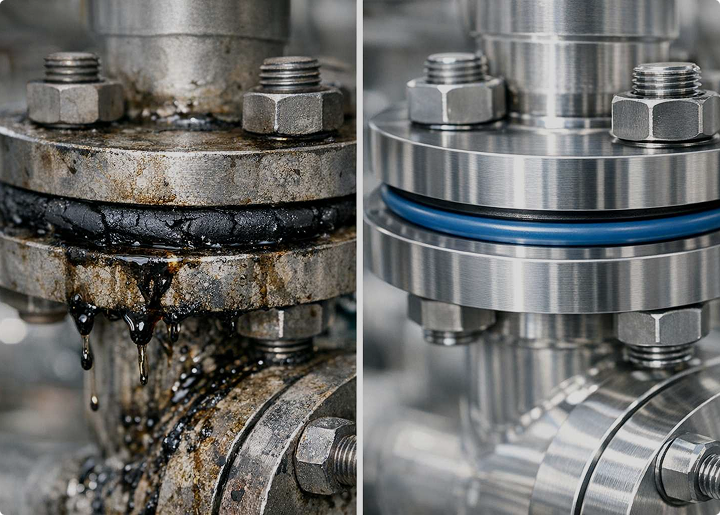
The key to fluorosilicone’s performance lies in its molecular architecture. Standard silicone consists of siloxane backbones with methyl side groups. Fluorosilicone replaces some methyl groups with trifluoropropyl (CF₃-CH₂-CH₂-) substituents, creating a polymer that resists hydrocarbon attack while maintaining the siloxane backbone’s flexibility.
This structural modification provides:
- Hydrocarbon resistance: Superior performance against fuels, oils, and non-polar solvents
- Temperature stability: Operating range from -60°C to +260°C
- Mechanical retention: Maintains elasticity and sealing force in aggressive media
- Low compression set: Ensures long-term sealing reliability
TEMPERATURE PERFORMANCE IN CHEMICAL ENVIRONMENTS
Chemical processing often involves thermal cycling and elevated temperatures. Fluorosilicone maintains its elastomeric properties across a broader temperature range than most hydrocarbon-resistant materials:

CHEMICAL COMPATIBILITY CHART FOR
PROCESSING APPLICATIONS
Understanding fluorosilicone’s compatibility with specific chemicals guides proper application selection. The following compatibility matrix summarizes performance across common chemical processing media:

PROCESSING EQUIPMENT
APPLICATIONS
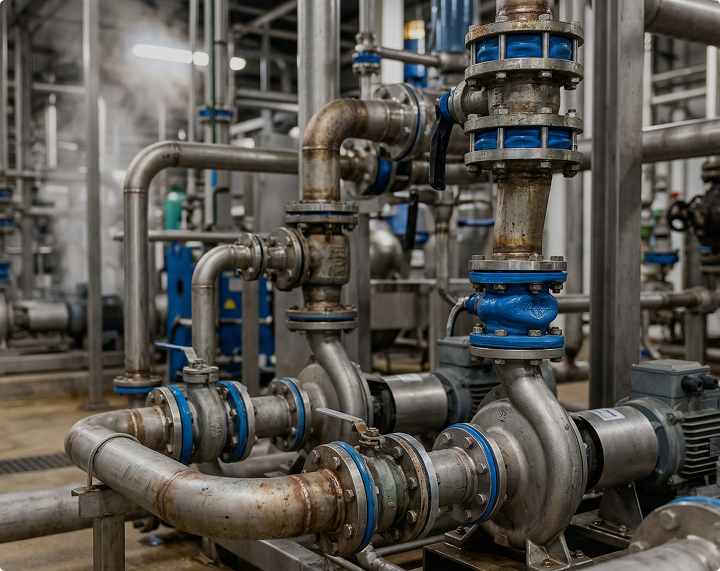
Fluorosilicone seals serve critical functions across diverse chemical processing equipment:
- Mixing and Reaction Vessels
Seals for agitator shafts, manway covers, and sight glasses benefit from fluorosilicone’s chemical resistance when processing hydrocarbon-based products. The material’s low compression set ensures reliable sealing through thermal cycling and pressure fluctuations
- Transfer and Pipeline Systems
Pump seals, valve stem packing, and flange gaskets in fluid transfer systems resist the swelling effects of process chemicals. Fluorosilicone maintains dimensional stability where standard elastomers would extrude or leak.
- Filtration Equipment
Filter housing seals and membrane support gaskets require materials that withstand both process chemicals and cleaning agents. Fluorosilicone’s broad chemical compatibility suits these demanding applications.
MATERIAL SPECIFICATIONS AND GRADES
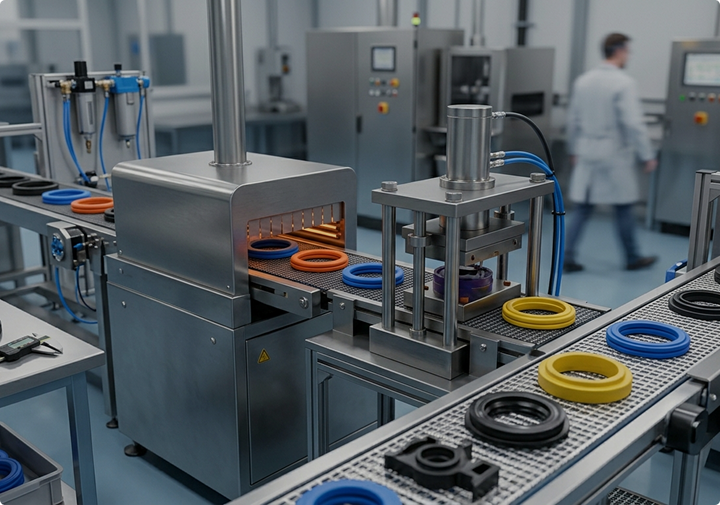
Commercial fluorosilicone compounds vary in hardness, curing systems, and filler content. Selecting the appropriate grade ensures optimal performance:
HARDNESS SELECTION GUIDE

CURING SYSTEMS
Fluorosilicone compounds utilize two primary curing mechanisms:
Peroxide Curing
- Suitable for most general-purpose applications
- Good compression set resistance
- Cost-effective processing
- Post-cure required for optimal properties
Platinum (Addition) Curing
- Lower volatile content
- Faster cure cycles
- Preferred for medical and food-contact applications
- Higher material cost
DESIGN
CONSIDERATIONS
FOR CHEMICAL
PROCESSING SEALS
Successful seal design requires attention to gland geometry, material selection, and operating conditions. Key factors include:
GLAND DESIGN PARAMETERS
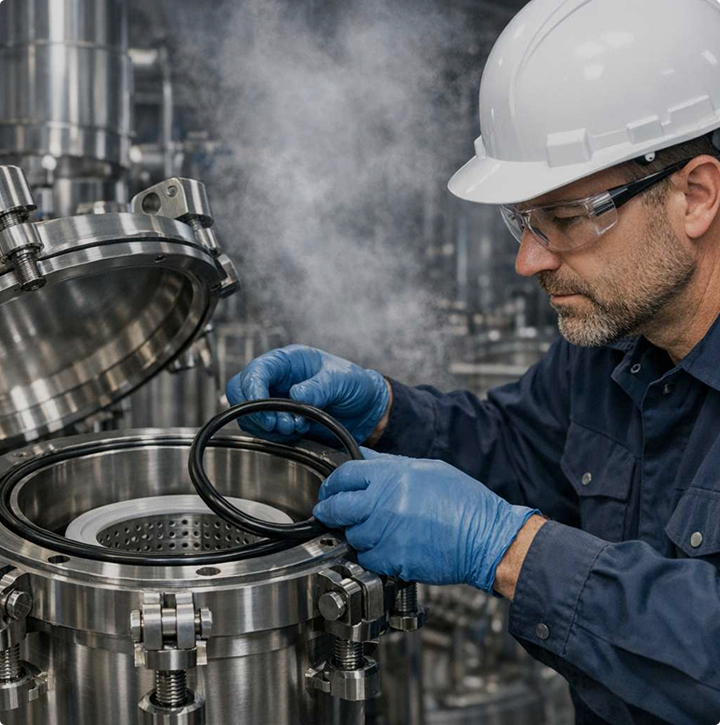
Proper gland design prevents extrusion and ensures adequate compression:
- O-ring groove fill: Maximum 85% to accommodate thermal expansion
- Surface finish: 16–32 μin Ra for static seals; 8–16 μin Ra for dynamic
- Corner radii: Minimum 0.005 inch to prevent nicking
- Extrusion gaps: Limit based on pressure and hardness
TEMPERATURE AND PRESSURE LIMITS
While fluorosilicone offers broad temperature capability, actual service limits depend on specific compound formulation and application conditions:

COMPARISON:
FLUOROSILICONE VS. ALTERNATIVE MATERIALS
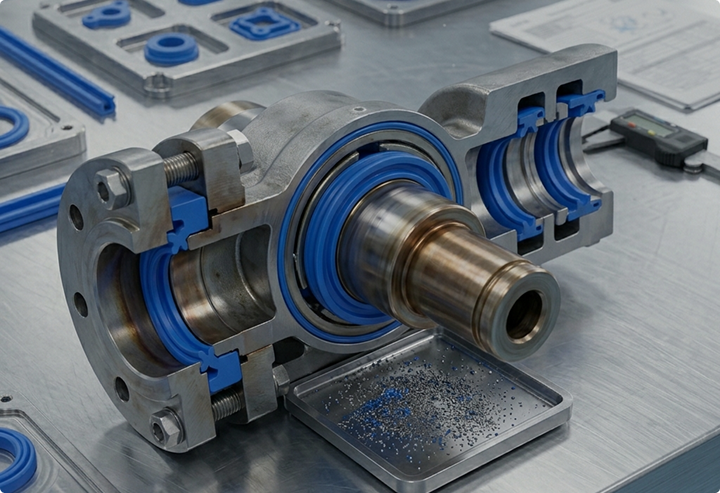
Selecting the optimal sealing material requires comparing fluorosilicone against alternatives for specific chemical environments:


WHEN TO SPECIFY FLUOROSILICONE
Choose fluorosilicone when the application requires:
- Resistance to fuels, oils, or hydrocarbon solvents
- Operation across wide temperature extremes
- Flexibility at sub-zero temperatures
- Long service life in chemical environments
- UV and ozone resistance for outdoor exposure
Consider alternatives when:
- Strong acids or bases are present (use PTFE or specialty elastomers)
- Steam exposure is continuous (EPDM preferred)
- Cost is primary concern and chemical exposure is minimal (silicone)
- Maximum fuel resistance at elevated temperatures is required (FKM)
QUALITY CONTROL
AND TESTING
Ensuring fluorosilicone seal performance requires rigorous quality control:
INCOMMING MATERIAL INSPECTION
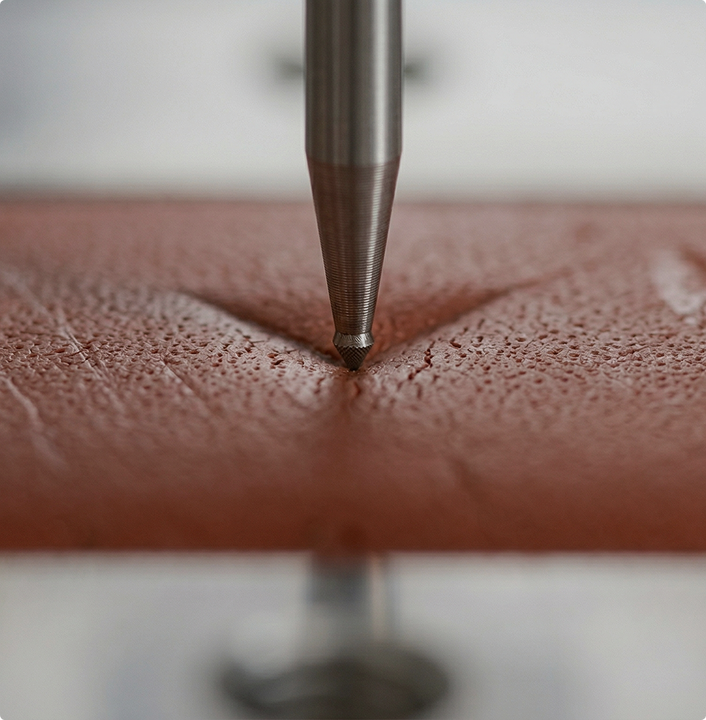
- Hardness verification: Shore A durometer per ASTM D2240
- Tensile properties: Ultimate strength and elongation per ASTM D412
- Compression set: 22 hours at 175°C per ASTM D395
- Fluid resistance: Volume swell in ASTM reference fuels
IN-PROCESS INSPECTION
- Dimensional verification: CMM or optical measurement
- Visual inspection: Surface defects, flash, contamination
- Cure state: Durometer confirmation
INSTALLATION AND
MAINTENANCE BEST
PRACTICES
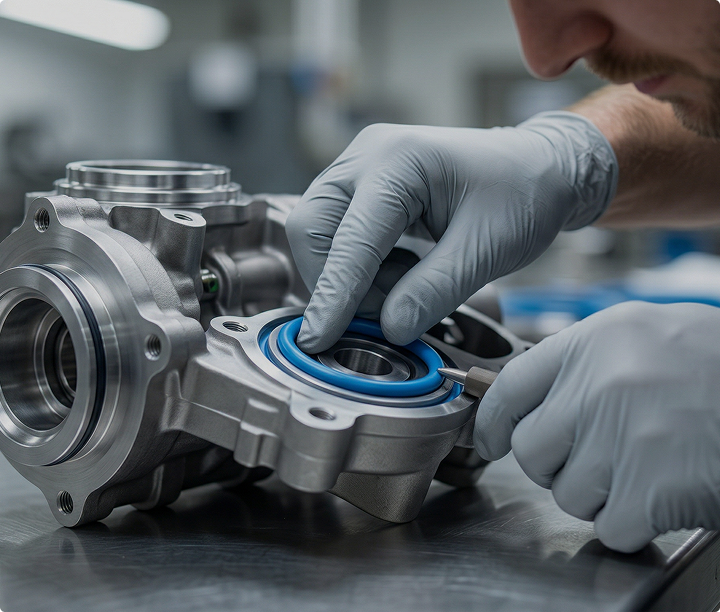
Proper installation extends seal life and prevents premature failure:
INSTALLATION GUIDELINGES
- Clean all components: Remove debris, burrs, and old seal material
- Lubricate appropriately: Use compatible lubricant for ease of assembly
- Avoid twisting: Roll O-rings into place; don’t stretch over threads
- Torque properly: Follow manufacturer specifications for flange bolts
- Verify compression: Ensure adequate squeeze without over-compression
MAINTENANCE INTERVALS
Proper installation extends seal life and prevents premature failure:

CONCLUSION
In demanding chemical processing environments, material performance directly impacts system reliability, safety, and operational continuity. At Go Flexion, we position fluorosilicone as a high-value solution for applications where exposure to fuels, oils, and aggressive solvents requires both chemical resistance and thermal stability. As an experienced Flourosilicone Manufacturer, Go Flexion supports engineers and plant operators in selecting sealing materials that maintain integrity under continuous stress, ensuring consistent performance in pumps, valves, reactors, and transfer systems where conventional elastomers may degrade over time .
As processing conditions become more complex, the importance of precise material selection continues to grow. Go Flexion works closely with engineering teams to align fluorosilicone formulations with specific chemical compatibility, temperature ranges, and mechanical requirements, helping reduce maintenance frequency and unplanned downtime. By combining material expertise with advanced manufacturing capabilities, we enable more durable sealing solutions that support long-term operational efficiency across a wide range of industrial applications.
HOW WE HELP DECIDE
We assess your operating fluids, temperature profile, sealing dynamics, and cost targets, then recommend fluorosilicone or alternatives where appropriate. If abrasion, dynamic motion, or strict cost caps are dominant constraints, we document why another elastomer may be better and outline the tradeoffs.
Request a Proposal or Book a Discovery Call to get a tailored materials recommendation.